

CHANDLER, Ariz. (AP) There were dozens of statements submitted to the court by family and friends of Christopher Pelkey when it came time to sentence the man convicted of fatally shooting him during a road rage incident. They provided glimpses of Pelkey’s humor, his character and his military service.
But there was nothing quite like hearing from the victim himself even if it was a version generated by artificial intelligence.
In what’s believed to be a first in U.S. courts, Pelkey’s family used AI to create a video using his likeness to give him a voice. The AI rendering of Pelkey told the shooter during the sentencing hearing last week in Phoenix that it was a shame they had to meet that day in 2021 under those circumstances and that in another life, the two of them probably could have been friends.
“I believe in forgiveness and in God who forgives. I always have and I still do,” Pelkey’s avatar told Gabriel Paul Horcasitas.
The AI version of Pelkey went on to encourage people to make the most of each day and to love each other, not knowing how much time one might have left.
While use of AI within the court system is expanding, it’s typically been reserved for administrative tasks, legal research and case preparation. In Arizona, it’s helped inform the public of rulings in significant cases.
But using AI to generate victim impact statements marks a new and legal, at least in Arizona tool for sharing information with the court outside the evidentiary phases.
Maricopa County Superior Court Judge Todd Lang, who presided over the case, said after watching the video that he imagined Pelkey, who was 37 at the time of his killing, would have felt that way after learning about him. Lang also noted the video said something about Pelkey’s family, who had expressed their anger over his death and had asked for Horcasitas to receive the maximum sentence.
“Even though that’s what you wanted, you allowed Chris to speak from his heart as you saw it,” Lang said.
Horcasitas, 54, was convicted of manslaughter and sentenced to 10.5 years in prison.
Horcasitas’ lawyer, Jason Lamm, told The Associated Press they filed a notice to appeal his sentence within hours of the hearing. Lamm said it’s likely the appeals court will weigh whether the judge improperly relied on the AI video when handing down the sentence.
The shooting happened the afternoon of Nov. 13, 2021, as both drivers were stopped at a red light. According to records, Pelkey was shot after getting out of his truck and walking toward Horcasitas’ car.
Pelkey’s sister, Stacey Wales, raised the idea of her brother speaking for himself after struggling to figure out what she would say. She wrote a script for the AI-generated video, reflecting that he was a forgiving person.
In Arizona, victims can give their impact statements in any digital format, said victims’ rights attorney Jessica Gattuso, who represented the family.
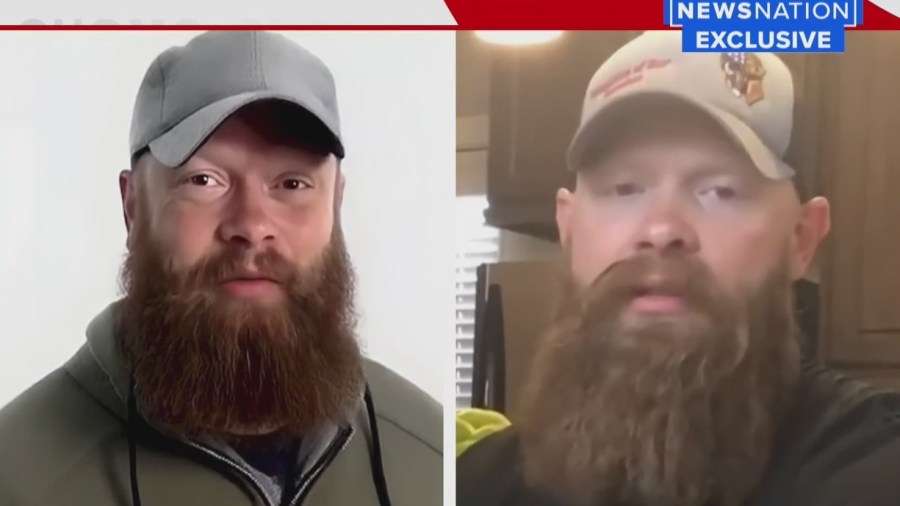
Wales, a software product consultant, took the AI idea to her husband, Tim. He and his friend, who have work experience creating humanlike AI avatars. Using a video clip of Pelkey, they aimed to replicate his voice and speech patterns. They generated Pelkey’s likeness through a single image of him, digitally manipulating it to remove glasses and a hat logo, edit his outfit and trim his beard.
Arizona Supreme Court Chief Justice Ann Timmer didn’t address the road rage case specifically in an interview Wednesday. But she said the rise in popularity and accessibility to AI in recent years led to the creation of a committee to research best practices in the courts.
Gary Marchant, a member of the committee and a law professor at Arizona State University, said he understands why Pelkey’s family did it. But he warned the use of this technology could open the door to more people trying to introduce AI-generated evidence into courtrooms.
“There’s a real concern among the judiciary and among lawyers that deepfake evidence will be increasingly used,” he said. “It’s easy to create it and anyone can do it on a phone, and it could be incredibly influential because judges and juries, just like all of us, are used to believing what you see.”
Marchant pointed to a recent case in New York, where a man without a lawyer used an AI-generated avatar to argue his case in a lawsuit via video. It took only seconds for the judges to realize that the man addressing them from the video screen didn’t exist at all.
In the Arizona case, Wales said the AI-generated video worked because the judge had nearly 50 letters from family and friends that echoed the video’s message.
“Everybody knew that Chris would forgive this person,” Wales said.
___
Yamat reported from Las Vegas. Associated Press reporter Susan Montoya Bryan in Albuquerque, New Mexico, contributed to this report.