
Share this @internewscast.com

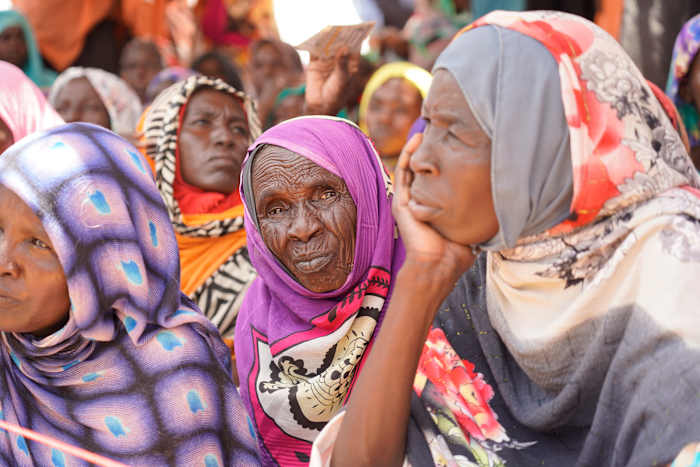
CAIRO – As Sudan battles a devastating war and millions endure severe hunger, many turn to weeds and wild plants to stave off starvation. They boil these plants with just salt and water because there are no other options.
Cherishing the relief it brought, a 60-year-old retired school teacher composed a love poem for a plant called Khadija Koro. Describing it as “a balm for us that spread through the spaces of fear,” he credited it with preventing starvation for himself and many others.
A.H, who requested anonymity due to fear of reprisal from the conflicting factions for speaking to the media, is among the 24.6 million people in Sudan experiencing severe food insecurity — almost half the population, per the Integrated Food Security Phase Classification. Aid workers report that the war has driven up market prices, hindered aid efforts, and reduced farming lands in what was once an agricultural powerhouse.
Sudan plunged into war in April 2023 when simmering tensions between the Sudanese army and its rival paramilitary the Rapid Support Forces escalated to fighting in the capital Khartoum and spread across the country, killing over 20,000 people, displacing nearly 13 million people, and pushing many to the brink of famine in what aid workers deemed the world’s largest hunger crisis.
Food insecurity is especially bad in areas in the Kordofan region, the Nuba Mountains, and Darfur, where El Fasher and Zamzam camp are inaccessible to the Norwegian Refugee Council, said Mathilde Vu, an aid worker with the group based in Port Sudan. Some people survive on just one meal a day, which is mainly millet porridge. In North Darfur, some people even sucked on coal to ease their hunger.
On Friday, U.N. Secretary-General Antonio Guterres called the Sudanese military leader Gen. Abdel-Fattah Burhan and asked him for a week-long ceasefire in El Fasher to allow aid delivery. Burhan agreed to that request, according to an army statement, but it’s unknown whether the RSF would agree to that truce.
A.H. said aid distribution often provided slight relief. His wife in children live in Obeid and also struggle to secure enough food due to high prices in the market.
His poem continued: “You were a world that sends love into the barren time. You were a woman woven from threads of the sun. You were the sandalwood and the jasmine and a revelation of green, glowing and longing.”
Fighting restricted travel, worsening food insecurity
Sudanese agricultural minister Abu Bakr al-Bashari told Al-Hadath news channel in April that there are no indicators of famine in the country, but there is shortage of food supplies in areas controlled by the paramilitary forces, known as RSF.
However, Leni Kinzli, World Food Programme Sudan spokesperson, said 17 areas in Gezeira, most of the Darfur region, and Khartoum, including Jebel Aulia are at risk of famine. Each month, over 4 million people receive assistance from the group, including 1.7 million in areas facing famine or at risk, Kinzli said.
The state is suffering from two conflicts: one between the Rapid Support Forces and the army, and another with the People’s Liberation Movement-North, who are fighting against the army and have ties with the RSF, making it nearly impossible to access food, clean water, or medicine.
He can’t travel to Obeid in North Kordofan to be with his family, as the Rapid Support Forces blocked roads. Violence and looting have made travel unsafe, forcing residents to stay in their neighborhoods, limiting their access to food, aid workers said.
A.H. is supposed to get a retirement pension from the government, but the process is slow, so he doesn’t have a steady income. He can only transfer around $35 weekly to his family out of temporary training jobs, which he says is not enough.
Hassan, another South Kordofan resident in Kadugli said that the state has turned into a “large prison for innocent citizens” due to the lack of food, water, shelter, income, and primary health services caused by the RSF siege.
International and grassroots organizations in the area where he lives were banned by the local government, according to Hassan, who asked to be identified only by his first name in fear of retribution for speaking publicly while being based in an area often engulfed with fighting.
So residents ate the plants out of desperation.
“You would groan to give life an antidote when darkness appeared to us through the window of fear.,” A.H. wrote in his poem. “You were the light, and when our tears filled up our in the eyes, you were the nectar.
Food affordability
Vu warned that food affordability is another ongoing challenge as prices rise in the markets. A physical cash shortage prompted the Norwegian Refugee Council to replace cash assistance with vouchers. Meanwhile, authorities monopolize some markets and essential foods such as corn, wheat flour, sugar and salt are only sold through security approvals, according to Hassan.
Meanwhile, in southwest Sudan, residents of Nyala, the capital of South Darfur, rely on growing crops, but agricultural lands are shrinking due to fighting and lack of farming resources.
Hawaa Hussein, a woman who has been displaced in El Serif camp since 2004, told the AP that they benefit from the rainy season but they’re lacking essential farming resources such as seeds and tractors to grow beans, peanuts, sesame, wheat, and weika — dried powdered okra.
Hussein, a grandmother living with eight family members, said her family receives a food parcel every two months, containing lentils, salt, oil, and biscuits. Sometimes she buys items from the market with the help of community leaders.
“There are many families in the camp, mine alone has five children, and so aid is not enough for everyone … you also can’t eat while your neighbor is hungry and in need,” she said.
El Serif camp is sheltering nearly 49,000 displaced people, the camp’s civic leader Abdalrahman Idris told the AP. Since the war began in 2023, the camp has taken in over 5,000 new arrivals, with a recent surge coming from the greater Khartoum region, which is the Sudanese military said it took full control of in May.
“The food that reaches the camp makes up only 5% of the total need. Some people need jobs and income. People now only eat two meals, and some people can’t feed their children,” he said.
In North Darfur, south of El Fasher, lies Zamzam camp, one of the worst areas struck by famine and recent escalating violence. An aid worker with the Emergency Response Rooms previously based in the camp who asked not to be identified in fear of retribution for speaking with the press, told the AP that the recent wave of violence killed some and left others homeless.
Barely anyone was able to afford food from the market as a pound of sugar costs 20,000 Sudanese pounds ($33) and a soap bar 10,000 Sudanese pounds ($17).
The recent attacks in Zamzam worsened the humanitarian situation and he had to flee to a safer area. Some elderly men, pregnant women, and children have died of starvation and the lack of medical treatment, according to an aid worker, who spoke on condition of anonymity because he’s fearful of retribution for speaking publicly while living in an area controlled by one of the warring parties. He didn’t provide the exact number of those deaths.
He said the situation in Zamzam camp is dire—“as if people were on death row.”
Yet A.H. finished his poem with hope:
“When people clashed and death filled the city squares” A.H. wrote “you, Koro, were a symbol of life and a title of loyalty.”
Copyright 2025 The Associated Press. All rights reserved. This material may not be published, broadcast, rewritten or redistributed without permission.