
Share this @internewscast.com
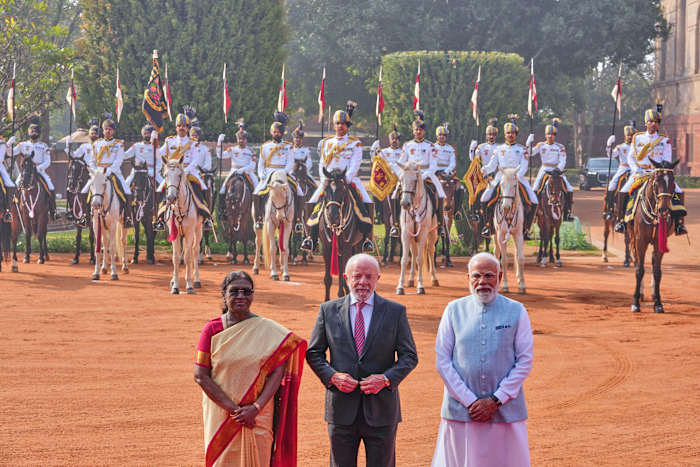
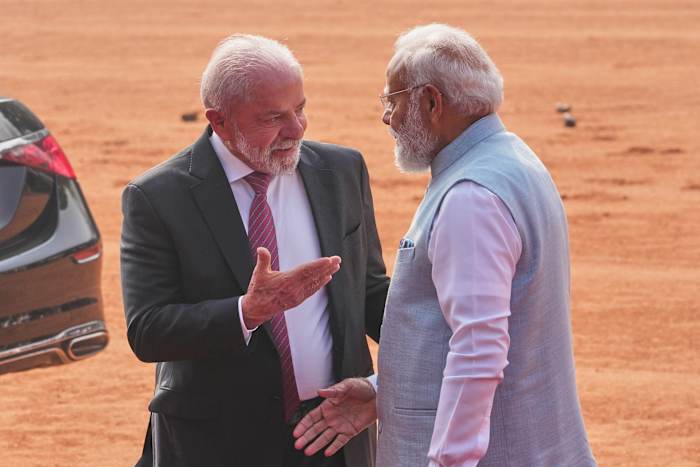
SAO PAULO – On Saturday, Brazil and India reached an important agreement concerning critical minerals and rare earth elements, marking a significant step in enhancing their resource cooperation. This partnership aims to diversify trade relations between these two influential countries of the global south.
The countries signed a non-binding memorandum of understanding focused on rare earths, setting up a cooperative framework that includes mutual investment, exploration, and mining. The agreement also emphasizes the use of artificial intelligence technologies, among other areas of interest.
Brazil is home to the world’s second-largest reserves of rare earth minerals, essential components in the production of various technologies such as smartphones, electric vehicles, solar panels, and jet engines.
“Today’s agreement represents a groundbreaking step towards boosting investments and cooperation in renewable energy and critical minerals,” Brazilian President Luiz Inácio Lula da Silva announced to the press.
Additionally, both nations have established legal frameworks to collaborate on entrepreneurship, health, scientific research, and education.
President Lula arrived in India on Wednesday for a state visit that extends until Sunday. His visit aims to strengthen connections with India, which, like Brazil, is a founding member of the BRICS+ consortium of developing countries. During his stay, he also took part in a summit focused on artificial intelligence.
Indian Prime Minister Narendra Modi visited Brazil in July last year, while the trip to India was Lula’s second state visit.
Lula was accompanied by 11 ministers, including those of foreign affairs, finance, health and agriculture, as well as a large delegation of business leaders. The Brazilian leader on Saturday said it may be the biggest delegation of his trips abroad so far, which he called a sign of his commitment to India.
The deal on rare earths is part of a broader strategy from both India and Brazil to become more strategically autonomous from China and the U.S. through diversification, said Oliver Stuenkel, an international relations professor at the Getulio Vargas Foundation, a think tank and university.
Brazil has been pursuing that strategy for years, said Stuenkel, which is why Lula was able to stand up to President Donald Trump last year when the U.S. leader imposed a 50% tariff on Brazilian exports to the country over the trial of his ally, former President Jair Bolsonaro.
“The reading is that, given how turbulent and unpredictable things have become, the more partners, the better,” Stuenkel said.
The U.S. later removed most tariffs on Brazil and the sanctions imposed on the judge who was overseeing the case.
Roberto Goulart Menezes, an international relations professor at the University of Brasilia, said that last year’s confrontation with the U.S. is when Brazil germinated the idea of putting rare earths and critical minerals on the bargaining table.
“Brazil began to reposition its understanding of the importance of these elements beyond their commercial dimension, recognizing their geopolitical relevance,” said Goulart.
Lula is expected to visit his counterpart in Washington D.C. in the coming months. “For Brazil, this agreement represents a kind of pilot before negotiating with a country with which Brazil has an asymmetrical relationship,” Goulart said.
Copyright 2026 The Associated Press. All rights reserved. This material may not be published, broadcast, rewritten or redistributed without permission.