
Share this @internewscast.com

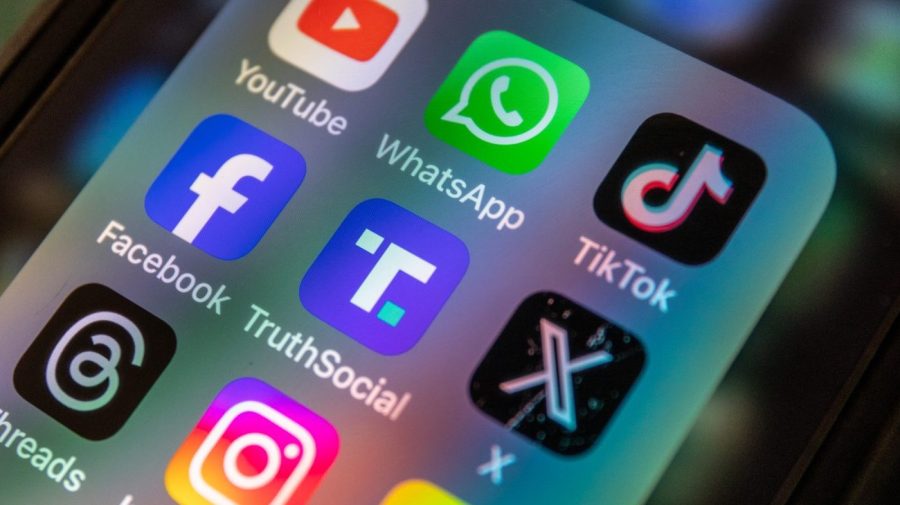
CHICAGO (WGN) In an effort to address the city’s significant $1.2 billion budget deficit, Mayor Brandon Johnson has introduced an unprecedented tax proposal aimed at social media companies. This initiative sets Chicago apart as the first U.S. city to consider such a measure.
“We already impose taxes on harmful addictions like nicotine and tobacco, so it’s high time we apply similar principles to social media companies,” Johnson stated.
The suggested tax would require social media platforms to contribute 50 cents monthly for each active user, although the initial 100,000 users would be exempted. City authorities project this tax could raise $31 million annually, which would be allocated toward enhancing crisis response services and developing city-operated mental health facilities.
Despite its potential benefits, the proposal has encountered skepticism, particularly from members of the City Council and legal analysts.
“You’ve acknowledged that we would be pioneering this approach nationwide. How certain are we about the city’s legal authority to impose such a tax?” inquired Alderman Brendan Reilly of the 42nd Ward during a council session on Tuesday.
“Our discussions with the Department of Law suggest we have a robust legal foundation to implement this tax through the amusement tax framework,” explained budget director Annette Guzman.
But legal experts say the tax would not hold up in court.
“On its face, frankly it’s unconstitutional,” said Amy Bos, Vice President of Government Affairs at the trade association NetChoice, whose members include Meta and Snapchat.
Bos pointed to a 1983 Supreme Court ruling that she says supports that view.
“The court ruled you cannot single out media for special tax treatment, and that’s what Chicago is doing here,” Bos said. “The city can tax businesses broadly, but the moment they pick out specific media companies, it becomes constitutionally suspect. They’re going to have to find this money from somewhere else because it simply won’t survive the inevitable legal challenge.”
But Johnson defended his proposal, saying this is just modernizing the amusement tax.
“The amusement tax already exists, and so I would not put something forward if I didn’t think we had the ability to stand the test of any challenge,” he said.
If approved as part of the mayor’s budget, the social media tax would take effect Jan. 1.
“This shows that Chicago, as always, is a leader,” Guzman said.