
Share this @internewscast.com
BOGOTA – In a groundbreaking legal move, the relatives of a Colombian man have lodged the first official objection to U.S. military actions targeting suspected drug trafficking vessels. Their petition to the leading human rights organization in the Americas claims his death was an extrajudicial killing.
The family of Alejandro Carranza argues that the military’s bombing of his fishing vessel on September 15 violated international human rights standards. This incident occurred as he navigated the waters off Colombia’s Caribbean coastline. The Inter-American Commission on Human Rights received their complaint on Tuesday. Although the Trump administration has expressed support for the commission’s efforts, the U.S. does not acknowledge the jurisdiction of its associated international court, rendering any potential recommendations from the petition non-binding.
Daniel Kovalik, the family’s lawyer, stated that Carranza’s spouse and four children are seeking compensation, as he was the family’s primary provider. He noted that the commission was approached due to the challenges inherent in pursuing a federal case, though this option remains under consideration.
“The U.S. often evades accountability, so we are utilizing the channels available to us,” Kovalik remarked on Wednesday. “We believe that a favorable decision, along with public pressure, could secure the compensation we seek and potentially put an end to such killings in the Caribbean region.”
The complaint stems from a series of military strikes
Since early September, the U.S. military has conducted operations resulting in over 80 deaths, targeting vessels allegedly transporting drugs to the United States. Initially focused on the waters off Venezuela’s Caribbean coast, these operations have since extended into the eastern Pacific Ocean.
The U.S. also has built up its largest military presence in the region in generations, which many see as part of a strategy to pressure Venezuelan President Nicolás Maduro to resign.
The Trump administration has not provided any details of the people killed in the strikes, but it has insisted that its intelligence confirmed that members of foreign terrorist organizations were operating the targeted vessels.
The U.S. military’s Sept. 15 strike killed three people. Asked at the time what proof the U.S. has that the vessel was carrying drugs, President Donald Trump told reporters that big bags of cocaine and fentanyl were spattered all over the ocean. However, images of what Trump described were not released by the military or the White House.
Kovalik denied that Carranza’s boat was carrying drugs and said he did not know if other people were on the vessel. Kovalik, who is also representing President Gustavo Petro in the U.S. after the Trump administration imposed sanctions on him, said he met the Carranzas at their home in northern Colombia.
Petro, the leftist leader of a traditional U.S. ally, has called the boat attacks “murders,” questioning the disproportionate use of force.
Family says its received threats after allegations
The petition cites as evidence of Carranza’s killing stories from The New York Times and The Washington Post regarding the family’s allegations and statements by U.S. Secretary of Defense Pete Hegseth. It also says the family has received threats since Carranza’s death.
“The victims do not have adequate and effective resources in Colombia to obtain reparations … moreover, even if such resources existed, the victims could not exercise them safely, given that they have been threatened by right-wing paramilitaries simply for denouncing Mr. Carranza’s murder,” according to the petition, which was first reported by The Guardian.
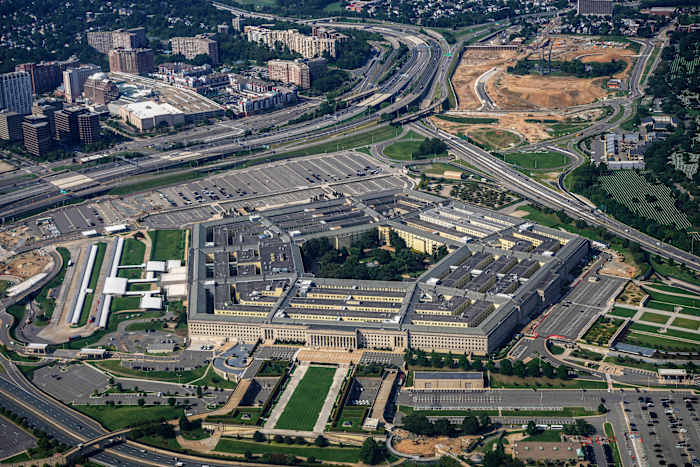
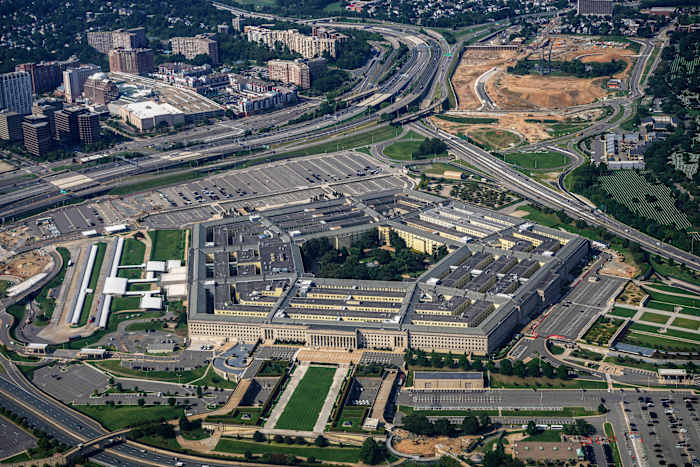
The Pentagon did not immediately respond to a request for comment about the complaint.
The attacks have increasingly come under scrutiny after the Washington Post reported that Hegseth issued a verbal order to “kill everybody” on the first boat targeted by the military and an admiral approved a follow-on strike said to have killed two survivors of the initial hit. Hegseth has said the admiral “made the right call” and he “had complete authority to do” so.
Trump on Tuesday said the U.S. would start doing strikes on land soon, though he didn’t specify where and said attacks might occur in countries besides Venezuela, suggesting Colombia.
“You know, the land is much easier, much easier. And we know the routes they take,” Trump said to reporters. “We know everything about them. We know where they live. We know where the bad ones live. And we’re going to start that very soon, too.”
Later, when asked to elaborate, Trump said he was speaking about countries that are manufacturing and selling fentanyl or cocaine. The president said he heard that Colombia is manufacturing cocaine and selling it to the U.S. Colombia is the world’s top cocaine producer.
“Anybody that’s doing that and selling it into our country is subject to attack,” Trump said. He added a few moments later, “Not just Venezuela.”
___
Garcia Cano reported from Caracas, Venezuela.
Copyright 2025 The Associated Press. All rights reserved. This material may not be published, broadcast, rewritten or redistributed without permission.