
Share this @internewscast.com
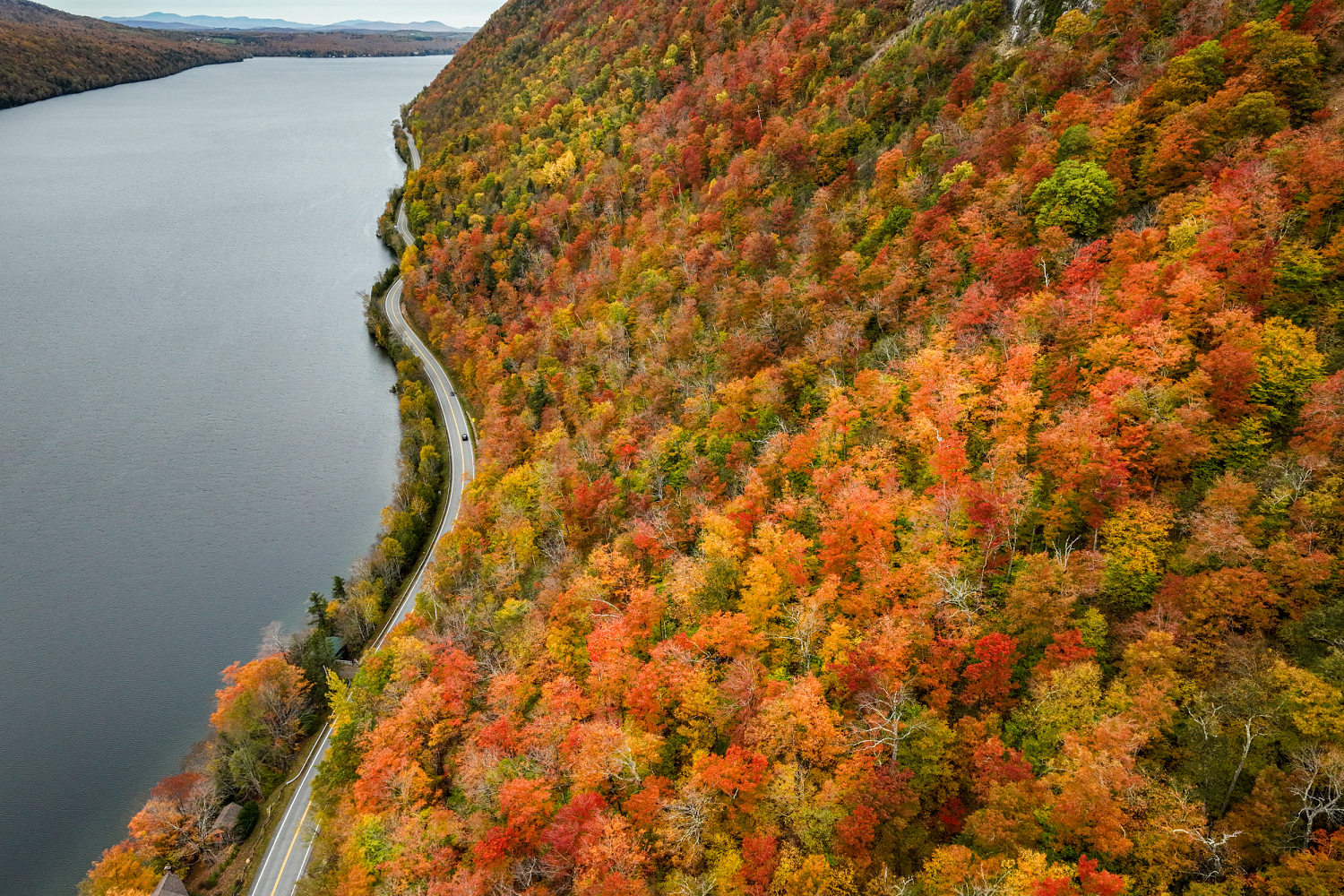
This autumn, the renowned foliage display in New England may not be as prolonged as enthusiasts would like. Following a summer marked by drought and inconsistent rainfall, specialists anticipate that the fall colors will show up sooner, shine brightly, but fade more rapidly than normal.
Capturing the timing of this natural spectacle is important beyond just snapping picturesque photos. Annually, millions flock to New York, Vermont, Massachusetts, New Hampshire, and Maine to enjoy hiking, driving, and wandering beneath the vibrant trees, contributing approximately $8 billion to the regional economies, as per the U.S. Forest Service.
This year, however, experts suggest the signature display will be more erratic, with intermittent splashes of color taking the place of the usual extended waves of red, orange, and gold hues.
A ‘bright, brief and early’ season
Jim Salge, who forecasts fall foliage for Yankee Magazine, expects the transformation to be “bright, brief, and early.” In fact, some leaves are already turning brown and falling off without displaying their vivid hues.
“Typically, we observe a progression of color change starting from the north, moving inland, and heading uphill to the southern and coastal areas. This year, though, we anticipate a more inconsistent pattern as stressed trees begin changing early,” Salge explained.
Trees become “stressed” when they lack sufficient water, which disrupts photosynthesis — the process that converts sunlight into energy. On the other hand, excessive water can drown their roots.
Salge recommends traveling to Vermont’s White Mountains, Maine’s western ranges, southern New Hampshire and northern Massachusetts, where stressed trees may hold up better than more drought-stricken forests farther north.
Peak color is expected late September at higher elevations, shifting to Vermont, New Hampshire and western Maine in early October, about a week earlier than usual.
“The nice thing about New England is if you miss it, you can always move further south,” he said. “If you’re too early, just you just go north or up the hills into the mountains.”
Travelers can track the foliage with tools such as Yankee Magazine’s Peak Foliage Map and I Love NY’s weekly reports.
Why foliage is shifting
Although climate change has generally delayed fall in recent decades, this year’s dry summer is pushing the timeline up.
“Ideally, what’s good for a forest is to have mild events of rain that are broadly distributed during the course of the year,” said Mukund Rao, an assistant research professor at Columbia University’s Lamont-Doherty Earth Observatory. “But if you have an extreme storm, a month without rain, and then another extreme storm, it’s too quick for the water to soak in.”
Vibrant foliage colors thrive on warm days and cool nights, but warmer evenings and stressed trees accelerate leaf drop. Unhealthy or stressed trees also tend to have shorter transitions and duller leaves, Rao said. In contrast, trees in urban areas often hold color longer because buildings and pavement retain heat, while street lamps provide extra light.
Other threats include tree fungus from heavy spring rains and beech leaf disease, which has been killing off glowing late-season beech trees.
“We’re seeing a lot of invasive insects that are changing our forests, killing whole species of trees again, as well as invasive plants that are disrupting the pattern of reforestation and succession,” Salge said.
Tracking change
To make predictions, Salge relies on weather forecasts and phenological data, or the tracking of seasonal life cycles.
One unusual source: Polly’s Pancake Parlor in Sugar Hill, New Hampshire, which has tracked local foliage since 1975. Its records show peak color arrived for two weeks in late September of that year, but in 2024 shifted to only two days in early October.
The USA National Phenology Network also collects and shares observations and data nationwide. Its Nature’s Notebook app enlists volunteers to log seasonal changes, data that has powered more than 200 scientific studies according to Theresa Crimmins, the organization’s director.
“We have a kind of general understanding of the nature,” Crimmins said. “When it comes down to individual species in specific locations, there’s a lot actually that we don’t know.”
A revamped version of the app launching this spring will allow users to upload photos, even for one-time observations.
“The world needs more people observing and becoming citizen scientists,” Salge said. “Their view of the world is data.”