
Share this @internewscast.com
NEW YORK – The financial markets have experienced a shaky start to the year, with the first two months marked by uncertainty. However, the situation took a dramatic turn with the onset of a new conflict.
The price of Brent crude oil has surged past $100 per barrel for the first time since the summer of 2022, causing gasoline prices to skyrocket. This comes after a prolonged period during which oil prices remained relatively stable, fluctuating between $60 and $70.
At the beginning of 2026, global stock markets were primarily concerned with the implications of artificial intelligence—debating whether companies were overinvesting in AI and which industries might face obsolescence due to the technology. Previous issues, such as President Donald Trump’s controversial remarks about acquiring Greenland from the European Union, have faded into the background. Now, investor focus has shifted to the duration and economic impact of the ongoing war in Iran, potential inflation spikes, and their ramifications for the global economy, leading to volatile swings in indexes like the S&P 500.
The conflict has complicated the Federal Reserve’s stance on interest rates. This year, the Fed has maintained steady rates after making three cuts at the end of the previous year. Reducing rates further could stimulate economic growth but might exacerbate inflation. Conversely, keeping rates high could help curb inflation but might also hinder economic expansion.
Here’s a closer examination of the market fluctuations observed in March:
Oil
Oil prices have been dictating the U.S. stock market’s sharp swings since the Iran war began. Brent crude, the benchmark for about three-quarters of global crude oil, has shot from roughly $70 per barrel to as high as $119 at times. Investors have flipped back and forth between hopes for a fairly quick end to the war and worries that a prolonged conflict will keep oil and natural gas from the Persian Gulf out of global markets, which could create a brutal blast of inflation.
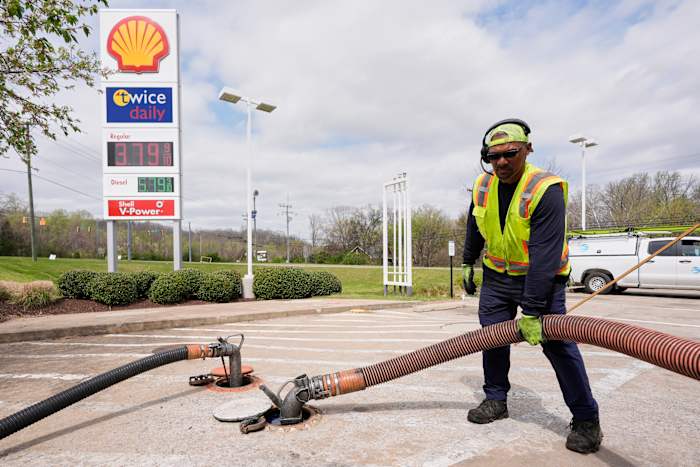
As February came to a close, drivers in many parts of the U.S. were paying under $3 for a gallon of gas. As of Tuesday, the nationwide average had topped $4 for the first time since 2022.
The jump in diesel, used in many freight and delivery trucks, is more pronounced, with the average for a gallon now $5.45, up from about $3.76 a gallon before the war began, according to AAA.
“Americans (are) spending hundreds of millions of dollars more on gasoline every day,” said Patrick De Haan, the head of petroleum analysis at fuel-tracking service GasBuddy.
Stocks
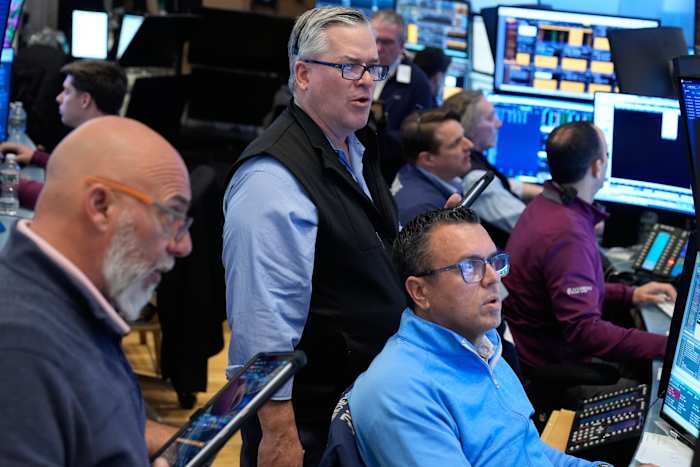
The U.S. stock market came into 2026 coming off three straight years of strong gains. Many international markets outpaced it in 2025 after trailing behind for a few years.
With a drop of nearly 4.6%, the S&P 500 had its worst quarterly performance since 2022. The Nasdaq composite, with a heavy allotment of technology stocks, on Thursday closed down more than 10% from the all-time high it set in October, a steep-enough fall that professional investors call it a “correction.”
Not surprisingly, energy stocks have been among the best performers in the S&P 500 for the month and the quarter. Exxon Mobil had its largest quarterly gain, according to FactSet. Other strong performers include Occidental Petroleum and Valero Energy.
Perhaps it’s fitting that the stock market ended the month with another outsized move, this time to the upside on renewed hopes the war could end sooner than later. Such hopes, though, have built up and then vanished quickly several times already so far during the war.
Bonds
Typically investors flock to bonds and other safe-haven assets when a global event threatens the economy. But in this case, the chance of a spike in inflation due to the surge in oil prices has caused a sell-off in bonds and a corresponding jump in their yields.
The yield on the 10-year Treasury was at just 3.97% in late February but ballooned as high as 4.44% before falling back a bit. That surge has helped push up rates for mortgages and other loans for U.S. households and businesses. Traders now see just a slim chance that the Fed will cuts rates even once this year.
Uncertainty reigns
What comes next is hard to predict. President Donald Trump has pivoted between talk of ending the war and threats of escalating it to target Iran’s energy infrastructure. The Iranians have downplayed Trump’s claims of progress in diplomatic talks.
Iran maintains a stranglehold on the Strait of Hormuz, the waterway leading out of the Persian Gulf through which a fifth of the world’s oil is transported during peacetime. As long as that remains the status quo, analysts expects oil and stock markets to continue to experience heightened volatility.
Copyright 2026 The Associated Press. All rights reserved. This material may not be published, broadcast, rewritten or redistributed without permission.