
Share this @internewscast.com

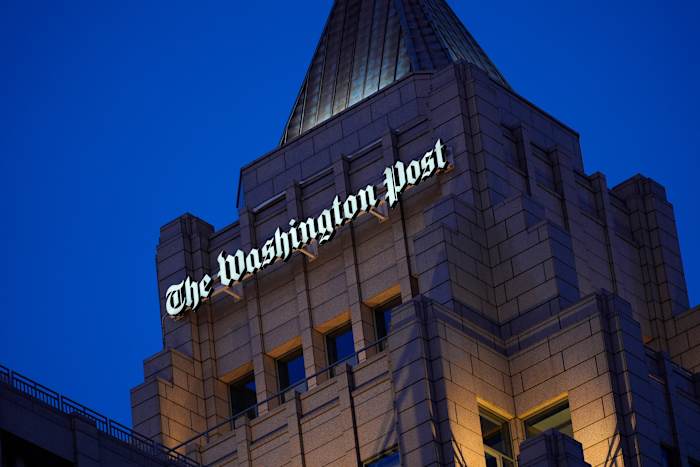
WASHINGTON – A magistrate judge has ruled that federal officials cannot conduct an unchecked and broad search of electronic devices seized from a Washington Post journalist’s home in Virginia. This decision comes as part of an investigation into claims that a Pentagon contractor unlawfully leaked classified information to the reporter.
U.S. Magistrate Judge William Porter announced he will personally examine the materials from reporter Hannah Natanson’s devices, rather than allowing a Justice Department “filter team” to do so. In his decision, Porter emphasized the balance between protecting Natanson’s free speech rights and the government’s responsibility to secure sensitive national security data.
“Seizing the entirety of a reporter’s electronic work tools, pivotal to their journalistic endeavors, constitutes a limitation on First Amendment freedoms,” he stated in his ruling.
This case has garnered widespread attention, particularly from advocates of press freedom, who argue that it signifies a more assertive approach by the Justice Department in leak investigations involving the press.
During a search of Natanson’s Alexandria, Virginia home on January 14, federal agents confiscated a phone, two laptops, a recorder, a portable hard drive, and a Garmin smartwatch. Previously, Judge Porter had temporarily halted the government from examining any data from these devices, a restriction that Tuesday’s order has now extended.
“The Court sincerely hopes that this search was executed — as the government asserts — to collect evidence for a specific criminal case, rather than to obtain information about confidential sources from a journalist known for publishing articles critical of the administration,” Porter expressed.
The Post sought an order requiring the government to immediately return the devices to its reporter, but Porter denied that request. He said it is reasonable for the government to keep nothing more than the “limited information” responsive to the search warrant. The rest of the contents must be returned to Natanson, he ruled.
Allowing the government to search a reporter’s work material, including unrelated information from confidential sources, “is the equivalent of leaving the government’s fox in charge of the Washington Post’s henhouse,” Porter wrote.
Pentagon contractor Aurelio Luis Perez-Lugones was arrested on Jan. 8 and charged with unauthorized removal and retention of classified documents. Perez-Lugones is accused of taking home printouts of classified documents from his workplace and later passing them to Natanson.
The newspaper’s attorneys accused authorities of violating legal safeguards for journalists and trampling on Natanson’s First Amendment rights.
Justice Department attorneys argued that the government is entitled to keep the seized material because it contains evidence in an ongoing investigation with national security implications.
The FBI began investigating after the Post on Oct. 31 published an article containing classified information from an intelligence report, according to the government. The Post reporter co-wrote and contributed to at least five articles that contained classified information provided by Perez-Lugones, authorities said.
Natanson has been covering Republican President Donald Trump’s transformation of the federal government. The Post published a piece in which she described gaining hundreds of new sources from the federal workforce, leading one colleague to call her “the federal government whisperer.”
The Post says the seized material spanned years of Natanson’s reporting across hundreds of stories, including communications with confidential sources.
The Justice Department has internal guidelines governing its response to news media leaks. Last April, Attorney General Pam Bondi issued new guidelines restoring prosecutors’ authority to use subpoenas, court orders and search warrants to hunt for government officials who make “unauthorized disclosures” to journalists.
The new guidelines rescinded a policy from Democratic President Joe Biden’s administration that protected journalists from having their phone records secretly seized during leak investigations.
Perez-Lugones, 61, of Laurel, Maryland, has remained jailed since his arrest. He held a top-secret security clearance while working as a systems engineer and information technology specialist for a government contractor.
Investigators found phone messages between Perez-Lugones and the reporter in which they discussed the information that he provided, authorities said. “I’m going quiet for a bit … just to see if anyone starts asking questions,” Perez-Lugones wrote after sending one of the documents, according to the government.
Copyright 2026 The Associated Press. All rights reserved. This material may not be published, broadcast, rewritten or redistributed without permission.