
Share this @internewscast.com

ATLANTA – In the digital age, Millennial and Generation Z Christian influencers are stepping up to fill a noticeable gap in American religious discourse. By engaging with young audiences across various online platforms, these influencers are guiding their followers to explore biblical perspectives on challenging questions that traditional Sunday sermons often overlook.
“I aim to be that bridge,” says Megan Ashley, 35, while seated comfortably on a couch in her casual attire, ready to dive into another recording session for her “In Totality” podcast. “I offer practical advice throughout the week, helping you feel connected and not alone in your spiritual journey.”
These influencers, hailing from diverse backgrounds, openly discuss a wide range of topics, from personal anxieties and doubts to cultural issues and relationships, all while exploring the intricacies of the Bible. For many believers, these digital faith leaders are reinvigorating young people’s search for meaning, especially in a cultural landscape where traditional church attendance has waned.
“What they offer is an accessible truth that can transform lives,” states Lecrae Moore, a well-known Christian rapper and podcaster. “There’s something happening on a deeper, even supernatural level, that defies explanation.”
Both Ashley and Moore, along with several other influential figures who shared their insights for this article, stress their commitment to being non-denominational in their approach. Whether formally trained in theology or not, they see themselves as active church participants who resist being confined by traditional labels.
While some of these influencers were raised in religious environments, others found their spiritual awakening later in life, often spurred by personal struggles or a sense of emptiness attributed to secular living. Their collective experiences resonate strongly with their audiences, offering a fresh perspective on faith in today’s world.
“We’re like, listen, we’re two mess-ups too. It’s OK,” said Arielle Reitsma, 36, co-host of podcast “Girls Gone Bible,” which gets more than a million listens or streams each month.
Connecting online, and in person
These algorithm-savvy podcasters fit comfortably in a long tradition of Christian celebrities, said Zachary Sheldon, a Baylor University lecturer on media, religion and culture who cited televangelist Billy Graham as an example. Working independently, they can harness audiences more easily than established congregations and media organizations can.
“Exposing people to the faith and challenging them to ask questions and search for something more” are really good things to do, Sheldon said. But he pointed to “potential dangers in granting them too much authority on the basis of their celebrity and their acumen with social media.”
These influencers encourage church attendance and describe reaching a variety of people, including those who have been particularly disconnected from religion, which polls show is a growing number of young Americans. Only 41% of people ages 18-35 surveyed in 2023-24 said they believe in God with certainty, down from 65% in 2007, according to the Pew Research Center.
“People are spiritually hungry, emotionally hungry, and I think for the first time ever … people are encountering Jesus even through online platforms, and they’re realizing, this is true life and fulfillment,” said Angela Halili, 29, Reitsma’s co-host.
The pair now draws live crowds since starting the podcast more than two years ago. At an event in Atlanta, they warned hundreds of fans against idolizing work or relationships, Bibles in hand, and recounted their days as Hollywood actors battling addiction, heartbreak and mental health disorders. Halili said God brought them “radical healing,” and they want listeners to know that God can perform “miracles” in their lives, too.
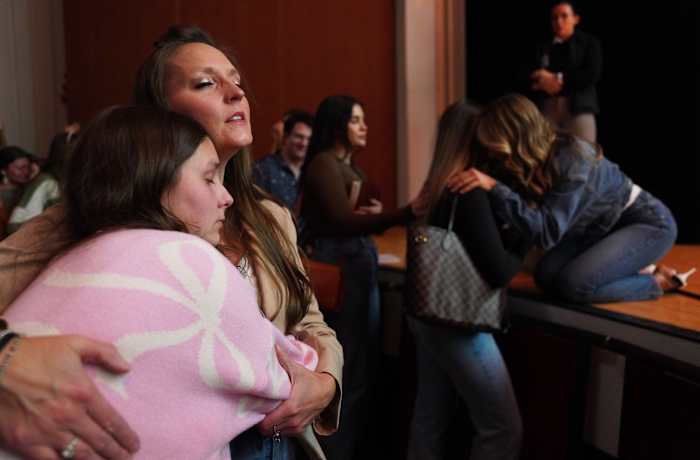
Afterward, they hugged and prayed for people in the audience, where Anna Williams, 17, said she considers both Reitsma and Halili to be “a big sister” in her life.
They say Christian life isn’t easy, but it’s worth it
Even as they espouse biblical principles as guidance toward true joy, influencers say that being Christian can be hard.
God “does make everything better, but that doesn’t always come in the way that we think it’s gonna come,” said “In Totality” host Ashley.
Her current obsession, which she teaches with fervor, is a biblical passage about living as a sacrifice. God asks people to give up certain wants and behaviors so they can grow closer to him, Ashley says. She said her intensity grew after a healing encounter with God’s “severity” as a freshly divorced single mom plagued by suicidal thoughts and depression.
Bible passages, day-to-day plights and heavier challenges are covered on “With the Perrys,” a podcast led by husband and wife authors and spoken-word artists who also run a streetwear brand.
“It is the all — how do we do all of this stuff in this weird flesh and weird world?” said Jackie Hill Perry, 36.
She is an admired speaker who is working towards her seminary degree and wrote a book about leaving behind same-sex relationships. She and husband Preston Perry, 39, started podcasting in 2019. Followers already resonated with Perry’s theological debates and story of growing up around poverty and violence before finding faith and becoming a Christian evangelist.
“God calls us to ruffle feathers sometimes, to speak to culture,” Perry said.
In a recent episode, the Perrys urged listeners to be honest with God about struggling to trust him. Through focused prayer, obedience and Bible reading, God brings lasting peace, answers and growth during hard circumstances, they say, but this requires more than quick fixes like scrolling and sex.
At just 22, Bryce Crawford teaches Bible chapters on his self-named podcast and posts videos of himself talking to people about Christianity at Pride parades, the Burning Man counter-culture festival and a satanic temple.
Rather than shout “repent,” Crawford’s street evangelism aims to change minds through kindness. His followers say they’re attracted by his empathetic yet bold demeanor while delivering talking points against lifestyles such as same-sex marriage.
“My issue with ‘repent or burn in hell’ is that people get frustrated because they don’t know why you’re telling them that,” said Crawford, who describes being severely anxious and bitter toward God until God healed him at a Waffle House. “Our tactics have been one-on-one conversations, calmly listening, asking questions because we care about them, and in that explaining our worldview.”
The challenges of online Christianity
These influencers acknowledge that online Christianity has its challenges.
A hyperfocus on online drama and Christianity’s more esoteric beliefs can miss the basics, such as love and Christ’s sacrifice, Hill Perry said. She worries that “simply talking about gentleness or respect or kindness or patience is gonna be boring” to people.
And the deep political and cultural rifts among Christians emerge online too.
For example, Halili and Reitsma got pushback for taking the opportunity to pray at a pre-inauguration rally for President Donald Trump. The Perrys have been criticized by conservatives for talking about police brutality and racial injustice, and liberals for expressing opposition to same-sex marriage and abortion.
Some followers say these influencers provide a welcome alternative to the buttoned-up pastors they grew up with who spoke of God as a faraway deity that would reject them for breaking too many rules.
“I really needed someone who was a younger Black female portraying something that wasn’t super traditional,” said Olivia Singleton, 24. She’s involved with her church and likes her pastor, but feels like these influencers are like “one of the girls … walking out the faith with you.”
___
Kramon is a corps member for The Associated Press/Report for America Statehouse News Initiative. Report for America is a nonprofit national service program that places journalists in local newsrooms to report on undercovered issues.
___
Associated Press religion coverage receives support through the AP’s collaboration with The Conversation US, with funding from Lilly Endowment Inc. The AP is solely responsible for this content.
Copyright 2025 The Associated Press. All rights reserved. This material may not be published, broadcast, rewritten or redistributed without permission.