

WASHINGTON – In a significant shift in admissions priorities, some of the nation’s most esteemed universities are welcoming an unprecedented number of low-income students. This initiative is gaining traction, particularly in the wake of diminishing affirmative action policies.
While wealth continues to dominate the landscape of elite American campuses, several institutions are making conscious efforts to broaden their reach. They are increasingly targeting urban and rural regions and providing free tuition to students from lower-income families. This approach aims to create a more diverse student body, both economically and geographically.
This proactive recruitment strategy, however, may stir tensions with the federal government. The Trump administration has previously withdrawn funding from prestigious colleges due to various disputes and has implied that prioritizing low-income students might be legally questionable. Despite this, university leaders are confident that their initiatives adhere to legal standards.
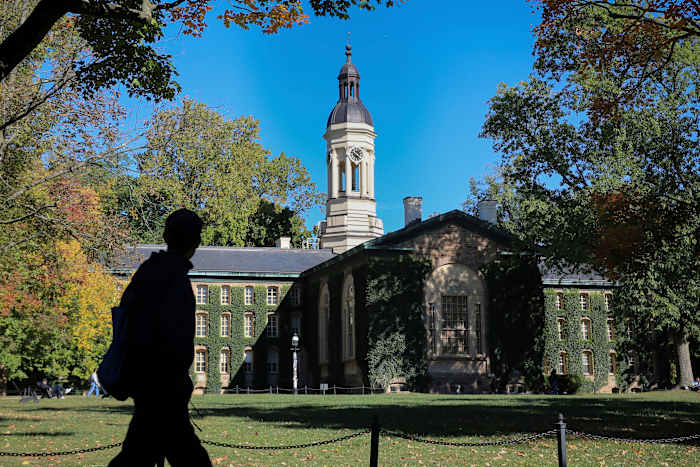
Princeton University stands at the forefront of this movement, with this year’s freshman class comprising a record number of low-income students. Notably, one in four of these students qualify for federal Pell grants, a scholarship designed for those with significant financial need. This marks a dramatic increase from two decades ago, when fewer than 10% of students were eligible.
“The only way to increase socioeconomic diversity is to be intentional about it,” stated Princeton President Christopher Eisgruber. “Socioeconomic diversity will increase if and only if college presidents make it a priority.”
In response to the Supreme Court’s decision to eliminate affirmative action in higher education, Princeton has set ambitious targets to draw more low-income students. By focusing on economic diversity, university officials argue that they can tap into their greatest potential for attracting a broad spectrum of talented individuals.
The country’s most selective colleges still enroll large proportions of students from the wealthiest 1% of American families. Many of those campuses have tried for years to shed reputations of elitism, with only gradual changes in enrollment.
Colleges set records for enrollment of low-income students
Only a small fraction of the nation’s colleges have publicly disclosed their low-income enrollments this year, and national data won’t be released by the federal government until next year. But early numbers show a trend.
At 17 highly selective colleges that have released new data, almost all saw increases in Pell-eligible students between 2023 and this year, according to an Associated Press analysis. Most saw increases in consecutive years, and none saw a significant decrease in aggregate over the two years.
Yale, Duke, Johns Hopkins and the Massachusetts Institute of Technology all have set enrollment records for Pell-eligible students in the past two years.
Part of the uptick owes to a federal expansion that made more students eligible for Pell grants last year. But campus leaders also believe the increases reflect their own efforts.
The numbers in MIT’s freshman class have climbed by 43% over the past two years, and low-income students account for more than a quarter of this year’s class. MIT officials cited its policy providing free tuition for families that earn less than $200,000 a year.
“MIT has always been an engine of opportunity for low-income students, and we are dedicated to ensuring we can make an MIT education accessible for students from every walk of life,” Stu Schmill, MIT’s dean of admissions, said in a statement.
Nationwide, roughly a third of undergraduate students have received Pell grants in recent years.
Two years ago, Amherst College in Massachusetts made tuition free for students in the bottom 80% of U.S. earnings. It also started covering meals and housing for those below the median income, and it stopped prioritizing children of alumni and donors in admissions decisions. Since then, low-income enrollment has risen steadily, reaching 1 in 4 new students this year.
At the same time, the admissions office has stepped up recruiting in overlooked parts of the country, from big cities to small towns.
“When we go out and talk to students, it’s not in the fanciest ZIP codes,” said Matthew McGann, dean of admissions. “It’s in places where we know there’s a lot of talent but not a lot of opportunity.”
Racial diversity does not necessarily follow economic diversity
On many campuses, officials hoped the focus on economic diversity would preserve racial diversity — Black, Hispanic and Indigenous Americans have the country’s highest poverty rates. But even as low-income numbers climb, many elite campuses have seen racial diversity decrease.
Without the emphasis on income, those decreases might have been even steeper, said Richard Kahlenberg, a researcher at the Progressive Policy Institute who advocates for class-based affirmative action. He called the latest Pell figures “a significant step in the right direction.”
“Economic diversity is important in its own right,” he said. “It’s important that America’s leadership class — which disproportionately derives from selective colleges — include people who’ve faced economic hardships in life.”
Swarthmore College saw the most dramatic leap in Pell enrollment, jumping from 17% to 30% last year.
While many campuses were delaying scholarship decisions until the government resolved problems with a new financial aid form, Swarthmore used other data to figure out applicants’ financial need. That allowed Swarthmore to offer scholarships to students while they were still awaiting decisions from other schools.
More financially disadvantaged students ended up enrolling at Swarthmore than officials expected. College leaders also credit their work to reduce campus costs — laundry is free and students get yearly credits for textbooks, for example.
Yet Swarthmore saw its Black enrollment fall to 5% of its freshman class this year, down from 8% the year before.
“In a race neutral environment, those numbers are likely to drop,” Jim Bock, the admissions dean, said in a statement. “Not all minority students are low-income, and not all majority students have significant financial means.”
The approach risks federal scrutiny
In legal memos, the White House has alleged that prioritizing students based on earnings or geography amounts to a “racial proxy” in violation of the Supreme Court’s 2023 decision against affirmative action.
In a June letter, Trump officials accused the University of California-Los Angeles of “race-based admissions in all but name.” It criticized UCLA for considering factors like applicants’ family income, ZIP code and high school profile.
Colleges often weigh that kind of information in admissions decisions. Yet the Trump administration has declared that the Supreme Court decision outlaws a wide range of long-accepted education practices, including scholarships targeting students in underserved areas.
Already, there are signs of an impact.
Earlier this year the College Board — the nonprofit that oversees the SAT — suddenly discontinued an offering that gave admissions offices a wealth of information about applicants, including earnings data from their neighborhoods.
Kahlenberg and others see it as a retreat in the face of government pressure. The College Board offered little explanation, citing changes to federal and state policy around the use of demographic information in admissions.
___
The Associated Press’ education coverage receives financial support from multiple private foundations. AP is solely responsible for all content. Find AP’s standards for working with philanthropies, a list of supporters and funded coverage areas at AP.org.
Copyright 2025 The Associated Press. All rights reserved. This material may not be published, broadcast, rewritten or redistributed without permission.