
Share this @internewscast.com

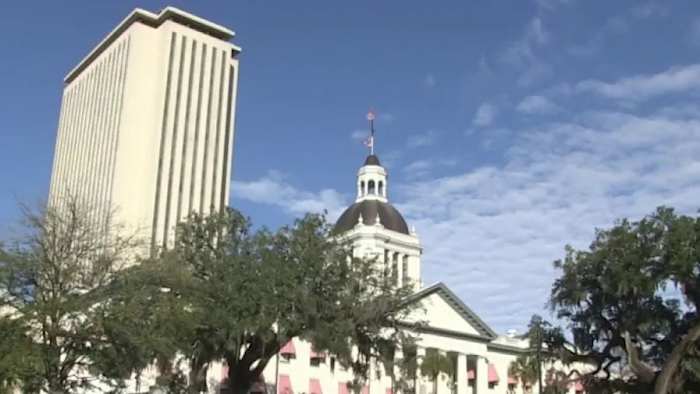
TALLAHASSEE, Fla. – The House has successfully passed its proposed budget of $113.6 billion on Thursday, but House Speaker Daniel Perez has cautioned that discussions with the Senate could become contentious, potentially prolonging the legislative session.
“Today marks a pivotal moment in our session,” remarked Perez, a Republican from Miami, as he addressed members before the budget debate. “The actions we take in the coming days will determine whether our session concludes in three weeks or extends to three months.”
The current session, set to last 60 days, is slated to conclude on March 13. However, last year, the House and Senate were unable to finalize a budget on schedule, resulting in an additional 45-day session to settle disagreements over tax reductions.
Perez suggested that the House is not inclined to yield to Senate demands solely to meet the session’s deadline.
“We are open to dialogue with anyone, at any time, on any subject. We refuse to let personal differences or past grievances hinder our progress,” Perez stated. “However, it’s crucial to understand that we won’t be swayed by arbitrary deadlines. We won’t compromise our integrity for the sake of expedience.”
Meanwhile, the Senate is expected to approve its $115 billion budget proposal on Friday.
For his part, Senate President Ben Albritton, R-Wauchula, said he hadn’t seen Perez’ remarks but wasn’t daunted by the $1.4 billion gap between the chambers’ preferred budgets.
“I was encouraged, quite honestly, to be able to see the side by side of the House’s budget and our budget,” Albritton told reporters Thursday.
The chambers, though, have deep disagreements not just on total spending but whether to put stronger guardrails on how some funds can be spent, or even whether any money should be spent on certain programs.
The House, for example, puts no money towards Florida Forever, the state’s land acquisition and conservation program. But it has $300 million for the Rural and Family Lands program, which provides easements to farmers, allowing them to maintain agriculture activities and protecting the land from future development.
By contrast, the Senate has $35 million for Florida Forever, although the money is limited to easements only, and $200 million for the Rural and Family Lands program.
Another major difference is in K-12 education, where the Senate proposes $29.9 billion and the House has about $300 million more.
The Senate prefers to separate the $4.5 billion in projected costs for private school scholarships from the main funding formula for K-12 public schools, while the House prefers to include the provision in the traditional funding scheme.
For state workers, the Senate has a 3 percent salary increase for all state workers, plus another 2 percent for state law enforcement officers, prison guards, state firefighters and park rangers.
The House plan doesn’t have an across-the-board pay increase for state workers, but has targeted raises for state law enforcement, prison guards, park rangers and state attorneys.