

TALLAHASSEE, Fla. (WFLA) — With the enactment of the Sunshine Genetics Act, Florida has taken a significant step forward in pediatric genetic medicine, positioning itself as a leader in the field. However, lawmakers and advocates emphasize that this marks just the beginning of their efforts.
Following its signing by Governor Ron DeSantis, the legislation introduces a five-year pilot program for newborns. This program allows families to opt into having their baby’s complete genetic code sequenced at no cost to them.
The initiative aims to identify serious but treatable genetic conditions before symptoms manifest, providing families with crucial information and timely access to care, which is vital when timing is critical.
“It’s just a matter of time before that hope is transformed into cures for rare diseases,” said State Representative Adam Anderson (R-Palm Harbor).
Anderson led the bill after losing his son to Tay Sachs disease. He says momentum is already building beyond the state of Florida.
“I’ve already had about half a dozen other states reach out to me. They want to know what’s going on in Florida. They’re excited about the Sunshine Genetics Act, they want to bring the Sunshine Genetics Act to other states,” Anderson said.
“I will tell you; it’s been a rough, it’s been a rough few years,” said Dorothea Lantz, PWSA | USA Director of Community Engagement.
Lantz, a national advocate and mother to a child with a rare disease, says the national fight for better rare disease detection has been difficult, but with the Sunshine Genetics Act, Florida families can expect groundbreaking change.
“I think being able to point to the state of Florida and say, ‘Listen guys, you know we’re working so hard to change rare, and recognize that rare isn’t rare when it affects 30 million Americans’,” said Lantz.
Backers of the initiative acknowledge it opens new doors, but with it comes lingering questions, especially around data privacy.
However, Representative Anderson said Florida already has one of the most protective genetic privacy laws on the books.
“This genetic information is sensitive, we want to make sure that can’t get into the hands of the wrong people, people who may want to use it for harm or profit, that’s not what the Sunshine Genetics Act is about,” Anderson said.
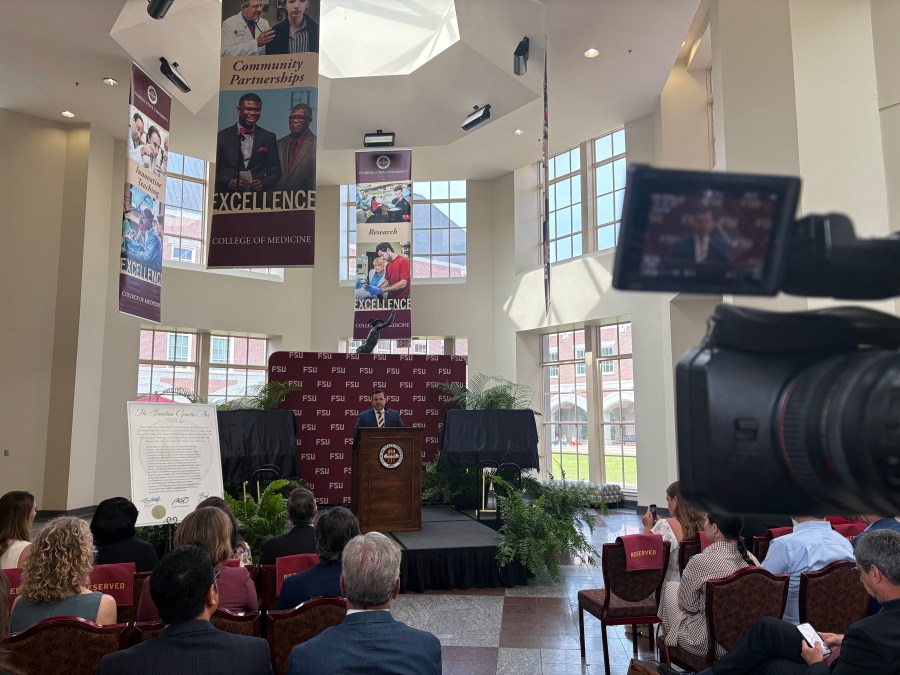
The Act not only jumpstarts the pilot program, but it also establishes the Florida Institute for Pediatric Rare Diseases within the Florida State University College of Medicine and lays the foundation for a new $100 billion genomic medicine industry in Florida.
Other Florida universities, hospitals, and biotech leaders have joined the move, offering hope to families who may have otherwise endured years uncertainty.