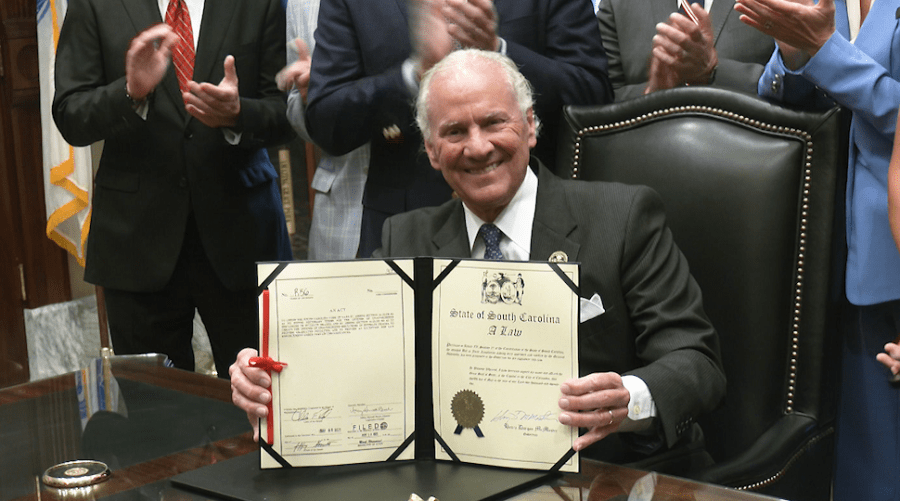


In Columbia, Governor Henry McMaster conducted a ceremonial signing for a law designed to prevent the non-consensual distribution of sexual images, often known as “revenge porn.”
The Disclosure of Intimate Images Act was unanimously approved at the State House, officially criminalizing the malicious and unauthorized sharing of sexually explicit images in South Carolina.
“We received extensive information from individuals regarding their experiences, and we have witnessed tragedies as a result,” McMaster remarked. “While these acts have occurred, they were not previously considered a crime in South Carolina, but now they are.”
This bill makes it clear that receiving a photo from someone does not mean the sender agrees for it to be shared anywhere else.
“I want to continue to just like the other folks appear to, to protect our, not only just our daughters and wives and significant others, but just our sons, too,” Representative Chris Wooten (R – Lexington).
Attorney General Alan Wilson said this law has similarities to other legislation that was passed on a federal and state level. He added that South Carolina lawmakers are still working on bills to protect citizens even further.
“President’s signing of the Take It Down Act, which is a federal counterpart to this state law, and I like our law better because it’s got stiffer penalties,” Wilson said. “But not just this law that the governor signing today that’s going to make it harder or make it better for us to be able to go after people who exploit those using the internet.”
The law said posting or sharing intimate photos could result up to five years in prison, and a $5,000 fine for the first offense.
A second offense could land you behind bars for as long as ten years, with a maximum of $10,000 in fines.
“One thing that we did way back was our state constitution guarantees a right to privacy and uses that word,” McMaster said. “The U.S. Constitution doesn’t use that word. Our constitution does, so we have a basis for these kinds of laws that can’t be challenged.”
South Carolina was the last state in the country to pass this type of law, and lawmakers said this bill finally fills a gap in the state’s privacy laws.


