Share this @internewscast.com

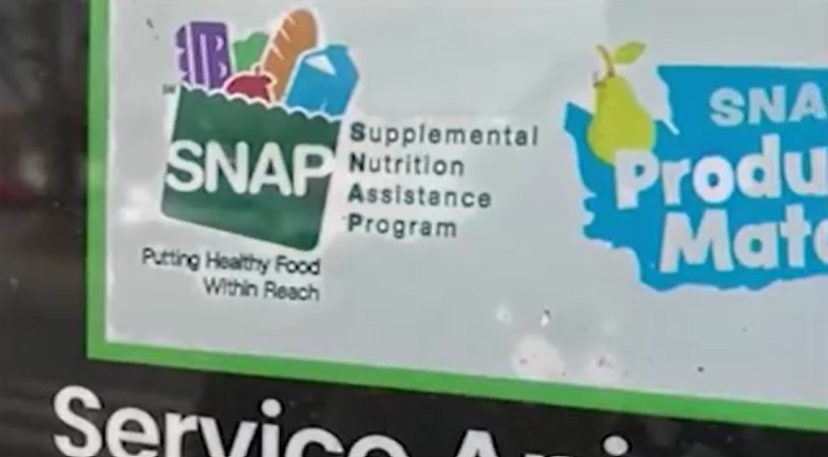
SAVANNAH, Ga. () – President Trump’s “Big Beautiful Bill” designed to reduce taxes and federal spending will additionally entail cuts to initiatives such as the Supplemental Nutritional Assistance Program (SNAP), a crucial program for hundreds of thousands of Georgia households to sustain their families.
The legislation was approved by the United States House of Representatives over a week ago. As it stands, the bill’s current structure would render thousands of Georgians ineligible under the federal criteria to receive SNAP benefits.
“I stay home because I’m disabled, but even with the food stamps I get, I’m still having to pay out of pocket,” said Heather Nelson, whose family depends on SNAP.
Right now, anyone who does not work but has children under the age of eighteen is eligible to receive benefits. Under Trump’s bill, those who do not work would only be eligible to receive SNAP if their children are under eight.
“They’re still growing. They’re actually hungrier than after that age. So, they’re eating more food than normal, especially in summer. So, they’re home all the time,” Nelson said. “Cutting after the age of eight, I think that’s crazy.”
The second major change would be an increase in the age requirement for SNAP for older adults. People who don’t or can’t work wouldn’t be eligible to receive SNAP until 64, instead of the current age of 54.
“It takes about 300 billion dollars out of SNAP, according to the non-partisan congressional budget office. This is the largest cut to the food assistance program in history,” Alex Jacquez, Chief of Policy and Advocacy at Groundwork Collaborative, an economic policy think tank in Washington, D.C, said.
According to Jacquez, Trump’s “Big Beautiful Bill” shifts some of the cost for SNAP benefits to the states, which could lead to major cuts to the program at the state level.
“These are generally payments that have always been made by the federal government, and they’re instituted in an escalating penalty type of way,” Jacquez said. “Instead of having to actually make the outlays, the choice that these states are going to make is either to cut benefits back or opt out of the SNAP program entirely.”
Trump’s bill will go to the U.S. Senate next and it could be changed or rewritten in any number of ways during that process.
House Republicans said their goal is to get the bill passed in both chambers and signed into law by July 4.