
Share this @internewscast.com
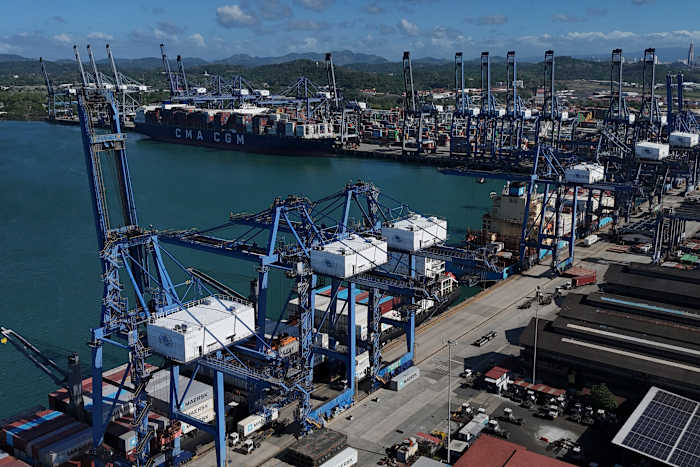
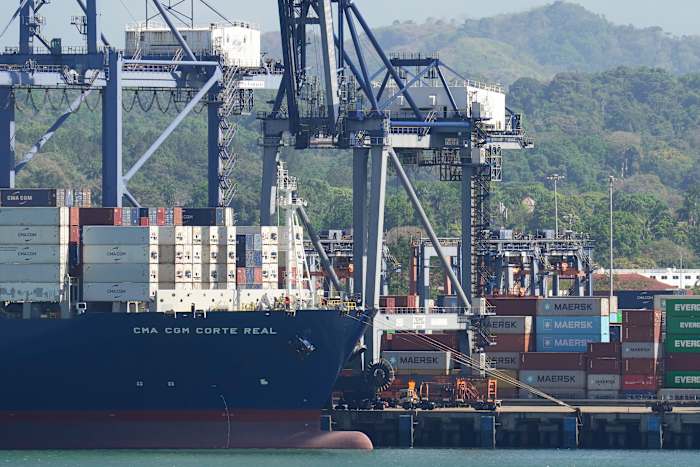
HONG KONG – On Wednesday, CK Hutchison Holdings, a prominent Hong Kong-based conglomerate, announced that its subsidiary has initiated arbitration against Panama. This move comes in response to a ruling by Panama’s Supreme Court, which declared the subsidiary’s concession to manage Panama Canal ports as unconstitutional.
The company expressed strong disagreement with the court’s decision, while China issued a stern warning, suggesting Panama could face significant repercussions if the ruling is upheld. In an effort to reassure the public, Panama’s president stated that port operations would continue smoothly despite the ruling, which aligns with U.S. efforts to limit Chinese influence over this critical waterway connecting the Atlantic and Pacific Oceans.
Hutchison’s subsidiary, known as Panama Ports Company, officially commenced the arbitration process on Tuesday. The proceedings are being conducted under the guidelines of the Paris-based International Chamber of Commerce, according to a company statement.
This arbitration will be overseen by the chamber’s International Court of Arbitration, an autonomous entity. However, the potential outcomes of these proceedings remain uncertain. Requests for comments from the Panamanian president’s office and the commerce ministry went unanswered as of late Tuesday local time.
China’s strong reaction to the court’s decision has added tension to the situation.
The court’s ruling has provoked a strong response from China, potentially complicating Hutchison’s plans to divest its port operations in numerous countries to a consortium that includes the U.S. investment giant BlackRock Inc.
The planned sale has already been caught up in tensions between Beijing and Washington. U.S. President Donald Trump, who has alleged that China interferes with the canal, initially welcomed that plan. However, it apparently angered Beijing and drew a review by Chinese anti-monopoly authorities.
On Tuesday night, Beijing’s office overseeing Hong Kong affairs criticized the Panama court ruling as legally groundless and ridiculous, saying the ruling reflected that Panamanian authorities were bowing down to hegemonic powers. It did not specify the countries but pointed to politicians from some countries who had said they were “encouraged” by the ruling, in an apparent veiled reference to U.S. Secretary of State Marco Rubio.
In a statement shared on social media platform WeChat, the office said that China will never bow to hegemonism and has sufficient means and tools, as well as capability, to uphold justice in the international economic and trade order.
“Panama’s authorities should recognize the situation and correct their course,” it said. “If they persist in their own way and refuse to see reason, they will pay a heavy price both politically and economically!”
A company caught in U.S.-China tensions
The Hutchison subsidiary has operated ports at both ends of the Panama Canal since 1997. The awkward position Hutchison found itself in highlights the challenges Hong Kong business elites face in navigating Beijing’s expectations of national loyalty, especially during U.S-China tension. CK Hutchison is owned by the family of Hong Kong’s richest man, Li Ka-shing.
The company said last July that it was considering seeking a Chinese investor to join as a significant member of the consortium under its sale plan, a move that some interpreted as way to please Beijing, but CK Hutchison hasn’t said more since.
The consortium also includes BlackRock subsidiary Global Infrastructure Partners and Terminal Investment Limited, which is chaired by Italian shipping scion Diego Aponte, whose family reportedly has a longstanding relationship with Li’s.
Last May, Hutchinson co-managing director, Dominic Lai told shareholders that Terminal Investment was the main investor.
Panama’s government has maintained it has full control over the canal and that the operation of the ports by Hutchison does not mean Chinese control of it. But Rubio made clear that the U.S. viewed the operation of the ports as a national security issue.
Copyright 2026 The Associated Press. All rights reserved. This material may not be published, broadcast, rewritten or redistributed without permission.