Share this @internewscast.com
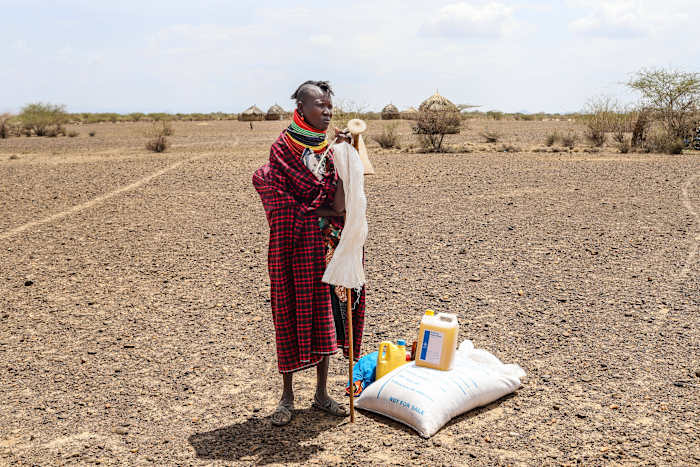
TEL AVIV – Humanitarian organizations are raising alarms as the conflict in the Middle East significantly hampers their ability to deliver essential food and medicine to millions globally. These groups warn that the humanitarian crisis will worsen if the hostilities persist.
The ongoing conflict has not only disrupted crucial shipping routes, sparking a worldwide energy dilemma, but it has also thrown aid supply chains into disarray. As a result, these groups must resort to more expensive and time-consuming alternative routes.
Critical passages such as the Strait of Hormuz are effectively blocked, while strategic locations like Dubai, Doha, and Abu Dhabi are also feeling the impact. This situation has led to skyrocketing transportation costs, driven by increased fuel and insurance prices, thus reducing the amount of aid that can be delivered within the same budget constraints.
The World Food Program reports significant delays, with tens of thousands of metric tons of food stuck in transit. Meanwhile, the International Rescue Committee has $130,000 worth of pharmaceuticals for Sudan held up in Dubai and nearly 670 boxes of therapeutic food for malnourished children in Somalia stranded in India. The U.N. Population Fund is also experiencing setbacks, delaying shipments of vital equipment to 16 countries.
Compounding the issue, steep cuts in U.S. foreign aid have already weakened many aid organizations, and the ongoing conflict is further straining their resources.
The United Nations describes this scenario as the most severe supply chain disruption since the COVID-19 pandemic, with costs increasing by up to 20% and extended delays due to rerouted shipments. The conflict is also triggering new crises, notably in Iran and Lebanon, where over a million people have been displaced.
“The war on Iran and disruption to the Strait of Hormuz risk pushing humanitarian operations beyond their limits,” said Madiha Raza, associate director for public affairs and communications for Africa for the International Rescue Committee.
Even when the fighting stops, the shock to global supply chains could continue to delay lifesaving aid for months, she said.
Longer and more costly routes
The war has forced organizations to find new ways to transport goods, with some bypassing the Strait of Hormuz and the Suez Canal and rerouting vessels around Africa, adding weeks to the delivery.
Others are using a hybrid of methods, including land, sea and air, increasing costs.
Jean-Cedric Meeus, chief of global transport and logistics for UNICEF, said his agency is using a mix of land and air routes to send vaccines to Nigeria and Iran in order to get them there in time for the vaccination campaigns, but the costs have soared.
Before the war, UNICEF sent vaccines to Iran by plane directly from vendors around the world. Now it’s flying the vaccines to Turkey and driving them into Iran, which has increased costs by 20% and has added 10 days to the delivery time, he said.
Save the Children International, which would normally send supplies by ocean freight from Dubai to Port Sudan, will now have to truck the goods from Dubai through Saudi Arabia and then by barge across the Red Sea, it said. The route adds 10 days and increases costs by about 25%, at a time when over 19 million Sudanese face acute food insecurity. The delay puts more than 90 primary health care facilities across Sudan at risk of running out of essential medicines, it said.
The spike in prices also means organizations have to choose what to prioritize.
“In the end, you sacrifice either the number of children that you serve … or you sacrifice the number of items that you can afford to buy,” said Janti Soeripto, president of Save the Children for the United States. The group said it has stockpiles in countries where it works but some of those could run out within weeks.
Rising costs are also impacting people’s ability to seek help within their countries.
Doctors Without Borders said rising fuel prices across Somalia — where some 6.5 million people are experiencing acute food insecurity — have driven up transport and food costs, making it harder for people to get care. In Nigeria, the IRC says fuel prices have surged by 50% and clinics are struggling to power equipment, such as generators and mobile health teams have scaled back operations.
Hunger crisis could deepen
One of the biggest concerns is the impact the war will have on global hunger.
WFP warns that if the conflict continues through June, 45 million more people will be acutely hungry, adding to nearly 320 million people facing hunger around the world.
Some 30% of the world’s fertilizer comes through the Strait of Hormuz and with planting season ahead in areas like East Africa and South Asia, small farmers in poor countries will be hard hit. Sudan imports more than half its fertilizer from the Gulf and Kenya approximately 40% from there, aid groups say.
The U.N. secretary-general has established a task force to facilitate fertilizer trade — modeled on the Black Sea Grain Initiative. But aid groups say that won’t be enough. If there’s no ceasefire, governments need to provide more funding for organizations to respond to the rising costs, they say.
Humanitarian experts say there’s been a slower international response to fund aid during this war compared to previous conflicts like Ukraine, which could reflect growing pressure to invest in security over aid at a time when the world is in turmoil.
“They’re making hard choices between defense security and humanitarian aid,” said Sam Vigersky, an international affairs fellow at the Council on Foreign Relations who has written about the war’s impact on aid.
He said when the U.S. goes to war, it normally has provisions for aid, but hasn’t been “activating” those provisions. “It’s not a capacity issue, it’s a policy decision,” he said.
Tommy Pigott, principal deputy spokesperson for the U.S. State Department, said that the U.S. has been the “most generous country in the world” when it comes to humanitarian aid.
The department said it’s releasing an additional $50 million in emergency assistance to Lebanon, including to the World Food Program and working closely with the United Nations and others to address the humanitarian needs.
—
Associated Press writer Edith M. Lederer contributed from the United Nations
Copyright 2026 The Associated Press. All rights reserved. This material may not be published, broadcast, rewritten or redistributed without permission.