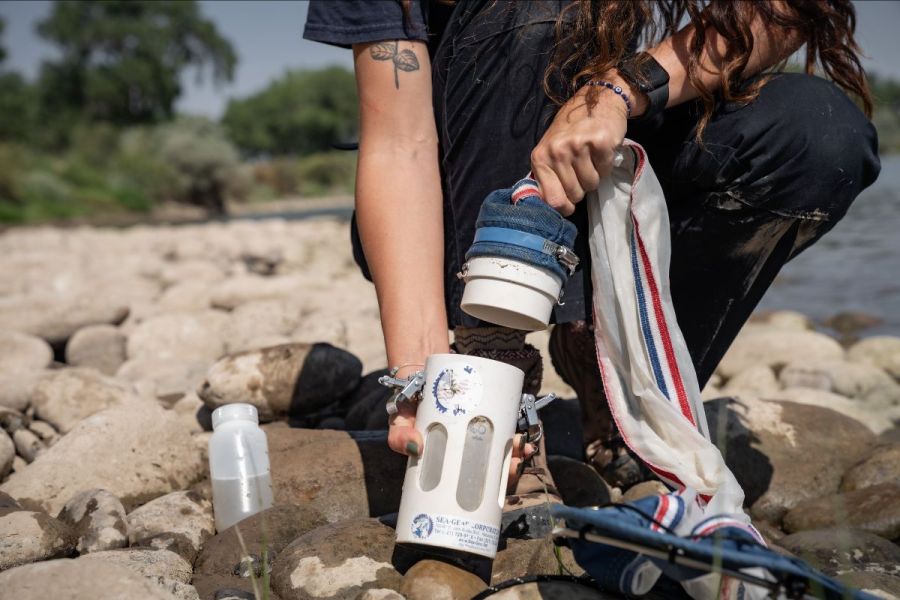

Invasive Species Specialist Maddie Baker holds a plankton tow in her hand.

DENVER (KDVR) Colorado Parks and Wildlife is on the lookout for invasive species in the Colorado River, following the discovery of zebra mussel veligers in the river last July.

The agency said it has begun conducting weekly shoreline and water sampling along sections of the Colorado River between Glenwood Springs and the Utah border as part of increased aquatic nuisance species sampling efforts.

CPW said its ANS technicians along with wildlife officers and state park staff will also be engaged in increased invasive species education efforts during boat launches over the summer between Palisade and Loma.

“When we think of ANS prevention, we often only think about motorized boats and forget about other ways invasive species can be introduced or spread,” said Robert Walters, CPW’s Invasive Species Program Manager, in a statement.

Invasive Species Specialist Maddie Baker holds a plankton tow in her hand.
Invasive Species Specialist Maddie Baker holds a plankton tow in her hand. (Credit: Colorado Parks and Wildlife)

Methods for finding invasive mussels

ANS sampling efforts involve using a fine mesh net to filter plankton from slow-moving water in the Colorado River, according CPW. The water samples are then sent to a lab in Denver where they are evaluated for the presence of mussel veligers.

The agency said its ANS technicians will also conduct shoreline surveys by inspecting surfaces where zebra mussels may attach, such as rocks and other hard surfaces.

CPW ANS Technician tosses a plankton tow into the Colorado River during sampling efforts on Sept. 4, 2024.
CPW ANS Technician tosses a plankton tow into the Colorado River during sampling efforts on Sept. 4, 2024. (Credit: Colorado Parks and Wildlife)

Colorado River users urged to help prevent exposure

Invasive species can be introduced to a river in a number of different ways, according to CPW, including from motorized and hand-launched vessels, such as paddleboards and kayaks, or by anglers.

CPW is encouraging anglers to clean, drain and dry their gear, while those with motorized or hand-launched vessels are asked to do the same for their watercraft.

“By taking the extra time to complete a few simple steps, you can help prevent zebra mussels, or any other invasive species, from spreading to other bodies of water throughout Colorado,” Walters said.

You May Also Like

Asian Markets Slip in Light Holiday Trading Following Wall Street’s Tech-Driven Rally

BANGKOK – Asian stocks moved lower Friday, while markets across Greater China…

ChampionsGate Fraud Scheme Exposed: Affidavit Details That Led to FHP Troopers’ Arrests

CHAMPIONSGATE, Fla. — Two longtime Florida Highway Patrol members have lost their…

Mississippi Police Shooting of 1-Year-Old Boy Fuels Anger and Deepens Rift With Black Community

JACKSON, Miss. — The police shooting of a 1-year-old boy during a…

From Hunted to Hunter: Inside Trump’s Bold Push to Expand Executive Power, New Book Reveals

WASHINGTON — As President Donald Trump pointed out the massive new flagpoles…

JD Vance Rebukes Israeli Critics of Iran Deal, Escalating U.S.-Israel Tensions

TEL AVIV – U.S. Vice President JD Vance sharply criticized figures within…

Kissimmee Triple Murder Suspect’s Competency Hearing Delayed in Osceola County Case

A competency hearing for the man accused of fatally shooting three tourists…

Qantas Targets October Launch for 22-Hour Nonstop London-to-Sydney Flight

Qantas Airways says it will begin operating the world’s longest nonstop commercial…

3 Months After Orlando Rialto Evacuation, Displaced Residents Still Wait for Answers

Community manager says the assessment from engineering continues ORLANDO, Fla. — Three…

Central Florida Heat Advisory Issued as Strong Afternoon Storms Move In

Central Florida is bracing for another sweltering day marked by dangerous heat…

US Jobless Claims Drop to 226,000 as Layoffs Stay Near Historic Lows

WASHINGTON — New applications for unemployment benefits edged lower last week, a…