
Share this @internewscast.com

TOKYO – In a significant move, Japan’s Cabinet has sanctioned an unprecedented defense budget exceeding 9 trillion yen (approximately $58 billion) for the upcoming year. This budget aims to enhance the nation’s retaliatory capabilities and coastal defenses, focusing on deploying cruise missiles and unmanned weaponry amid escalating regional tensions.
The proposed budget for the fiscal year 2026, commencing in April, represents a 9.4% increase from the previous year. It is part of Japan’s strategic five-year initiative to double its annual defense expenditure to constitute 2% of the country’s gross domestic product.
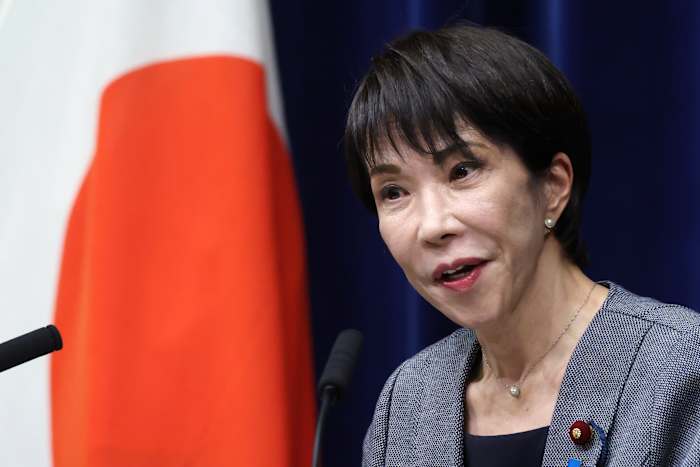
This budget escalation is largely driven by mounting tensions with China. In November, Japanese Prime Minister Sanae Takaichi indicated that Japan’s military might play a role if China acts against Taiwan, which China insists should be under its jurisdiction.
In response to U.S. encouragement to bolster military spending, Takaichi’s administration vowed to hit the 2% GDP defense spending target by March, ahead of the original schedule. Additionally, Japan plans to update its security and defense policies by December 2026 to further enhance its military strength.
Japan is focusing on incorporating missiles and drones to bolster the defense of its southwestern islands.
In a notable shift from the post-World War II stance of using force solely for self-defense, Japan has been expanding its offensive capabilities by acquiring long-range missiles designed to strike distant enemy targets.
The current security strategy, adopted in 2022, names China as the country’s biggest strategic challenge and calls for a more offensive role for Japan’s Self-Defense Force under its security alliance with the U.S.
The new budget plan allocates more than 970 billion yen ($6.2 billion) to bolster Japan’s “standoff” missile capability. It includes a 177 billion-yen ($1.13 billion) purchase of domestically developed and upgraded Type-12 surface-to-ship missiles with a range of about 1,000 kilometers (620 miles).
The first batch of the Type-12 missiles will be deployed in Japan’s southwestern Kumamoto prefecture by March, a year earlier than planned, as Japan accelerates its missile buildup in the region.
In part due to Japan’s aging and declining population and its struggles with an understaffed military, the government believes unmanned weapons are essential.
To defend the coasts, Japan will spend 100 billion yen ($640 million) to deploy “massive” unmanned air, sea-surface and underwater drones for surveillace and defense under a system called “SHIELD” planned for March 2028, defense ministry officials said.
For speedier deployment, Japan initially plans to rely mainly on imports, possibly from Turkey or Israel.
Tension wit
h China grows
The budget announcement comes as Japan’s row with China escalate following Takaichi’s remark in November that Japanese military could get involved if China were to take action against Taiwan, the self-governing island that Beijing claims as its own.
The disagreement escalated this month when Chinese aircraft carrier drills near southwestern Japan prompted Tokyo to protest when Chinese aircraft locked their radar on Japanese aircraft, which is considered possible preparation for firing missiles.
The Defense Ministry, already been alarmed by China’s rapid expansion of operations in the Pacific, will open a new office dedicated to studying operations, equipment and other necessities for Japan to deal with China’s Pacific activity.
Two Chinese aircraft carriers were spotted in June almost simultaneously operating near southern Japanese island of Iwo Jima for the first time, fueling Tokyo’s concern about Beijing’s rapidly expanding military activity far beyond its borders and areas around the disputed East China Sea islands.
Japan plans joint development of frigates and jets
Japan is pushing to strengthen its largely domestic defense industry by participating in joint development with friendly nations, and promoting foreign sales, after drastically easing arms export restrictions in recent years.
For 2026, Japan plans to spend more than 160 billion yen ($1 billion) to jointly develop a next-generation fighter jet with Britain and Italy for deployment in 2035. There also are plans for research and development of AI-operated drones designed to fly with the jet.
In a major boost to the country’s defense industry, Australia selected Mitsubishi Heavy Industries in August to upgrade Mogami-class frigate to replace its fleet of 11 ANZAC-class ships.
Japan’s budget allocates nearly 10 billion yen ($64 million) to support industry base and arms sales.
Meeting targets but future funding uncertain
The budget plan requires parliamentary approval by March to be implemented as part of a 122.3 trillion yen ($784 billion) national budget bill.
The five-year defense buildup program would bring Japan’s annual spending to around 10 trillion yen ($64 billion), making it the world’s third-largest spender after the U.S. and China. Japan will clear the 2% target by March as promised, the Finance Ministry said.
Takaichi’s government plans to fund its growing military spending by raising corporate and tobacco taxes and recently adopted a plan for income tax increase beginning 2027. Prospects for future growth at a higher percentage of GDP is unclear.
Copyright 2025 The Associated Press. All rights reserved. This material may not be published, broadcast, rewritten or redistributed without permission.