
Share this @internewscast.com
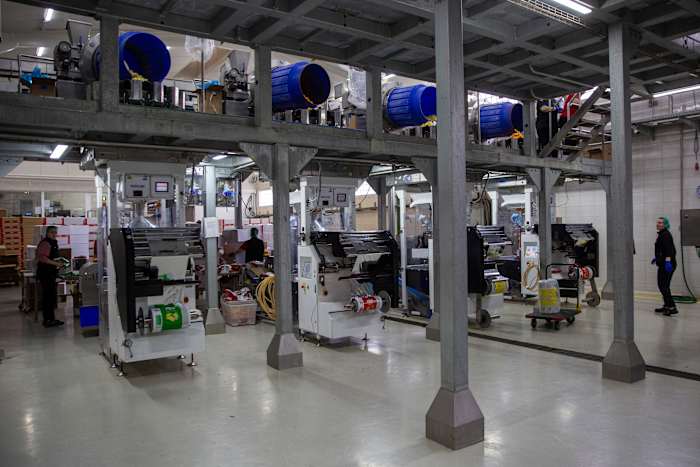
PRISTINA – Kushtrim Ajvazi takes pride in contributing to the success of a thriving business in Kosovo, one of Europe’s economically challenged nations. As a manager at the company, which produces popular potato chips and snacks found in nearly every local store and even exported internationally, he is keenly aware of its impact.
However, Ajvazi’s company is grappling with unexpected obstacles due to a sharp increase in fuel prices, a consequence of the ongoing conflict in Iran. This geopolitical tension has sent ripples all the way to southeastern Europe, affecting businesses like his.
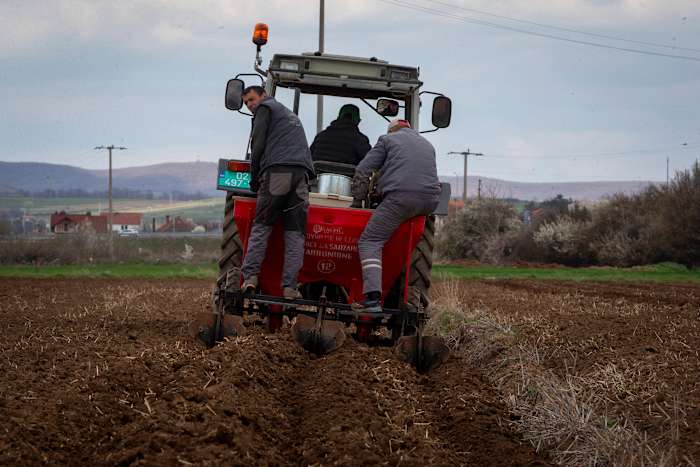
The Pestova company, owner of nearly 100 acres of potato fields in eastern Kosovo, produces the well-known Vipa potato chips. Both Pestova and its distribution network have been significantly impacted by the soaring fuel prices, which have jumped from 1.10 euros ($1.27) to as high as 1.7 euros ($1.96) per liter, Ajvazi explains.
In Kosovo, which lacks its own fuel production facilities, the cost of diesel and gasoline is dictated by importers whose profit margin is capped at 12%.
Ajvazi is calling on the government for support, particularly as the potato planting season approaches. The company requires substantial fuel supplies, making their operational costs “extremely high,” he notes. Although fertilizer prices have surged as well, Pestova has managed to maintain a reserve supply.
The company needs a lot of fuel so costs are “extremely high,” he said. Fertilizer prices also have gone up, but the company had reserves.
“We are analyzing and calculating every additional cost, and if we see that this process of rising costs continues, we will be forced to adjust our prices,” Ajvazi said.
While other countries in Balkans have put in place measures to ease the effects on farmers, Kosovo’s government is yet to act. The government did not respond to questions.
Romania, Hungary and Serbia have introduced special diesel prices for farmers or lowered the state tax income.
In Kosovo, economic experts warned that the government should urgently respond in case of a further price increase, to prevent greater damage to the economy.
“There is not one sector that is not affected by the price increase,” economist Safet Gerxhaliu said.
Ajvazi said his company faces additional problems because around 40% of production is exported with prearranged, fixed prices that can be changed only with a 90-day advance notice. He said it is hard to plan anything without stable prices.
“We call on the government to ease this phase for us,” he said. “We are a company that exports to more than 23 different countries, including those in Europe.”
The price hike has also burdened ordinary citizens. Bardh Mehmeti, an IT professional from the capital, Pristina, said he now pays 100 euros ($115) for a full tank, up from 80 euros ($92) before the crisis. Mehmeti is now “seriously considering” ways to get an electric car.
Kosovo’s economy has struggled ever since the country declared independence from Serbia in 2008 following a war. Serbia does not recognize the split, and the unresolved situation has stalled the countries in their bids to join the European Union.
Also affecting Kosovo’s economic situation has been a prolonged political crisis that left the country without a fully functioning government for much of last year. The current government of Prime Minster Albin Kurti is again in a stalemate over a failure to elect a new president.
The main opposition Democratic Party has criticized what it calls government inaction and urged temporary tax cuts to help ease the burden on citizens and businesses.
___
Associated Press writer Jovana Gec contributed from Belgrade, Serbia.
Copyright 2026 The Associated Press. All rights reserved. This material may not be published, broadcast, rewritten or redistributed without permission.