Share this @internewscast.com

Flooding has led to an annual average of over 125 fatalities in the United States in recent decades, as reported by the National Weather Service. Flash floods are considered the leading cause of storm-related deaths in the country.
Here’s a look at some of the most deadly flooding nationwide in the past 25 years.
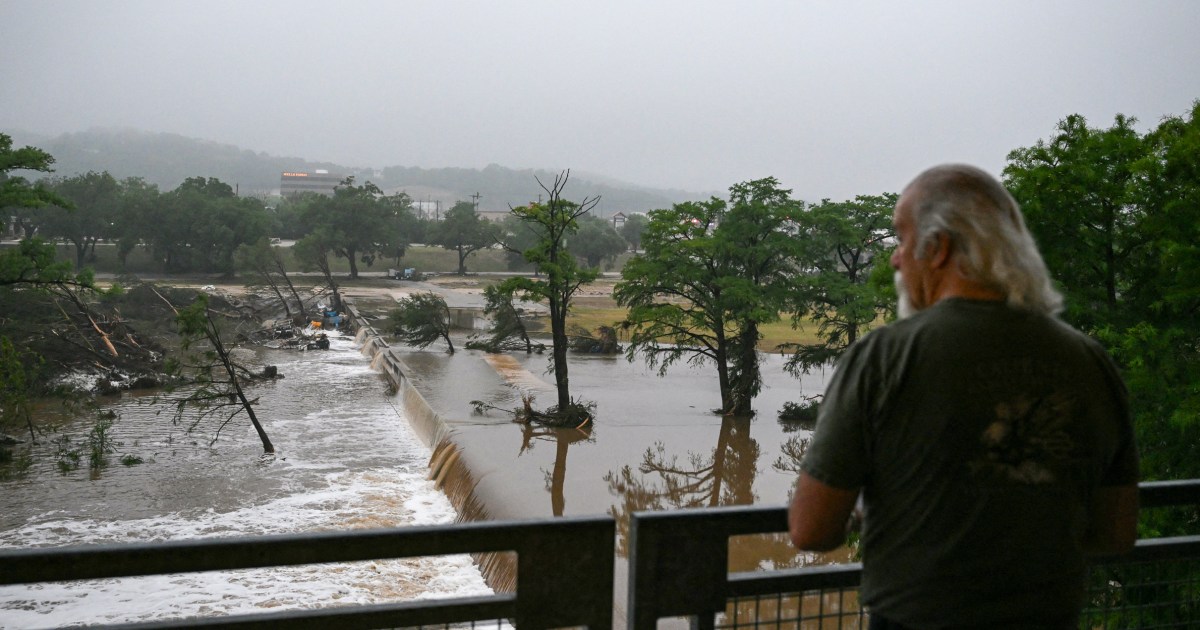
Searchers used helicopters, boats and drones to look for victims and to rescue stranded people in trees and from camps isolated by washed-out roads.
Hurricane Helene, 2024
In September 2024, Hurricane Helene impacted Florida, Georgia, the Carolinas, Tennessee, and Virginia. The storm resulted in approximately 250 fatalities, according to the National Weather Service.
A significant number of deaths during Helene were due to severe inland flooding rather than strong winds. Helene stands as the deadliest hurricane to strike the mainland U.S. since Hurricane Katrina in 2005.
The storm decimated remote towns throughout the Appalachians and left millions without power, cellular service and supplies. In North Carolina alone, Helene was responsible for 108 deaths, according to the state’s Department of Health and Human Services.
Kentucky, 2022
Raging floodwaters in eastern Kentucky in late July of 2022 led to 45 deaths, AccuWeather senior meteorologist Tyler Roys said Saturday.
The floods destroyed homes and businesses and caused significant damage to schools, roads, bridges and water systems. The disaster robbed thousands of families of all their possessions.
Tennessee, 2021
Twenty people were killed when creeks near the small Middle Tennessee town of Waverly overflowed after more than more than 17 inches (43 centimeters) of rain fell in the area in less than 24 hours in August 2021.
Homes were washed off their foundations, cars were wrecked and businesses were demolished. The dead included twin babies who were swept from their father’s arms.
Hurricane Harvey, 2017
Hurricane Harvey barreled into Texas in August 2017 as a powerful Category 4 storm. Harvey hovered for days as it trudged inland, dumping several feet of rain on many Gulf Coast communities and the Houston area.
Harvey killed at least 68 people, according to a National Hurricane Center report. All but three of the Harvey deaths were directly attributed to freshwater flooding, which damaged more than 300,000 structures and caused an estimated $125 billion in damage.
West Virginia, June 2016
A rainstorm that initially seemed like no big deal turned into a catastrophe in West Virginia, trapping dozens of people during the night and eventually leaving 23 people dead around the state.
Superstorm Sandy, 2012
Superstorm Sandy was a a late fall freak combination of a hurricane and other storms that struck New York and surrounding areas in October 2012.
Sandy killed 147 people, 72 in the eastern U.S., according to the National Hurricane Center. More than 110 deaths were attributed to drowning, Roys said.
Mississippi River, 2011
Heavy rainfall in several states, plus a larger-than-normal slow melt, led rivers in the Mississippi River Basin to swell and flood in 2011.
Flash floods associated with these storms caused 24 deaths across Oklahoma, Missouri, Arkansas, Louisiana and Tennessee in April and May, according to the National Weather Service.
Hurricane Ike, 2008
Hurricane Ike struck the Southeast Texas Gulf Coast in September 2008, creating a storm surge as high as 20 feet (6 meters) in the island city of Galveston.
Ike then poured more than 4 feet (1.2 meters) of rain on Houston, destroying thousands of cars and leaving hundreds of thousands of families with flood-damaged homes.
In all, Ike was responsible for more than 100 deaths, many caused by flooding.
Hurricane Katrina, 2005
Hurricane Katrina is the deadliest flood event in the U.S. in the past 25 years.
The storm crashed into the Gulf Coast and caused devastating flooding when levees failed in New Orleans, where people had to be rescued by boat and helicopter from rooftops.
The costliest storm in U.S. history, Katrina caused nearly 1,400 deaths and an estimated $200 billion in damages.
Tropical Storm Allison, 2001
Tropical Storm Allison caused 41 deaths, mostly attributed to flooding caused by 40 inches (101 centimeters) of rain that fell in Texas and Louisiana, Roys said.
Allison remained a threat for days as its remnants lingered after making landfall in June 2001, causing major flooding in Houston.