
Share this @internewscast.com
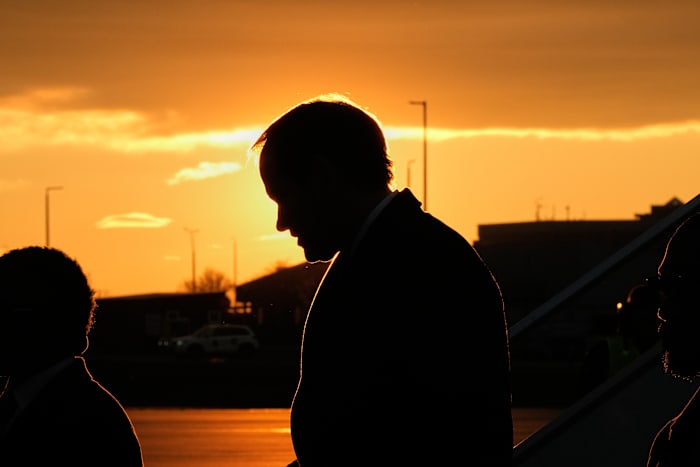
BUDAPEST – On Monday, U.S. Secretary of State Marco Rubio arrived in Budapest to engage in discussions with Hungarian Prime Minister Viktor Orbán and his administration. A key highlight of his visit is the anticipated signing of a civilian-nuclear cooperation agreement, an initiative championed by U.S. President Donald Trump.
President Trump has been vocal in his support of Orbán, particularly as the Hungarian leader gears up for a critical reelection campaign in two months. The upcoming April 12 election poses the most significant challenge to Orbán and his Fidesz party since they regained power in 2010.
Rubio’s visit to Hungary follows a stop in Slovakia on Sunday, having previously participated in the Munich Security Conference in Germany.
Slovakia and Hungary, led by Euroskeptic populists who express opposition to supporting Ukraine and openly endorse Trump, provide a favorable atmosphere for Rubio’s mission. His goal is to strengthen energy agreements with these Central European nations.
Orbán, often regarded as Russian President Vladimir Putin’s dependable ally within the European Union, has managed to keep amicable ties with the Kremlin despite its conflict with Ukraine. Simultaneously, he has sought to align with Trump and his “Make America Great Again” (MAGA) movement.
To many within the MAGA community and the broader conservative sphere, Hungary is perceived as a model of successful conservative nationalism, even as its democratic institutions weaken and it remains one of the EU’s less affluent members.
In a post on his Truth Social site earlier this month, Trump endorsed Orbán for the coming elections and called him a “truly strong and powerful Leader” and “a true friend, fighter, and WINNER.”
Trump has praised Orbán’s firm opposition to immigration, exemplified by a fence his government erected on Hungary’s southern border in 2015 as hundreds of thousands of refugees fled Syria and other countries in the Middle East and Africa.
Other U.S. conservatives admire Orbán’s hostility to LGBTQ+ rights. His government last year banned the popular Budapest Pride celebration and allowed facial recognition technology to be used to identify anyone participating despite the ban. It has also effectively banned same-sex adoption and same-sex marriage, and disallowed transgender individuals from changing their sex in official documents.
Orbán has remained firmly committed to purchasing Russian energy despite efforts by the EU to wean off such supplies, and received an exemption from U.S. sanctions on Russian energy after a November meeting in the White House with Trump.
Apparently trusting that his political and personal affinity with the U.S. leader could pay even greater dividends, Orbán and his government have sought to woo Trump to Hungary before the pivotal April 12 elections — hoping such a high-profile visit and endorsement would push Orbán, who is trailing in most polls, over the finish line.
Budapest has hosted several annual iterations of the Conservative Political Action Conference, or CPAC, and another was hastily rescheduled this year to fall in March, just before Hungary’s elections.
Copyright 2026 The Associated Press. All rights reserved. This material may not be published, broadcast, rewritten or redistributed without permission.