
Share this @internewscast.com

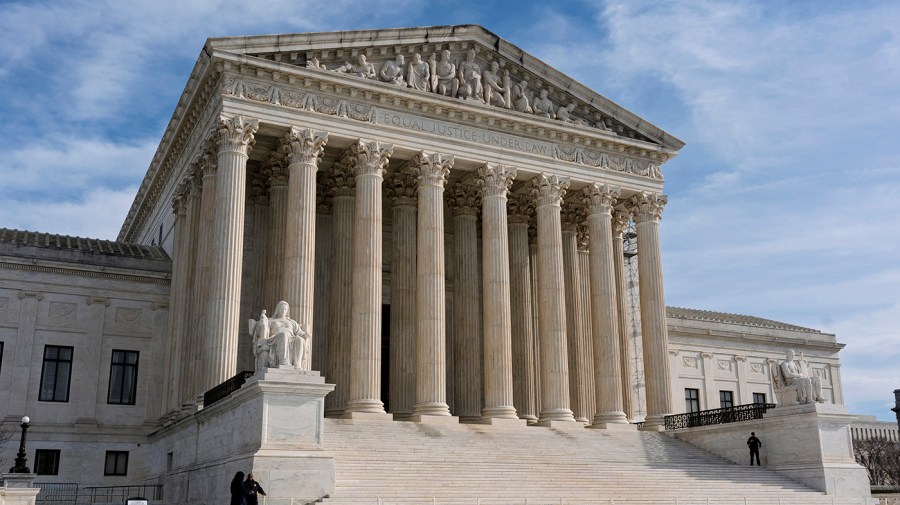
The Supreme Court delivered a win for the vaping industry on Friday, denying the Food and Drug Administration’s (FDA) effort to control where companies can dispute product marketing rejections.
Authored by Justice Amy Coney Barrett, the 7-2 decision allows R.J. Reynolds Vapor Company to continue its case in the 5th U.S. Circuit Court of Appeals. Known as the country’s most conservative appeals court, this venue is where the company aims to sell its “Vuse Alto” flavored e-cigarette products through a lawsuit with retailers.
While the 5th Circuit has previously been more supportive of the industry, challenges remain. The justices had earlier criticized the 5th Circuit’s stance in a related matter, signaling potential difficulties ahead for the company.
Two of the court’s liberal justices, Ketanji Brown Jackson and Sonia Sotomayor, dissented from Friday’s decision.
Under federal law, “any person adversely affected” by the FDA denying a tobacco or e-cigarette marketing application can petition the federal appeals court in Washington, D.C., or where they have their principal place of business.
R.J. Reynolds is based in North Carolina, which is covered by the 4th U.S. Circuit Court of Appeals. But both that court and the one in D.C. have rejected the company’s legal theory that the FDA acted arbitrarily and capriciously in denying the authorization because it changed the evidentiary standard.
The 5th Circuit, however, which covers Louisiana, Mississippi and Texas, has been more friendly to the industry.
So the company sought review there, joined by a Texas retail store that sells Vuse Alto products and a Mississippi trade association of gas stations and convenience stores. The Supreme Court agreed to hear the federal government’s appeal after the 5th Circuit refused to transfer the case.
“Because Avail Vapor and the trade association have their principal places of business in Texas and Mississippi, respectively, they could both file in the Fifth Circuit. So when it denied the FDA’s motion to dismiss or transfer, the Fifth Circuit correctly concluded that at least one proper petitioner had venue,” Barrett wrote.
In dissent, Jackson said the statute does not allow retailers to sue.
“And, here, all the usual tools of statutory interpretation point in the same direction: Congress established a detailed scheme for manufacturers to obtain authorization to market new tobacco products—a scheme within which retailers have no rights and play no role—and, in the context of that scheme, Congress provided a cause of action for the protection of the manufacturers’ statutorily created interests,” Jackson wrote.
The case now returns to the lower courts, but the companies may still face a steep path to getting their product approved. In another case decided earlier this term, the Supreme Court found the FDA acted lawfully in rejecting two other vaping companies’ applications, reversing the 5th Circuit’s contrary decision.