
Share this @internewscast.com

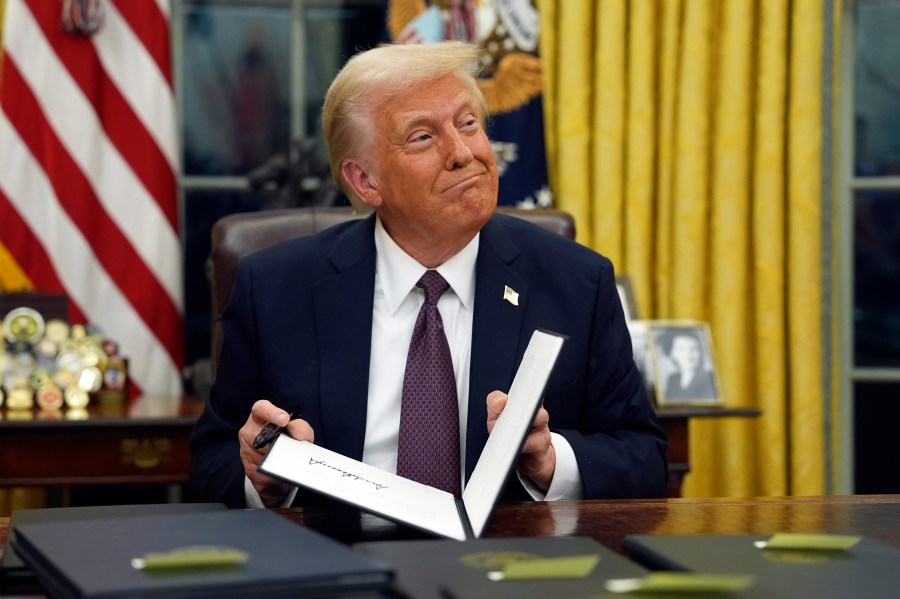
() President Trump has signed more than 160 executive orders since taking office, and there have been more than 300 lawsuits seeking to block his actions.
Now, those EOs may pack a bigger punch, following the U.S. Supreme Court ruling that limits the power of federal judges to issue nationwide injunctions.
On his first day back in office, Republican Trump issued more than 20 executive orders, including one that sought to deny birthright citizenship to children born in the U.S. to people here illegally.
A federal judge in Washington state issued a nationwide injunction blocking the president’s order. Trump called it an “abuse of power,” if any one of hundreds of appointed federal judges were allowed to check an elected president.
U.S. Attorney General Pam Bondi said most nationwide injunctions against Trump EOs have come from five judicial districts that she classified as liberal.
Nationwide injunctions have become a problem for both Republican and Democratic presidents.
A 2024 Harvard Law Review article found that 93.6% of nationwide injunctions issued during Trump’s first term and during the administration of Democrat Joe Biden were issued by judges appointed by a president of the opposing political party.
Trump this week was buoyed by the Supreme Court decision limiting nationwide injunctions.
“We can now promptly file to proceed with numerous policies that have been wrongfully enjoined on a nationwide basis,” he said.
Some of those policies include dismantling the Department of Education and the U.S. Agency for International Development; freezing federal funding to so-called sanctuary cities; suspending refugee resettlement in the U.S. and restricting taxpayer funding of gender-affirming care.
The new ruling means federal district courts must limit their injunctions to the parties bringing the case forward. This will make it more difficult and time-consuming to challenge executive orders.
Some groups have already found a way around the new ruling by filing a class-action lawsuit, which allows people to sue on behalf of a larger group who have suffered similar issues from a government policy.