
Share this @internewscast.com
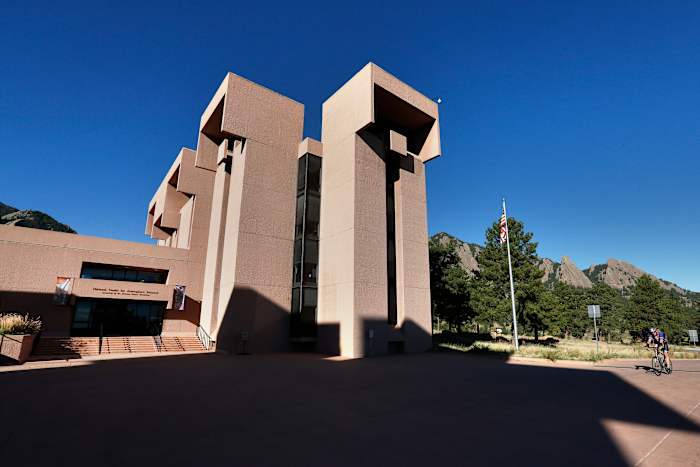
WASHINGTON – The Trump administration has initiated the closure of the National Center for Atmospheric Research (NCAR) in Colorado, a move that aims to shut down a research facility labeled by a senior White House official as a “major contributor to climate alarmism.”
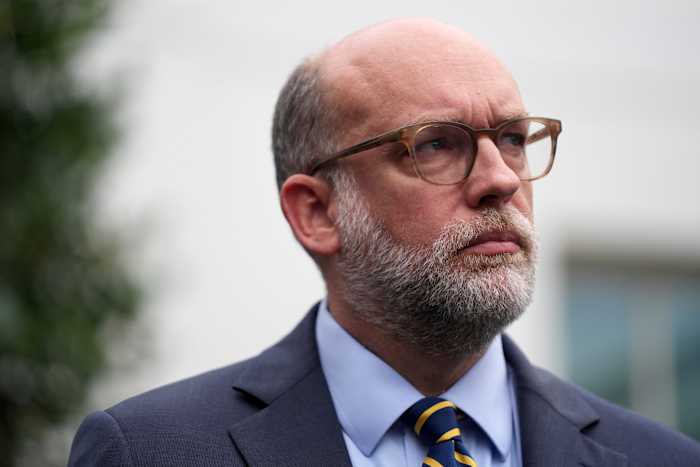
Russ Vought, the White House budget director, expressed criticism towards the lab on social media Tuesday evening, indicating that a thorough evaluation is currently in progress. He reassured that essential functions like weather research would be relocated to different facilities or organizations.
NCAR, renowned for housing the most substantial federal climate change research initiative, is pivotal in forecasting, preparing for, and responding to extreme weather and natural disasters. Operated by a nonprofit alliance of over 130 academic institutions, it functions on behalf of the National Science Foundation.
A high-ranking White House authority pointed to two examples of what they described as the lab’s “progressive agenda,” accusing it of misusing taxpayer money on unnecessary projects. These included an initiative to establish an Indigenous and Earth Sciences center focused on inclusivity and justice, and a study linking air pollution to motor vehicles and fossil fuel industries. The official requested anonymity to discuss the administration’s strategy candidly.
Katharine Hayhoe, a noted climate scientist and Distinguished Professor at Texas Tech University, emphasized the lab’s global significance, describing it as “our global mothership.”
Hayhoe highlighted NCAR’s support for various scientific endeavors, including hurricane research, development of advanced radar technologies, innovative weather modeling, and the maintenance of the world’s most extensive community climate model, underscoring its critical role in climate science.
“Dismantling NCAR is like taking a sledgehammer to the keystone holding up our scientific understanding of the planet,” she said.
Following World War II, interest in meteorology, solar observations and atmospheric science increased, spurring the creation of NCAR. The focus initially centered on atmospheric chemistry and physical meteorology.
NCAR’s budget more than doubled from the 1980s into the 1990s, driven by increased federal focus on climate change research.
Colorado Gov. Jared Polis called the lab a global leader in earth systems scientific research.
“Climate change is real, but the work of NCAR goes far beyond climate science,” the two-term Democrat said. “NCAR delivers data around severe weather events like fires and floods that help our country save lives and property and prevent devastation for families. If these cuts move forward we will lose our competitive advantage against foreign powers and adversaries in the pursuit of scientific discovery.”
The White House said President Donald Trump is restoring the lab to its original purpose. It is unclear how many of the research lab’s 830 employees and associated programs at partnering universities could be affected.
The change comes after the administration recently targeted another Colorado lab, the former National Renewable Energy Lab, to remove its focus on wind and solar power. The Energy Department site was renamed “National Laboratory of the Rockies” earlier this month.
Assistant Energy Secretary Audrey Robertson said the Trump administration is “no longer picking and choosing energy sources.”
Colorado’s Democratic senators — John Hickenlooper and Michael Bennet — along with Democratic Rep. Joe Neguse argued in a statement that the center’s work has led to early warnings for natural disasters and has deepened understanding of the Earth’s systems. They called the administration’s move reckless, saying it would have devastating consequences for families in Colorado and communities across the nation.
“Efforts to dismantle this institution and its essential programs are deeply dangerous and blatantly retaliatory,” they said.
Antonio Busalacchi, president of the nonprofit consortium, said dismantling the research lab “would set back our nation’s ability to predict, prepare for, and respond to severe weather and other natural disasters.”
___
Montoya Bryan reported from Albuquerque, New Mexico.
Copyright 2025 The Associated Press. All rights reserved. This material may not be published, broadcast, rewritten or redistributed without permission.