
Share this @internewscast.com
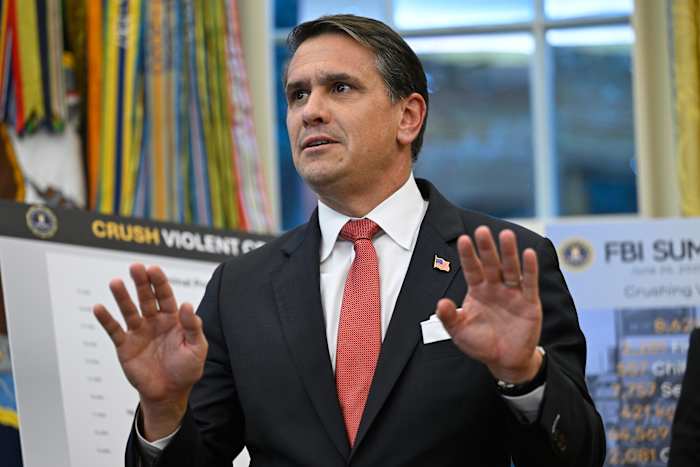
WEST PALM BEACH, Fla. – In a recent statement, Deputy Attorney General Todd Blanche defended the Justice Department’s decision to release only a portion of the Jeffrey Epstein files by the congressionally mandated deadline. He emphasized that this cautious approach was necessary to safeguard the privacy of survivors of Epstein’s sexual abuse.
Blanche assured that the Trump administration remains committed to fulfilling its legal obligations in due time. However, he highlighted the importance of careful consideration when disseminating thousands of documents that may contain sensitive information.
The partial release of Epstein-related files on Friday has sparked criticism, particularly from Democrats who accuse the Republican-led administration of withholding crucial information.
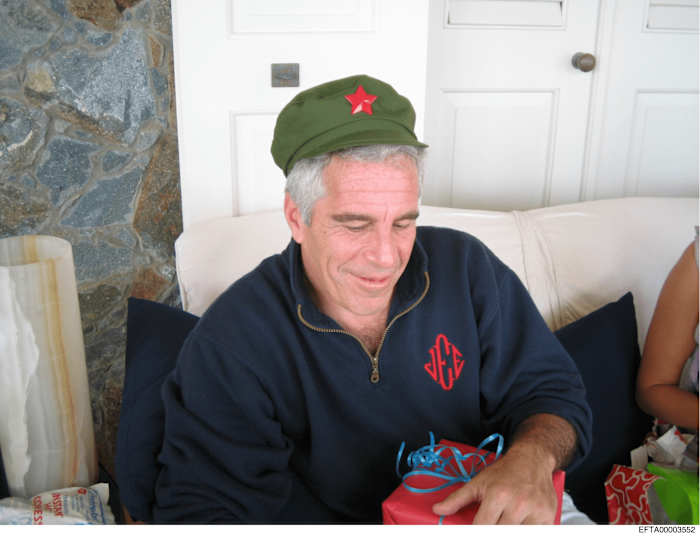
Blanche dismissed these criticisms, labeling them as disingenuous, and noted that the Trump administration continues to face demands for increased transparency. These calls come from various quarters, including some of the President’s own supporters, who seek clarity on the government’s probes into Epstein, a man known for his connections with Trump and other prominent figures.
“Our ongoing review of documents is driven by the need to protect victims,” Blanche explained on NBC’s “Meet the Press.” He pointed out the irony of critics demanding more document releases while seemingly disregarding the necessity to protect victims’ identities.
Blanche’s remarks are the most detailed from the administration since the document release, which included photos, interview transcripts, call logs, and court records. However, key records, such as FBI interviews with survivors and Justice Department memos on charging decisions, were notably absent. These missing documents could shed light on investigators’ perspectives and why Epstein was allowed in 2008 to plead guilty to lesser charges.
Trump, who was friends with Epstein for years before the two had a falling-out, tried for months to keep the records sealed. Though Trump has not been accused of wrongdoing in connection with Epstein, he has argued there is nothing to see in the files and that the public should focus on other issues.
Federal prosecutors in New York brought sex trafficking charges against Epstein in 2019, but he killed himself in jail after his arrest.
Democrat see a cover-up, not an effort to protect victims
But Democratic lawmakers on Sunday hammered Trump and the Justice Department for a partial release.
Rep. Jamie Raskin, D-Md., argued that the Justice Department is obstructing the implementation of the law mandating the release of the documents not because it wants to protect the Epstein victims.
“It’s all about covering up things that, for whatever reason, Donald Trump doesn’t want to go public, either about himself, other members of his family, friends, Jeffrey Epstein, or just the social, business, cultural network that he was involved in for at least a decade, if not longer,” he said on CNN’s “State of the Union.”
Blanche also defended the department’s decision to remove several files related to the case from its public webpage, including a photograph showing Trump, less than a day after they were posted.
The missing files, which were available Friday but no longer accessible by Saturday, included images of paintings depicting nude women, and one showed a series of photographs along a credenza and in drawers. In that image, inside a drawer among other photos, was a photograph of Trump, alongside Epstein, Melania Trump and Epstein’s longtime associate, Ghislaine Maxwell.
Blanche said the documents were removed because they also showed victims of Epstein. Blanche said that Trump photo and the other documents will be reposted once redactions are made to protect survivors.
“It has nothing to do with President Trump,” Blanche said. “There are dozens of photos of President Trump already released to the public seeing him with Mr. Epstein.”
The thousands of Epstein-related records posted publicly offer the most detailed look yet at nearly two decades worth of government scrutiny of Epstein’s sexual abuse of young women and underage girls. Yet Friday’s release, replete with redactions, has not dulled the clamor for information given how many records had yet to be released and because some of the materials had already been made public.
Justice Department has just learned the names of more potential victims, Blanche says
Blanche said that the department continues to review the trove of documents and has learned the names of additional potential victims in recent days.
The deputy attorney general also defended the decision by the federal Bureau of Prisons, which Blanche oversees, to transfer Maxwell to a less restrictive, minimum-security federal prison earlier this year soon after he interviewed her about Epstein. Blanche said that the transfer was made because of concerns about her safety.
Maxwell, Epstein’s onetime girlfriend, is serving a 20-year federal prison sentence for her 2021 conviction for sex trafficking crimes.
“She was suffering numerous and numerous threats against her life,” Blanche said. “So the BOP is not only responsible for putting people in jail and making sure they stay in jail, but also for their safety.”
Meanwhile, Rep. Ro Khanna, D-Calif., and Thomas Massie, R-Ky., have indicated they could draft articles of impeachment against Attorney General Pam Bondi for what they see as the gross failure of the department to comply with the Epstein Files Transparency Act.
House Democratic leader Hakeem Jeffries of New York said on ABC’s “This Week” that there needs “to be a full and complete explanation and then a full and complete investigation as to why the document production has fallen short of what the law clearly required,” but he stopped short of backing impeachment.
Blanche dismissed the impeachment talk.
“Bring it on,” Blanche said. “We are doing everything we’re supposed to be doing to comply with this statute.”
___
Associated Press writer Adriana Gómez Licón in Fort Lauderdale, Florida, contributed to this report.
Copyright 2025 The Associated Press. All rights reserved. This material may not be published, broadcast, rewritten or redistributed without permission.