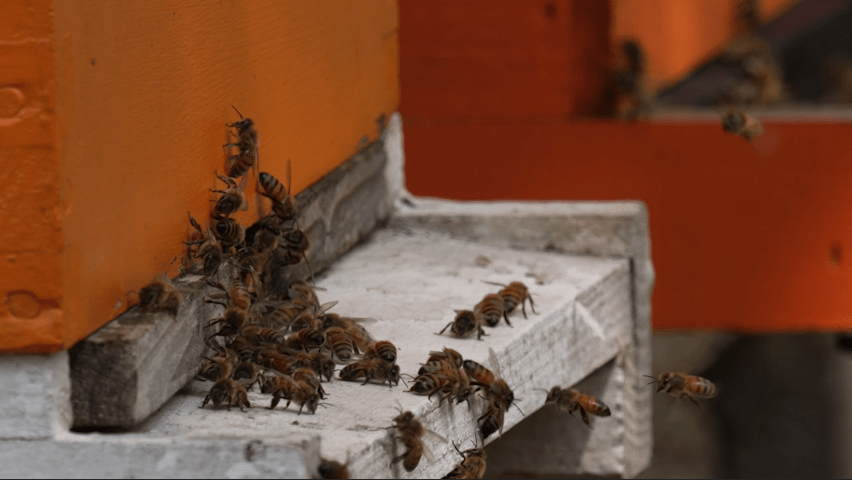

SAVANNAH, Ga. () — Honeybee colonies across the United States are experiencing unprecedented losses.
This year, the United States has experienced an alarming 62% drop in honeybee colonies, marking one of the highest decline rates ever observed. This significant reduction is causing concern among environmentalists who highlight the potential impact on food production.
Ben Powell, coordinator of Clemson University’s Apiculture and Pollinator program, says the situation is dire but not without hope.
Powell states, “Honeybees play a vital role in many ecosystems by being key pollinators. Approximately 75% of the plant species we grow for food are pollinated by honeybees.”
Powell identifies several factors contributing to the decline of honeybees, noting that pesticides are a contributor but stressing that habitat loss is one of the most severe threats.
“We’re altering landscapes, which leads to a decrease in the plants bees need to gather food to build their nests and support their colonies,” Powell explained. “By reducing flowering plants and increasing turf, we diminish the available resources for bees.”
Typically, beekeepers expect to lose 15% to 20% of their colonies annually due to natural events. However, these losses have nearly doubled in the past ten years. Powell mentioned that this year has been particularly devastating.
“We’ve recorded one of the highest colony loss rates at an average of about 62%. It’s unimaginable for any agricultural producer to lose 62% of their output and remain operational. Despite these challenges, beekeepers are resilient and are striving to sustain our bee populations and continue providing the essential services and products bees offer,” Powell remarked.
Beyond the ecological and agricultural importance, Powell emphasized the educational roles that beekeepers play when raising awareness:
“If you want to help bees, help beekeepers,” he said. “They’re engaging the public, they’re improving awareness. They’re teaching children and trying to get everybody to understand that the honeybee, the iconic pollinator, is indicative of what’s happening in the rest of the world around us.”
Powell also recommends that transforming your outdoor landscape can be an effective way to attract pollinators and cultivate an environment that supports them.
“You can plant plants in your yard that are better forage, get away from lawn grasses, get away from exotic species that don’t support our native pollinators near as well as the native flowering plants do.”


