
Share this @internewscast.com
In a significant legal development, 31 families who suffered tragic losses in the two calamitous crashes involving Boeing 737 Max aircraft are making a concerted effort to renew a criminal case against the aerospace giant. This appeal has been brought before a federal appeals court, marking a pivotal moment in their quest for justice.
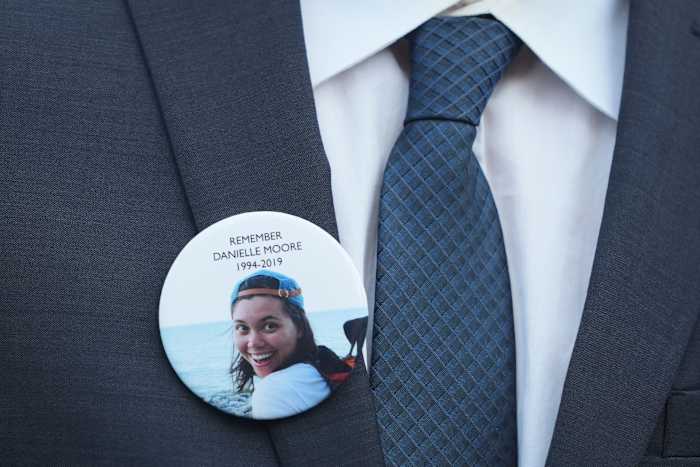
Representing these grieving families, attorney Paul Cassell presented their case to a three-judge panel of the 5th U.S. Circuit Court of Appeals. Cassell is pushing for the reinstatement of a criminal conspiracy charge against Boeing. The charge centers on accusations that the company misled Federal Aviation Administration regulators regarding a flight-control system implicated in the crashes, which tragically claimed 346 lives.
The backdrop to this legal battle is a controversial decision by a lower court to dismiss the charges at the behest of the U.S. government, following a deal with Boeing. This agreement allowed Boeing to evade prosecution by committing to pay or invest an additional $1.1 billion. These funds are intended for fines, compensations to the victims’ families, and improvements in internal safety and quality measures.
Cassell argues that federal prosecutors failed to fulfill their obligations to the families by not properly consulting them before finalizing the deal with Boeing. He contends that this lack of consultation effectively excluded the families from a process that directly impacted their pursuit of accountability.
In response, federal prosecutors have defended their actions, stating that they have consistently engaged with the families over the years. They assert that the government has diligently considered the families’ perspectives as it navigated the complex decision of whether and how to prosecute Boeing.
The emotional weight of this case was palpable as over a dozen family members attended the hearing in New Orleans. Many others from around the globe followed the proceedings via a livestream, underscoring the widespread interest and profound personal investment in the outcome of this legal fight.
“I feel that there wouldn’t be meaningful accountability without a trial,” Paul Njoroge said in a statement after the hearing. Njoroge, who lives in Canada, lost his entire family in the second of the two crashes — his wife, Carolyne, their children, ages 6, 4 and 9 months, and his mother-in-law.
All passengers and crew died when the 737 Max jets crashed less than five months apart in 2018 and 2019 — a Lion Air flight that plunged into the sea off the coast of Indonesia and an Ethiopian Airlines flight that crashed into a field shortly after takeoff.
U.S. District Judge Reed O’Connor in Texas, who oversaw the case for years, issued a written decision in November that described the families’ arguments as compelling. But O’Connor said federal judges couldn’t block a charge dismissal simply because they disagreed with the government’s view that a settlement deal served the public interest.
The judge also concluded that federal prosecutors hadn’t acted in bad faith, had explained their decision and had met their obligations under the Crime Victims’ Rights Act.
In the case of its deal with Boeing, the Justice Department had argued that given the possibility a jury might acquit the company, taking the case to trial carried a risk that Boeing would be spared any further punishment.
Boeing attorney Paul Clement said Thursday that more than 60 families of crash victims “affirmatively supported” the deal and dozens more did not oppose it.
“Boeing deeply regrets” the tragic crashes, Clement said, and “has taken extraordinary steps to improve its internal processes and has paid substantial compensation” to the victims’ families.
The appeals court panel that heard the arguments said it would issue a decision at a later date.
The criminal case took many twists and turns after the Justice Department first charged Boeing in 2021 with defrauding the government but agreed not to prosecute if the company paid a settlement and took steps to comply with anti-fraud laws.
However, federal prosecutors determined in 2024 that Boeing had violated the agreement, and the company agreed to plead guilty to the charge. O’Connor later rejected that plea deal, however, and directed the two sides to resume negotiations. The Justice Department returned last year with the new deal and its request to withdraw the criminal charge.
The case centered around a software system that Boeing developed for the 737 Max, which airlines began flying in 2017. The plane was Boeing’s answer to a new, more fuel-efficient model from European rival Airbus, and Boeing billed it as an updated 737 that wouldn’t require much additional pilot training.
But the Max did include significant changes, some of which Boeing downplayed — most notably, the addition of an automated flight-control system designed to help account for the plane’s larger engines. Boeing didn’t mention the system in airplane manuals, and most pilots didn’t know about it.
In both of the deadly crashes, that software pitched the nose of the plane down repeatedly based on faulty readings from a single sensor, and pilots flying for Lion Air and Ethiopian Airlines were unable to regain control. After the Ethiopia crash, the planes were grounded worldwide for 20 months.
Investigators found that Boeing did not inform key Federal Aviation Administration personnel about changes it had made to the software before regulators set pilot training requirements for the Max and certified the airliner for flight.
Copyright 2026 The Associated Press. All rights reserved. This material may not be published, broadcast, rewritten or redistributed without permission.