
Share this @internewscast.com
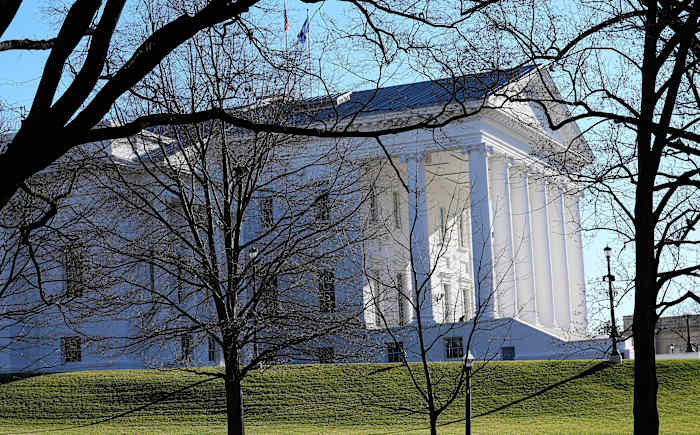
Virginia voters are set to weigh in on a congressional redistricting proposal that could favor Democrats, even as its legality faces judicial scrutiny.
The Virginia Supreme Court has authorized a statewide referendum scheduled for April 21, allowing voters to decide on a mid-decade redistricting measure. The court will later determine the amendment’s legal standing.
While Democrats hailed the decision to proceed with the election, there remains a risk that the effort could be rendered void if the Supreme Court ultimately deems the redistricting amendment unconstitutional.
Currently, Democrats hold six of Virginia’s 11 U.S. House seats. However, they support a revised district map that could potentially increase their representation to 10 seats in the upcoming midterm elections. This redistricting effort is part of a broader Democratic strategy to counteract expected Republican gains in other states where district maps were redrawn under President Donald Trump’s influence.
President Trump is striving to maintain a slim Republican majority in the House, facing the typical midterm electoral challenges that often disadvantage the sitting president’s party.
For Virginia Democrats to enact the new congressional districts, they must first secure voter approval to bypass a constitutional clause that currently assigns redistricting power to a bipartisan commission, transferring it temporarily to the General Assembly instead. Lawmakers advanced this constitutional amendment last fall and reaffirmed it in January, following a two-step process that necessitates an election before the amendment can appear on the ballot.
But Tazewell Circuit Court Judge Jack Hurley Jr. last month struck down the General Assembly’s actions on three grounds. The judge ruled that lawmakers failed to follow their own rules for adding the redistricting amendment to a special session.
Hurley also ruled that the General Assembly’s initial vote for the amendment failed to occur before the public began casting ballots in last year’s general election and thus didn’t count toward the two-step process. And he ruled that the state failed to publish the amendment three months before the election, as required by law. As a result of those issues, he said, the amendment was invalid and void.
Democrats appealed the decision to the state Supreme Court, which agreed on Friday to consider the case while stating that a narrowly tailored injunction by the lower court doesn’t prevent the April referendum. The court directed initial briefs to be filed by March 23, with the last round of court filings due April 23. Any oral arguments would be scheduled for later, the court said.
Nationwide, the redistricting battle has resulted so far in nine more seats that Republicans believe they can win in Texas, Missouri, North Carolina and Ohio, and six that Democrats think they can win in California and Utah. Democrats have hoped to make up that three-seat margin in Virginia, though the lower court ruling raised a hurdle to their plans. It’s unclear whether the redistricting efforts in various states ultimately will make any difference in determining control of Congress in the November election.
Copyright 2026 The Associated Press. All rights reserved. This material may not be published, broadcast, rewritten or redistributed without permission.