
Share this @internewscast.com

DUBAI – On Friday, separatists in southern Yemen accused Saudi Arabia of launching airstrikes against their forces. This claim comes amid escalating tensions, though Saudi Arabia has not yet confirmed the allegations. The kingdom previously issued a warning to these forces to retreat from recently captured regions.
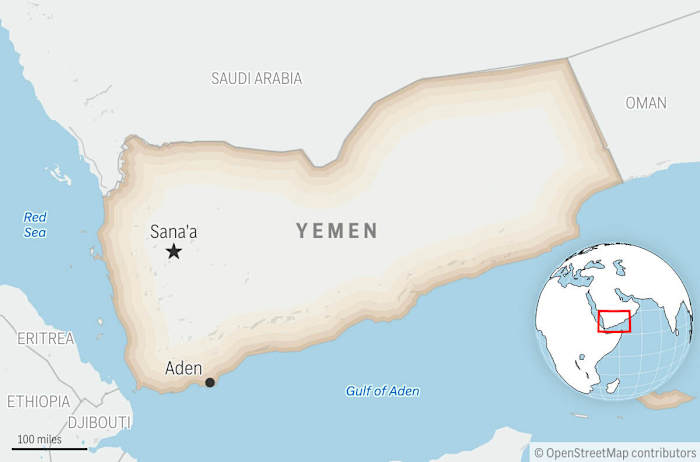
The Southern Transitional Council, which receives backing from the United Arab Emirates, reported that the alleged airstrikes occurred in Yemen’s Hadramout governorate. While it remains uncertain if there were any casualties, these developments escalate the already fragile situation. They pose a threat to the delicate balance within the Saudi-led coalition that has been combating the Iran-supported Houthi rebels in northern Yemen for the past decade.
Amr Al Bidh, a representative for the Council’s foreign affairs, informed The Associated Press that their troops were active in eastern Hadramout on Friday after enduring “multiple ambushes” from unidentified gunmen. According to Al Bidh, these attacks resulted in the deaths of two Council fighters and injuries to 12 others.
Al Bidh noted that the Saudi airstrikes took place subsequent to these incidents.
In the lead-up to the strikes, Saudi Arabia had issued warnings.
Faez bin Omar, a prominent figure within a tribal coalition in Hadramout, expressed to the Associated Press that he perceives the airstrikes as a caution for the Council to withdraw its forces. Ahmed al-Khed, an eyewitness, reported seeing damaged military vehicles in the aftermath, which are believed to belong to the forces allied with the Council.
The Council’s satellite channel AIC aired what appeared to be mobile phone footage it described as showing the strikes. In one video, a man speaking could be heard blaming the strike on Saudi aircraft.
Officials in Saudi Arabia did not immediately respond to a request for comment from the AP. On Thursday, the kingdom called on the Emirati-backed separatists in southern Yemen to withdraw.
The Council moved earlier this month into Yemen’s governorates of Hadramout and Mahra. That had pushed out forces affiliated with the Saudi-backed National Shield Forces, another group in the coalition fighting the Houthis.
Those aligned with the Council have increasingly flown the flag of South Yemen, which was a separate country from 1967-1990. Demonstrators rallied on Thursday in the southern port city of Aden to support political forces calling for South Yemen to secede again from Yemen.
Saudis, Emiratis back different Yemen forces
Following the capture of Yemen’s capital, Sanaa, and much of the country’s north by the Houthis in 2014, Aden has been the seat of power for the internationally recognized government and forces aligned against the rebels.
The actions by the separatists have put pressure on the relationship between Saudi Arabia and the UAE, which maintain close relations and are members of the OPEC oil cartel, but also have competed for influence and international business in recent years.
The UAE said in a statement Friday that it “welcomed the efforts undertaken by the Kingdom of Saudi Arabia to support security and stability” in Yemen.
“The UAE reaffirmed its steadfast commitment to supporting all endeavors aimed at strengthening stability and development in Yemen, contributing positively to regional security and prosperity,” it added.
There has also been an escalation of violence in Sudan, another nation on the Red Sea, where the kingdom and the Emirates support opposing forces in that country’s ongoing war.
The war in Yemen
The Iranian-backed Houthis seized Sanaa in September 2014 and forced the internationally recognized government into exile. Iran denies arming the rebels, although Iranian-manufactured weaponry has been found on the battlefield and in sea shipments heading to Yemen despite a U.N. arms embargo.
A Saudi-led coalition armed with U.S. weaponry and intelligence entered the war on the side of Yemen’s exiled government in March 2015. Years of inconclusive fighting have pushed the Arab world’s poorest nation to the brink of famine.
The war has killed more than 150,000 people, including fighters and civilians, and created one of the globe’s worst humanitarian disasters, killing tens of thousands more.
The Houthis, meanwhile, have launched attacks on hundreds of ships in the Red Sea corridor over the Israel-Hamas war, greatly disrupting regional shipping.
Further chaos in Yemen could again draw in the United States.
Washington launched an intense bombing campaign targeting the rebels earlier this year that U.S. President Donald Trump halted just before his trip to the Middle East in October. The Biden administration also conducted strikes against the Houthis, including using B-2 bombers to target what it described as underground bunkers used by the Houthis.
___
Gambrell reported from Dubai, United Arab Emirates. Associated Press writer Fatma Khaled in Cairo contributed to this report.
Copyright 2025 The Associated Press. All rights reserved. This material may not be published, broadcast, rewritten or redistributed without permission.