
Share this @internewscast.com
A groundbreaking study has revealed that the Pfizer-BioNTech COVID-19 vaccine poses significantly fewer risks for children and adolescents compared to the virus itself, addressing previous concerns about potential harm from the vaccine.
Researchers noted that the health risks associated with contracting the virus persisted much longer than those observed after vaccination.
Throughout the pandemic, an association was identified between the COVID-19 vaccine and a heightened risk of myocarditis, an inflammation of the heart muscle, as well as pericarditis, an inflammation of the heart’s surrounding lining.
The majority of those affected experienced symptoms within a week of receiving the vaccine, with young males under the age of 25 being the most commonly impacted group.
Conducted by experts from UCL, alongside colleagues from the universities of Cambridge and Edinburgh, and supported by the BHF Data Science Centre at Health Data Research UK, this comprehensive study analyzed health records of 13.9 million children under 18 from January 1, 2020, to December 31, 2022.
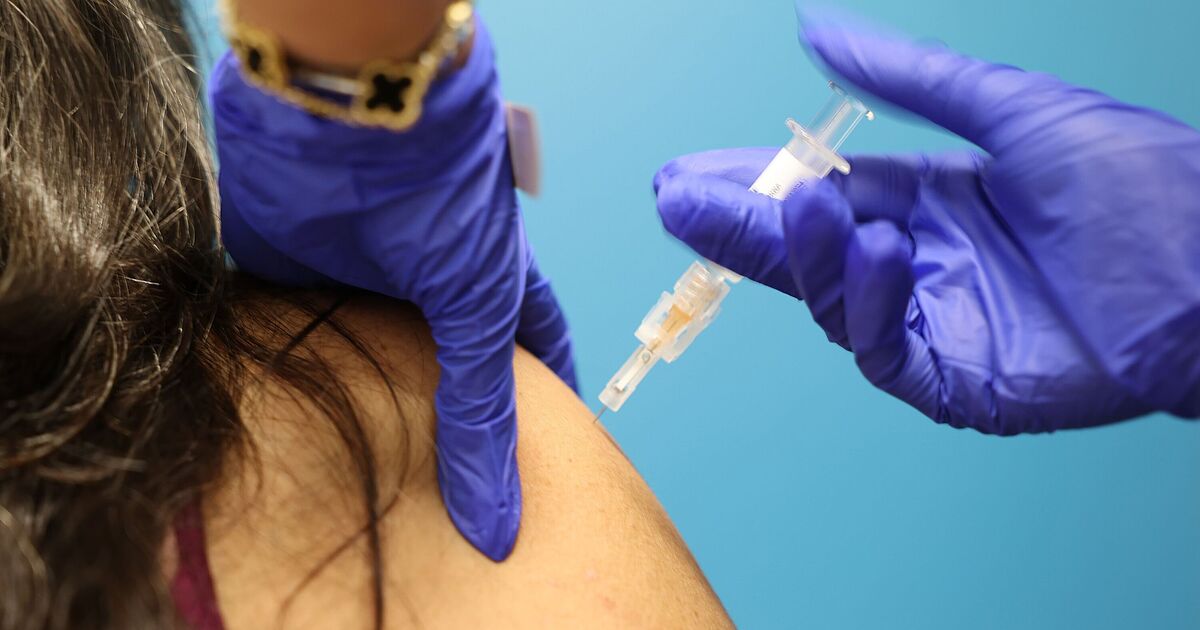
During this timeframe, approximately 3.9 million children were diagnosed with COVID-19, while about 3.4 million received their first dose of the Pfizer-BioNTech vaccine, which was predominantly administered to those aged five to 18.
The team looked at the risk of rare complications such as thrombocytopenia, or low levels of platelets in the blood, clots in the blood vessels, known as arterial and venous thrombosis, as well as myocarditis and pericarditis.
Researchers found youngsters had a higher risk of these conditions up to 12 months after being diagnosed with Covid-19.
Meanwhile, the risk of myocarditis or pericarditis was higher for four weeks post-vaccine, although researchers said the risk of developing them was “substantially lower” than the risk following infection with the virus.
Dr Alexia Sampri, of the University of Cambridge, said: “Our whole-population study during the pandemic showed that although these conditions were rare, children and young people were more likely to experience heart, vascular or inflammatory problems after a Covid-19 infection than after having the vaccine – and the risks after infection lasted much longer.”
Researchers estimate that over six months, Covid infections led to 2.24 extra cases of myocarditis or pericarditis per 100,000 children and young people, with this falling to 0.85 extra cases per 100,000 among those vaccinated.
Co-author Professor Pia Hardelid, of UCL and the National Institute for Health and Care Research Great Ormond Street Hospital Biomedical Research Centre, said: “Parents and carers have faced difficult choices throughout the pandemic.
“By building a stronger evidence base on both infection and vaccination outcomes, we hope to support families and healthcare professionals to make decisions grounded in the best available data.”
The team also looked at a number in inflammatory conditions, including paediatric inflammatory multi-system syndrome (PIMS), a new illness that happens weeks after someone has Covid-19 which causes swelling throughout the body, and Kawasaki disease, inflammation of the blood vessels which causes a fever, rash and swelling.
Co-author Prof Angela Wood, of the University of Cambridge and associate director at the BHF Data Science Centre, said: “After Covid-19 diagnosis, we see that the risk of inflammatory conditions was around 15 folds higher in those first weeks, and that persisted for many months, maybe just up to less than a year.
“After vaccination however, we see that risks were slightly lower than the background levels, probably likely reflecting the protective effect of vaccination here.”
Co-author Prof William Whiteley, of the University of Edinburgh and associate director at the BHF Data Science Centre, added: “Parents, young people, and children need reliable information to make decisions about their health.
“Data from hospitals and GP practices are an important part of the picture because they tell us all what has happened to people looked after in the NHS.”
Experts said the findings, published in The Lancet Child and Adolescent Health, “are of great importance for national policy makers and caregivers considering vaccination consent for children”.
They also “support the public health strategy of Covid-19 vaccination in children and young people to mitigate the more frequent and persistent risks associated” with infection, researchers added.
Prof Wood added: “Whilst vaccine-related risks are likely to remain rare and short-lived, future risks following infection could change as new variants emerge and immunity shifts.
“That’s why whole-population health data monitoring remains essential to guide vaccine and other important public health decisions.”