
Share this @internewscast.com
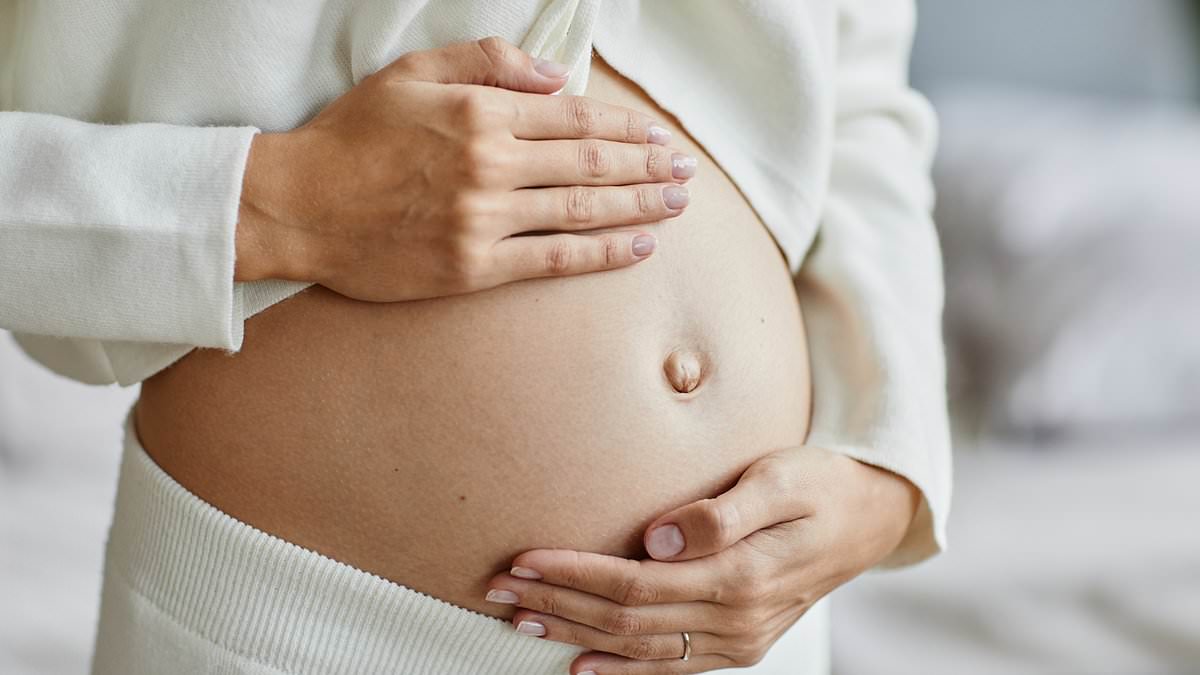
Emerging research suggests that children born to mothers who contracted Covid-19 during pregnancy may face an increased risk of developing autism.
In a study conducted by American researchers, involving over 18,000 births during the initial year of the pandemic, it was found that children had nearly a 30% higher likelihood of being diagnosed with a neurodevelopmental disorder if their mothers were infected with the virus while pregnant.
The study further indicated that this risk was particularly elevated in male children and when the maternal infection occurred in the third trimester of pregnancy.
This research is considered one of the most comprehensive analyses to date focusing on infants born to women infected with Covid-19 during the early pandemic phase, a period when vaccines were not yet widely accessible.
Public health professionals emphasize that these findings highlight the crucial role of Covid vaccination during pregnancy to protect both the expectant mother and the unborn child.
Nevertheless, the researchers stress that the overall likelihood of such a diagnosis remains very low.
Equally, the findings were merely observational, they noted, meaning they do not prove Covid causes neurodevelopmental disorders such as autism.
Dr Andrea Edlow, a maternal-fetal medicine specialist at Mass General Brigham in Boston and study co-author, said: ‘It’s not that every pregnant woman with Covid in pregnancy needs to think that her child is going to have autism.

US scientists, who analysed more than 18,000 births in the first year of the Covid pandemic found children were almost a third more likely to be diagnosed with a neurodevelopment disorder than those who did not have an infection while pregnant
‘Overall, the absolute risk is not extremely high.’
Dr Lydia Shook, a maternal-fetal medicine specialist at Mass General Brigham in Boston and study co-author, added: ‘Parental awareness of the potential for adverse child neurodevelopmental outcomes after Covid in pregnancy is key.
‘By understanding the risks, parents can appropriately advocate for their children to have proper evaluation and support.’
In the study, researchers assessed 18,124 children and their mothers between March 2020 and May 2021.
They found that among the 861 children whose mothers had Covid during pregnancy, 140 (16.3 per cent) received a neurodevelopmental diagnosis by three years old.
By comparison, 1,680 (9.7 per cent) of the 17,263 children whose mothers did not have a Covid infection, were diagnosed with a neurodevelopment disorder.
Writing in the journal Obstetrics & Gynecology, the researchers said that after accounting for factors that could skew the results, Covid infection during pregnancy was associated with 29 per cent higher odds of a neurodevelopmental condition in children.
They also found that boys were more likely to develop neurodevelopmental disorders than girls and that the risk was greatest when infection occurred during the third trimester, suggesting late-pregnancy exposure may have a greater neurological impact.
It comes as US health secretary Robert F Kennedy Jr — a longtime vaccine skeptic — announced earlier this year, that the Centers for Disease Control and Prevention would no longer recommend the coronavirus vaccine for healthy pregnant women.
At the time, it prompted widespread criticism from public health experts.
The American College of Obstetricians and Gynecologists, alongside the NHS in the UK, continues to recommend vaccination.
Scientists believe it is rare for respiratory viruses such as flu and Covid, to cross the placental barrier and that the impact on the fetus may be because of a mother’s immune response.
One possible culprit may be inflammation, which results in the release of signaling molecules that may influence how neurons in the brain grow, connect and migrate.
But research on the impact of flu and Covid on children’s neurodevelopment to date, has provided mixed results.
NHS figures show almost 130,000 under-18s in England were waiting for an autism assessment in December 2024.
Experts have described it as an ‘invisible crisis’, with services repeatedly failing to keep pace with rising demand.
Last year, the Children’s Commissioner warned that children left languishing for years on waiting lists were effectively being ‘robbed’ of their childhoods.
Autism is not a disease and is present from birth, although it may not be recognised until childhood or even much later in life.
It exists on a spectrum: while some people can live independently with little support, others may need full-time care.