
Share this @internewscast.com
In a recent development, health authorities in New York City have identified the first case of a more severe strain of mpox, previously known as monkeypox. This marks the 12th instance of the Clade I strain reported in the United States since November 2024.
The individual affected by the virus is currently under isolation, with their identity being kept confidential to protect their privacy. Officials in the city have assured the public that there is no indication of the virus spreading within the community, and they consider the overall risk to the public to be low.
The patient had embarked on a trip to Europe before returning to New York City, which is home to over 8 million residents. While authorities have not specified the exact countries visited in Europe, it is known that mpox is not endemic to the region.
In the previous year, the European Centre for Disease Prevention and Control (ECDC) issued a warning regarding locally acquired cases of Clade Ib mpox in countries such as Spain, the Netherlands, Italy, and Portugal. These instances, involving a newly recognized subtype of Clade I, were the first examples of community transmission occurring outside of Africa.
Although the specific subclade of the mpox virus in the New York City case has not been disclosed, the growing presence of Clade Ib, particularly in Europe, suggests it might be the subtype responsible. However, further testing is necessary to confirm this.
Clade I of the mpox virus is regarded as the most dangerous version. It is endemic to the Congo Basin and is known for having a significantly higher mortality rate and causing more severe illness compared to the Clade II variant.
Clade I mpox typically begins five to 21 days after exposure, beginning with fever, severe headache, muscle aches, profound fatigue and swollen lymph nodes.
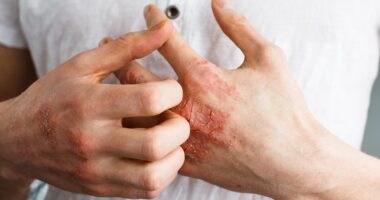
After this, a characteristic rash develops, often starting on the face and spreading to the palms and soles. These lesions progress together through stages, from flat spots to firm, pus-filled blisters, before crusting over.

New York City health officials have confirmed the first local case of clade I mpox, the more severe strain of the virus. This marks the 12th such case in the US since November 2024
Since the global mpox outbreak in 2022, Clade II mpox has continued to circulate in New York City, with 398 reported cases in 2025 and 45 reported cases between January 1 and March 10, 2026, with 16 cases reported in the last month alone.
In October 2025, the California Department of Public Health reported the first instances of community spread of Clade I mpox in the US.
According to the NIH, the fatality rate of Clade I ranges from 1.4 percent to more than 10 percent.
In the United States, transmission has occurred primarily through sexual and intimate contact within social networks of gay, bisexual and other men who have sex with men, as well as transgender individuals.
However, mpox can infect anyone who has close physical contact with an infected person, regardless of sexual orientation or gender identity.
Mpox is primarily spreading through oral, anal, and vaginal sex, as well as intimate activities like kissing, hugging, cuddling, biting and massage.
Transmission most commonly occurs through direct contact with a rash or sores, but can also happen via contact with an infected person’s mucus or saliva.
Less frequently, it may spread through contaminated clothing, bedding or other items.

The patient is in isolation, and officials have found no evidence of community transmission. The risk to the public remains low (file photo)

From the week of January 1, 2026 through March 7, New York City has recorded 45 mpox cases, including 16 in the past month
The virus can also pass from a pregnant person to a fetus or newborn, and from animals to humans through bites, scratches, or contact with fluids—though this is not a factor in the current US outbreak.
It remains unclear whether mpox can be transmitted through semen, vaginal fluid, urine or feces.
A person with mpox can transmit the virus from the moment symptoms begin until their rash has fully healed and fresh skin has formed.
In some cases, individuals may be contagious one to four days before symptoms appear, though it is unclear how frequently this occurs. Researchers are still investigating whether people who never develop symptoms can spread the virus to others.
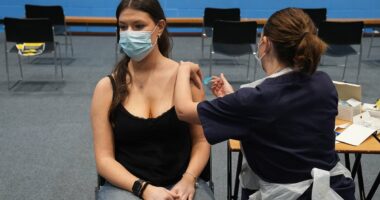
Vaccination significantly reduces the risk of contracting mpox and can lessen the severity of symptoms if someone does become infected.
To ensure maximum protection, those at risk should receive two doses of the JYNNEOS vaccine, with the second dose administered at least 28 days after the first. People who have already had mpox do not need to be vaccinated.
People who are male, trans, nonbinary, queer or gender non-conforming and have sex with men should speak to their doctors about vaccination.
People who are planning travel to a country where clade I mpox is spreading and may have sex with a new partner while there, regardless of sexual orientation or gender identity, should also get the vaccine.
Anyone who considers themselves at risk for mpox through sexual or intimate contact now or in the future should also consider vaccination.