
Bank of America is forecasting that the Federal Reserve will hold off on reducing interest rates until the latter part of 2027. This decision is primarily driven by persistent inflation and robust job market growth.
Initially, Bank of America Global Research anticipated two interest rate reductions in September and October of this year. This prediction was partly based on the assumption that Kevin Warsh, nominated by President Trump to replace Jerome Powell as Fed Chair, would guide policy towards more accommodative monetary measures.
However, the economic context has shifted, prompting a revision of this outlook. On Friday, economists from the financial institution informed clients that, given the current economic disturbances including conflicts in Iran, tariffs, and the rise of AI technologies, it has become increasingly challenging to predict interest rate changes, leading them to believe rate cuts are unlikely this year.
Bank of America is not alone in this sentiment. The CME Group’s FedWatch tool, which gauges financial market sentiment, indicates less than a 50% probability of rate cuts before the second half of 2027.
According to BofA Global Research, several elements could postpone Federal Reserve rate reductions. While Warsh has expressed a willingness to consider lowering borrowing costs, numerous Fed officials remain cautious about easing interest rates.
What’s impeding rate cuts?
Several factors could delay Fed rate cuts, BofA Global Research said. First, although Warsh has signaled his openness to easing borrowing costs, several Fed officials remain reluctant to ease rates.
For instance, Federal Reserve Bank of Chicago President Austan Goolsbee and St. Louis Fed President Alberto Musalem have recently pushed back against cutting rates amid concerns that AI-driven productivity gains could boost spending and cause the economy to overheat.
Second, the Fed is grappling with rising inflation, which at 3.3% remains stubbornly above its 2% annual target. Inflation has jumped since the start of the Iran war due to higher energy prices. Rate cuts help stimulate economic growth but can also fan inflation.
“Core inflation is too high, and moving up,” BofA Global Research said in its note, adding that rate cuts are more likely in the second half of 2027 as inflation starts to recede.
Deutsche Bank economists also expect consumer prices to remain above the Fed’s 2% annual target over the next year.
“Trend inflation has not shown clear signs of dipping below 3%,” they said in a May 8 note to investors, citing ongoing inflationary pressures, including the ongoing impact of tariffs and AI pushing up the cost of computer hardware and software.
Solid job growth
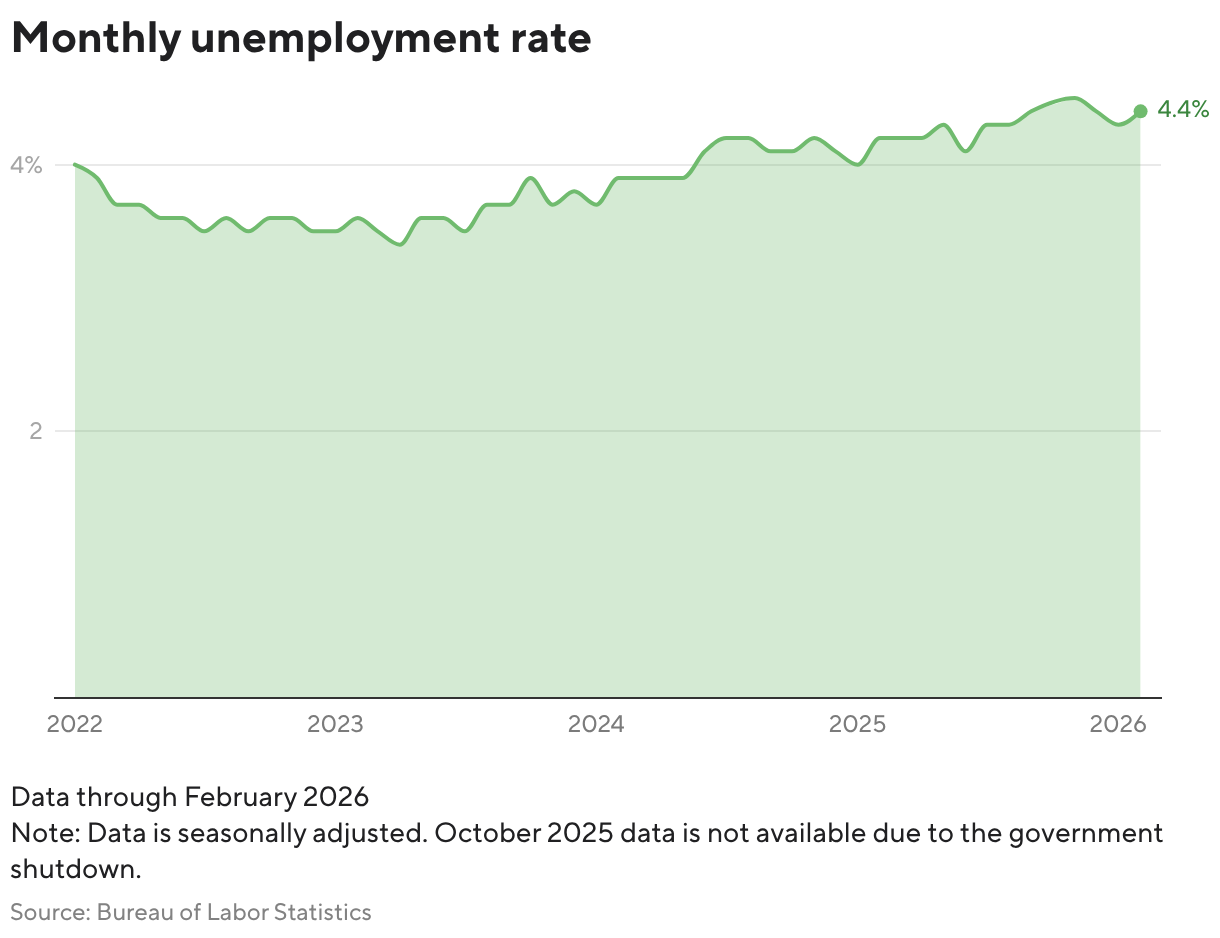
A stronger-than-expected jobs report released Friday also weakens the argument for rate cuts, according to BofA Global Research. Employers added 115,000 jobs in April, topping forecasts of 65,000 payroll gains.
With data showing the job market remains steady, Wall Street analysts said on Friday that the Fed will focus on taming inflation.
Interest rate cuts are decided by a 12-member panel known as the Federal Open Market Committee, or FOMC.
The last time the central bank cut rates was in December 2025, when it lowered the federal funds rate by a quarter of a percentage point. The federal funds rate has remained in its current range between 3.5% and 3.75% ever since.