Share this @internewscast.com
“Politics isn’t wagging the tail – it’s shaking the entire dog.”
These strong words from one wealth manager to CNBC last week capture a hectic first half of trading. They also set the stage for an uncertain second half, where “geoeconomics” looks set to remain a dominant market force.
This week, expect attention to return to monetary policy, as central bankers from across the globe — who have kept their heads down amid political tensions — prepare to speak at the ECB Forum in Sintra, Portugal.
Halftime report
A lot has happened in the last six months, with trade tensions and truces sending equity markets across the globe haywire.
The VIX volatility index — also known as the Wall Street fear gauge — spiked in April as tariff threats, followed by tariff pauses, caused huge intraday swings across major indices. Meanwhile, “black swan” moments in the Middle East also kept investors on edge.

Dax vs. S&P 500
Amid all the uncertainty, some stock markets showed remarkable resilience: Germany’s Dax remains the outperformer in Europe, up over 18% so far this year, followed by London’s FTSE 100 up around 9%, while the French CAC 40 lags with around 5% gains.
But what does this all mean for trading in the second half of the year? Goldman Sachs warns that, “elevated policy uncertainty paired with a worsening macro backdrop are likely to support higher equity volatility in the next months.”
Don’t miss the best of CNBC’s live programming and events from across Europe, Asia and the Middle East on YouTube.
Central banks take center stage at Sintra
As Goldman’s warning rings loudly in investors’ ears, the stage is set for central banks to return to the limelight.
This week, the town of Sintra in Portugal plays host to the annual ECB Forum, where European central bankers are joined by their international counterparts to exchange views on current policy issues.
The sun may well be shining in Portugal — but President Donald Trump’s recent comments will no doubt cast a shadow over the meeting, as he continues to put unprecedented pressure on Federal Reserve Chair Jerome Powell.
Just last week, Trump’s name-calling of Powell ramped up, sparking talk of a so-called “shadow Fed chair,” who could keep an eye on things until taking over as chair next year.
Powell also put the pressure on his monetary policy peers, calling on central bankers to hold steady until they see the impact of trade tariffs: “We are well positioned to wait and learn more about the likely course of the economy before considering any adjustments to our policy stance.”
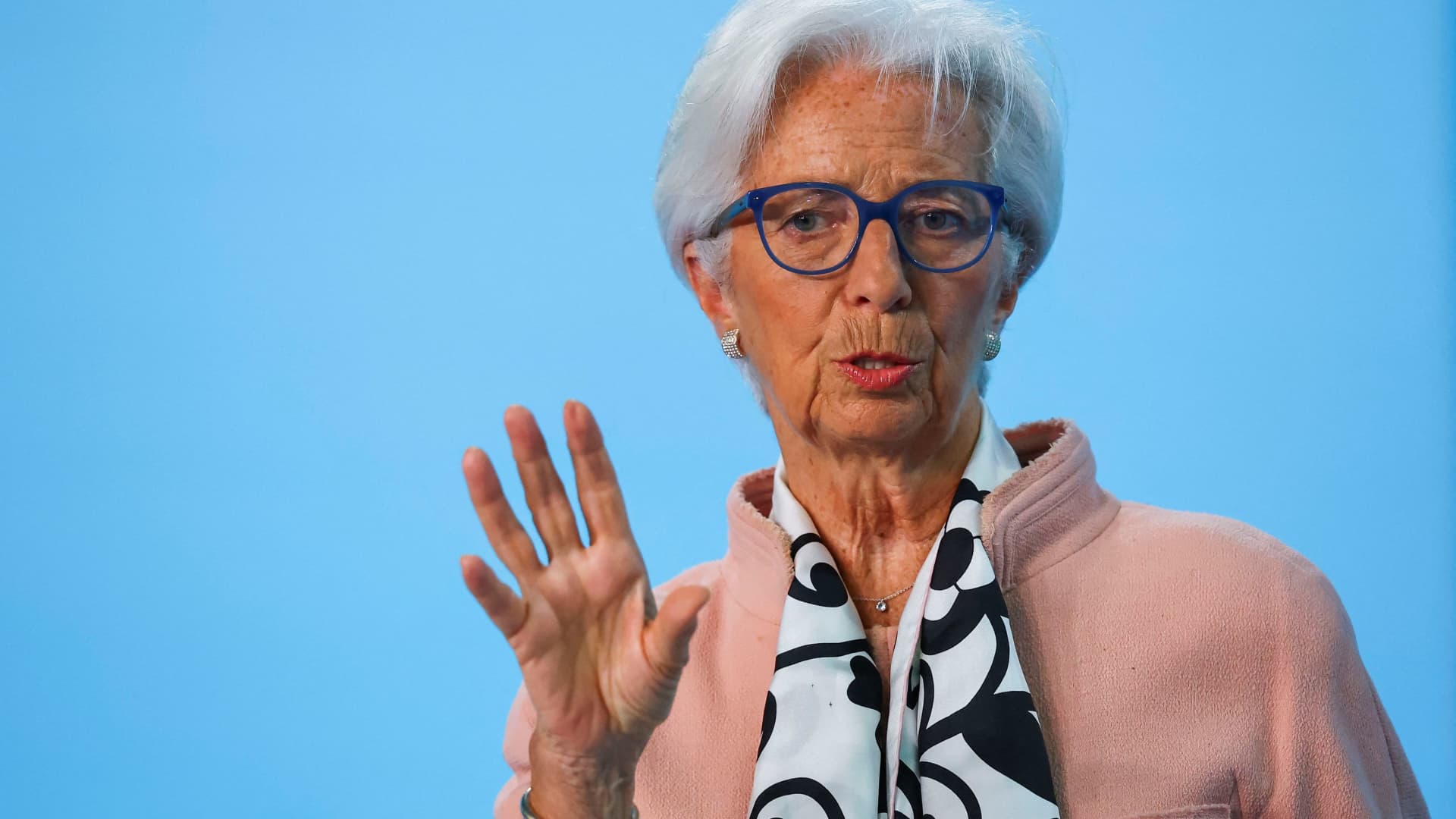
Europe will need to decide how much it lets the U.S. approach dictate its policy, with ECB President Christine Lagarde opening proceedings in Sintra with a speech on Monday evening.
Expect a punchy tone; her recent op-ed in the Financial Times saw her call for the euro to take advantage of the current environment and “gain global prominence.”
Labour’s First Year in Power
Next Friday marks the first anniversary of the Labour Party taking power in the U.K., following 14 years of Conservative rule. A landslide victory saw a jubilant Labour return to Downing Street with the promise of change and growth. But the honeymoon period was short-lived.
Fast-forward 12 months and Prime Minister Keir Starmer looks set to reach his first year in office with plummeting approval ratings which put him below his rival party leaders, including Reform’s Nigel Farage, Liberal Democrat Sir Ed Davey and Conservative leader Kemi Badenoch.
Starmer has faced a lot of external pressure, ranging from a public spat with Elon Musk to a slew of foreign policy challenges in Ukraine and the Middle East. Even three trade deals — with Europe, India and the very first U.S. agreement — did little to improve his popularity. But the economic challenges at home are causing the most discontent, with pressure even from within his own party to review certain reforms.