
Share this @internewscast.com

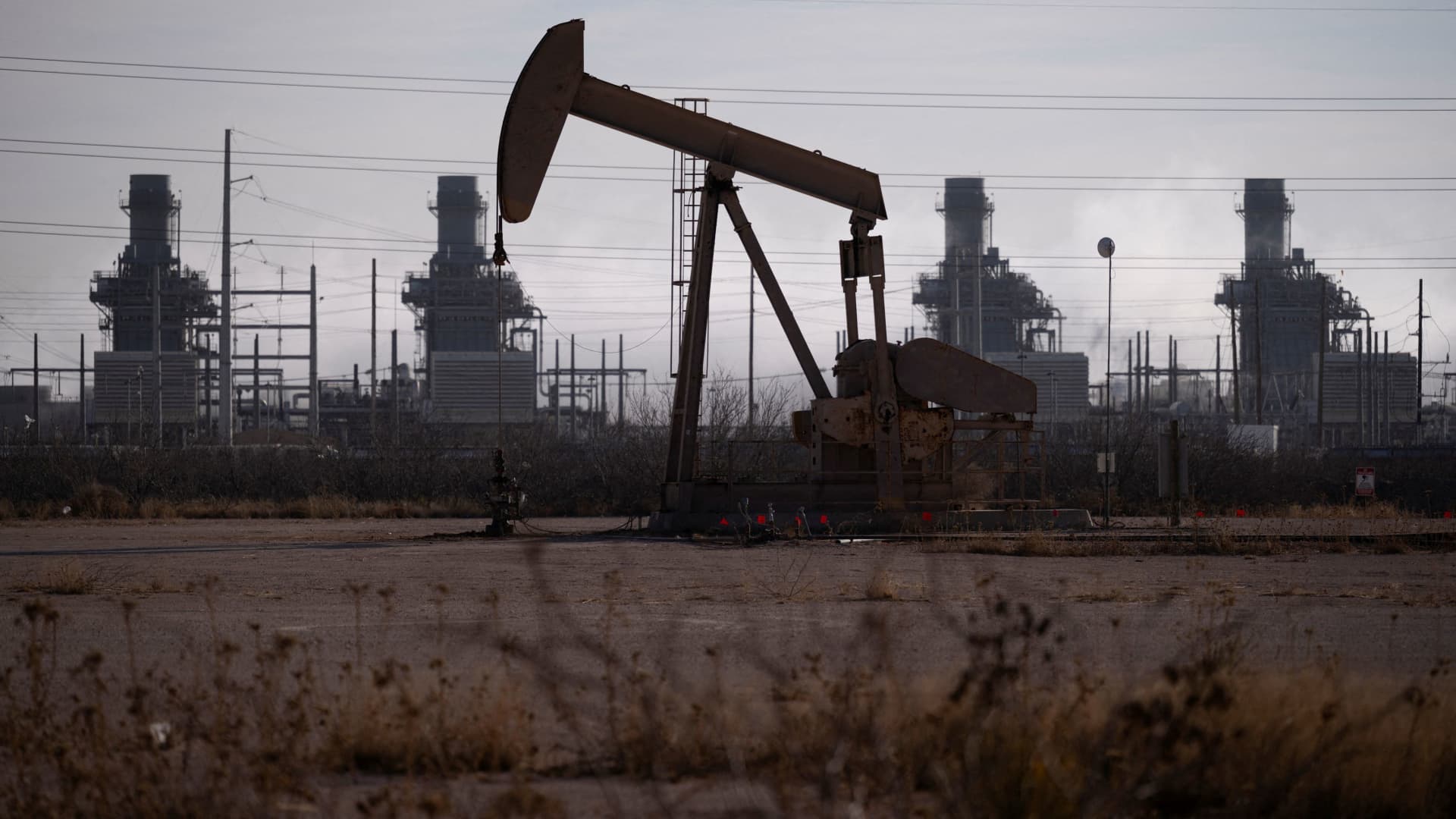
The U.S. crude oil market experienced an unprecedented surge this past week, marking the most significant weekly increase in futures trading history. This spike comes as the intensifying conflict in the Middle East severely disrupts global fuel supplies.
West Texas Intermediate (WTI) futures skyrocketed by an impressive 12.21%, climbing $9.89 to close at $90.90 per barrel. Meanwhile, Brent crude, the global benchmark, saw an 8.52% rise, increasing by $7.28 to settle at $92.69 per barrel.
U.S. crude oil soared by a remarkable 35.63%, setting a new record for the largest weekly gain since the inception of the futures contract in 1983. Similarly, Brent crude surged approximately 28%, marking its most substantial weekly rise since April 2020.
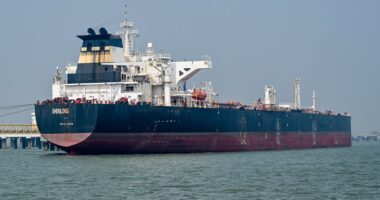
Amidst these market upheavals, President Donald Trump issued a stern demand for an unconditional surrender from Iran, heightening concerns about a prolonged conflict. Such a scenario could further destabilize the global oil and gas markets. The Strait of Hormuz, a vital artery for energy shipments, has already seen a dramatic slowdown in traffic due to the conflict.
Qatar’s energy minister, Saad al-Kaabi, warned in a statement to The Financial Times that crude prices might soar to $150 per barrel if tankers continue to face obstacles navigating through the Strait. According to Kaabi, such an escalation “could bring down the economies of the world,” underscoring the potential global economic ramifications of the ongoing turmoil.
This could “bring down the economies of the world,” Kaabi said.
“Everybody that has not called for force majeure we expect will do so in the next few days that this continues,” Kaabi told the FT. “All exporters in the Gulf region will have to call force majeure. If they don’t, they are at some point going to pay the liability for that legally, and that’s their choice.”
The Trump administration on Friday announced a $20 billion insurance program for oil tankers in the Persian Gulf, though the measure did little to calm the crude market.
Iraq has shut down 1.5 million barrels per day of production, two Iraqi officials told Reuters Tuesday. Kuwait has also started cutting production after running out of storage space, people familiar with the matter told The Wall Street Journal on Friday.
“The market is shifting from pricing pure geopolitical risk to grappling with tangible operational disruption,” Natasha Kaneva, head of global commodities research at JPMorgan, told clients in a Friday note.
Production cuts could approach 6 million bpd by the end of next week if the Strait is not open to traffic, Kaneva said. JPMorgan expects the United Arab Emirates to show supply constraints next week.
The average price for a gallon of regular gasoline jumped nearly 27 cents in the last week through Thursday to $3.25, according to data from U.S. travel organization AAA
The war between Iran and the U.S. entered its seventh day on Friday. In a press conference on Thursday, U.S. Defense Secretary Pete Hegseth said the U.S. had “only just begun to fight.”
“Iran is hoping that we cannot sustain this, which is a really bad miscalculation,” he told reporters.

Crude oil prices