
Share this @internewscast.com
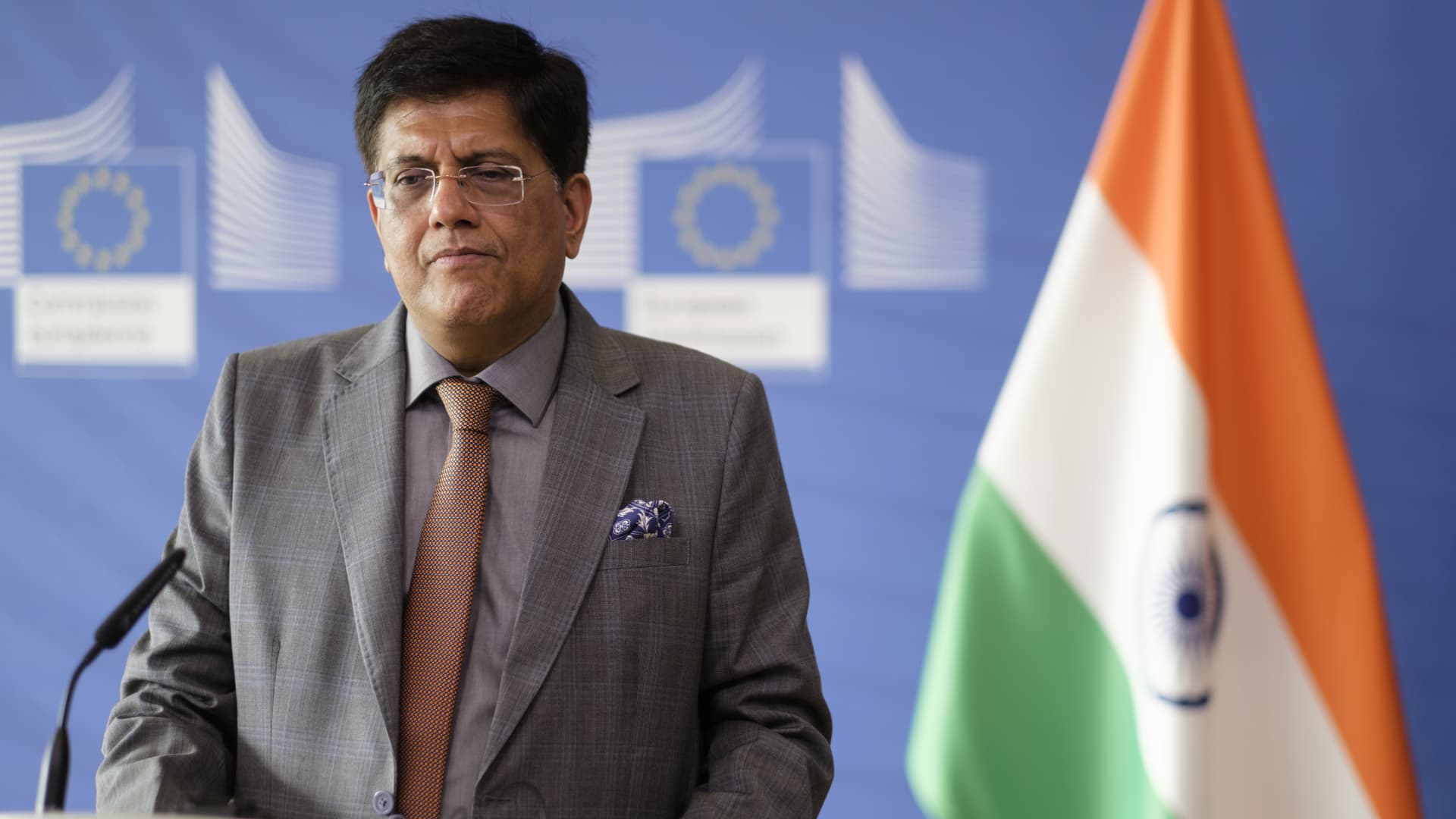
India’s Minister of Commerce and Industry, Shri Piyush Goyal, recently addressed the media regarding trade ties between India and the European Union. In a significant development, India plans to eliminate tariffs on industrial imports from four European countries in exchange for a $100 billion investment spread over the next 15 years, concluding nearly 16 years of prolonged negotiations.
According to reports, New Delhi is poised to make substantial aircraft purchases, with orders potentially reaching $80 billion for Boeing planes. Minister Goyal highlighted this move as a step towards enhancing trade relations with the United States.
Goyal noted that the demand for aircraft alone, with pending Boeing orders, could amount to $80 billion. When factoring in engines and other spare parts, imports from the U.S. could surpass $100 billion solely through these aircraft acquisitions.
In related news, families of those who perished in last year’s Air India crash in Ahmedabad have filed a lawsuit against Boeing. The tragedy, which resulted in the loss of 241 out of 242 passengers and crew, allegedly involved defective dual switches, as mentioned by the minister.
Goyal also mentioned the potential for India to procure at least $500 billion in goods from the U.S. over the next five years. However, he clarified that this projection does not entail a specific investment commitment within the current trade agreement with Washington.
The minister also said that there was potential to procure a minimum of $500 billion worth of goods from the U.S. over the next five years, but clarified that there was no explicit investment commitment made as part of the trade deal with Washington.
On Monday, within a week of the India-European Union trade deal, U.S. President Donald Trump announced in a social media post that Washington and New Delhi had agreed a trade deal.
Trump said that the U.S. will reduce tariffs on Indian goods to 18%, while New Delhi will lower duties on U.S. goods to zero, replace Russian oil with supply from U.S. and Venezuela, open sensitive markets such as agriculture, and buy $500 billion worth of American goods.
The Indian prime minister expressed delight over the cut in duties, as goods from the country entering the U.S. have been subjected to 50% tariffs, but did not acknowledge any other details shared by Trump.

While experts agree that India will buy more from the U.S., they have said the target of buying goods worth $500 billion from Washington “seems a stretch.”
India’s overall goods imports stood at $720.24 billion in financial year 2025, with its trade deficit at $94.3 billion. That includes goods worth $45.3 billion from the U.S.
Deal timeline
India and the U.S. will sign a joint statement in the next three to four days, finalizing the first tranche of the trade deal between the two countries, Goyal said on Thursday. The 18% tariffs on Indian exports to the U.S. will become effective after the joint statement is issued, he added.
The two sides will then sign a formal agreement in mid-March, after which the tariff concession for U.S. goods entering India will become effective.
Since the deal has been announced, the Indian government has been scant with details and is facing questions from opposition political parties.
The leader of India’s opposition, Rahul Gandhi, has accused Modi of being “compromised” and of having “surrendered on Tariffs.
The Indian government has not confirmed some of Trump’s claims about the trade deal such as India reducing duties on U.S. goods to zero and halting imports of Russian oil, as well as a firm commitment to purchasing goods worth $500 billion.
Experts say Trump’s claims seem “unrealistic” and risk the U.S. backtracking on the trade deal, citing his threats to raise tariffs on South Korea, after slashing them in July last year, despite a trade deal.