
Share this @internewscast.com
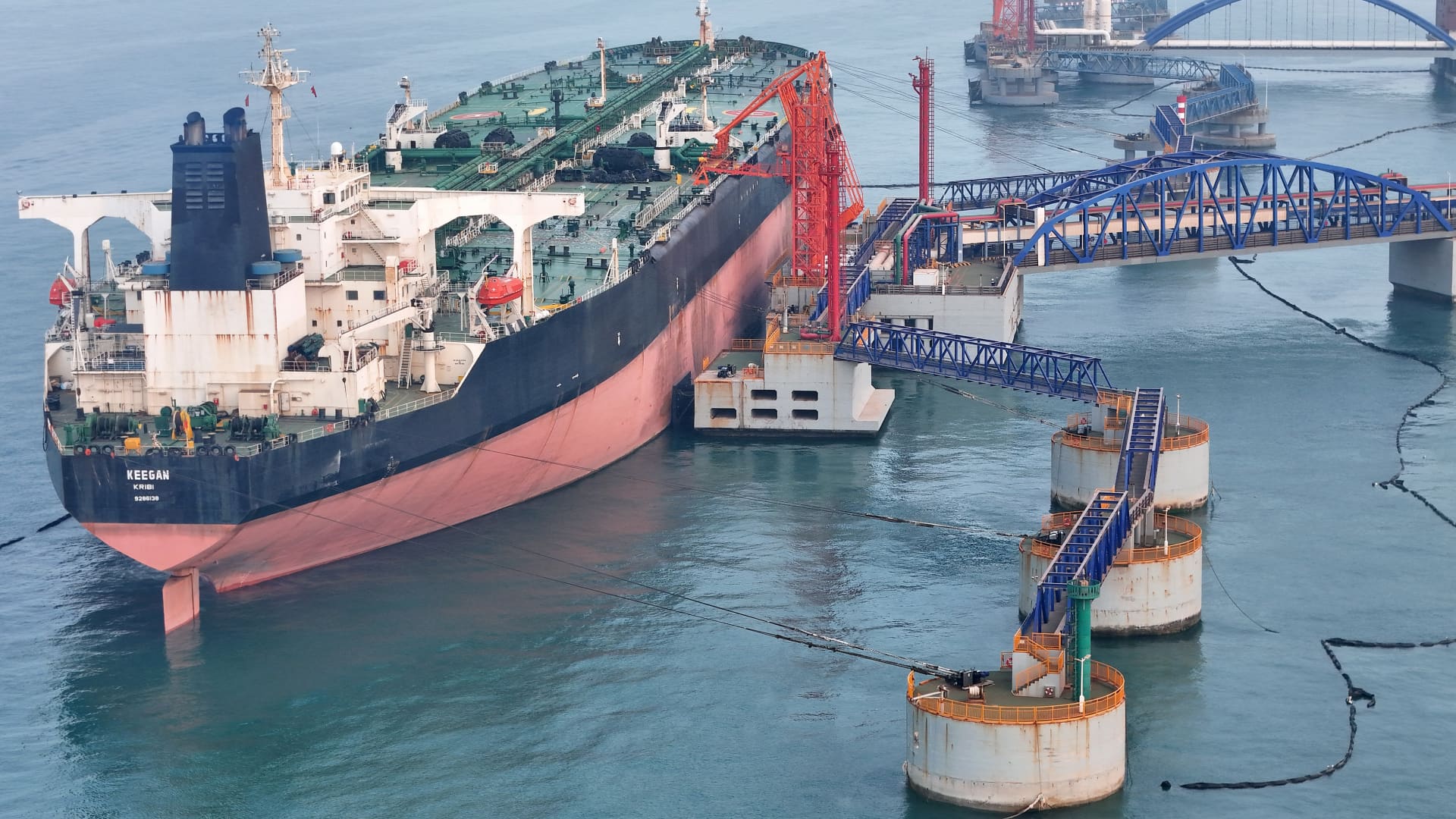
An image captured on March 26, 2026, reveals an oil tanker unloading crude oil at a port in Yantai, located in China’s eastern Shandong province.
Photo Credit: CN-STR | AFP | Getty Images
On Thursday, oil prices climbed as Iran accused the United States of violating portions of a two-week ceasefire agreement. This accusation has sparked concerns about a potential rise in tensions, which might lead to disruptions in energy supply.
Brent crude futures, the global oil benchmark, for June delivery increased by 2.8%, reaching $97.42 by 5:28 a.m. ET. Meanwhile, U.S. West Texas Intermediate (WTI) crude futures for May delivery saw a rise of 3.1%, priced at $97.33.
This price movement follows a significant drop in U.S. crude oil prices, marking the largest single-day decline since 2020, just a day prior.
Iran’s parliamentary speaker, Mohammad Bagher Ghalibaf, announced on Wednesday that Washington had violated the terms of the ceasefire agreement.
“The deep historical distrust we hold toward the United States stems from its repeated violations of all forms of commitments — a pattern that has regrettably been repeated once again,” Ghalibaf said in a statement posted on social media.

Oil prices since the start of the year
Ghalibaf said three elements of Iran’s 10-point truce proposal had been violated: Israel’s ongoing strikes in Lebanon, a drone entering Iranian airspace, and what he described as the denial of Tehran’s right to enrich uranium.
U.S. President Donald Trump had said Tuesday stateside that Iran’s proposal could serve as a basis for talks.
Vice President JD Vance responded to the allegations while on a trip to Hungary on Wednesday. “Ceasefires are always messy,” Vance said, addressing the reported drone incident in Iranian airspace. He added that Washington maintains Iran should not be allowed to enrich uranium, and said any ceasefire covering Lebanon had not been included in the agreement.
Now that oil is below $100 per barrel, refiners should “use this window to resume more opportunistic buying,” said Rystad Energy’s vice president of commodity markets, Janiv Shah.
“However, the transition period itself could present the next challenge. If refiners delay purchases in anticipation of further price declines while physical flows remain constrained, product tightness could worsen even amid de-escalation,” he added.