

South Korea’s Kospi index has recently posted its most impressive monthly performance, soaring nearly 31%—a feat not seen since January 1998. This remarkable upswing has been fueled by a robust rally in technology stocks, helping the market to weather geopolitical tensions in the Middle East.
Central to this surge is the growing enthusiasm surrounding artificial intelligence, with semiconductor giants such as SK Hynix and Samsung Electronics spearheading the advance. These companies saw their shares climb by 60% and 35% respectively over the month, illustrating the significant impact of the tech boom.
In a strategic shift, HSBC upgraded its rating of South Korea from “underweight” to “neutral” last week. This change was attributed to recent foreign investment outflows that have eased the pressure of over-positioning in the market and mitigated the risks associated with geopolitical instability.
Apart from the dominant semiconductor sector, HSBC has highlighted other growth sectors contributing to the market’s momentum. These include energy storage, shipbuilding, defense, and nuclear power, all of which are playing their part in sustaining the rally.
Despite these positive developments, the broader Asia-Pacific markets, including the Kospi, faced some challenges on Thursday. A sudden increase in oil prices, spurred by concerns over possible U.S. military action against Iran, drove oil to four-year highs before it eased. This, combined with ongoing uncertainty following the Federal Reserve’s decision to maintain interest rates, exerted downward pressure on the markets.
As a result, the Kospi ended the day down by 1.38% at 6,598.8, and the smaller Kosdaq index dropped 2.29% to settle at 1,192.35. Despite these declines, the recent rally underscores a period of significant growth and resilience for the Kospi.
In Australia, the S&P/ASX 200 lost 0.24% to end the trading day at 8,665.8.
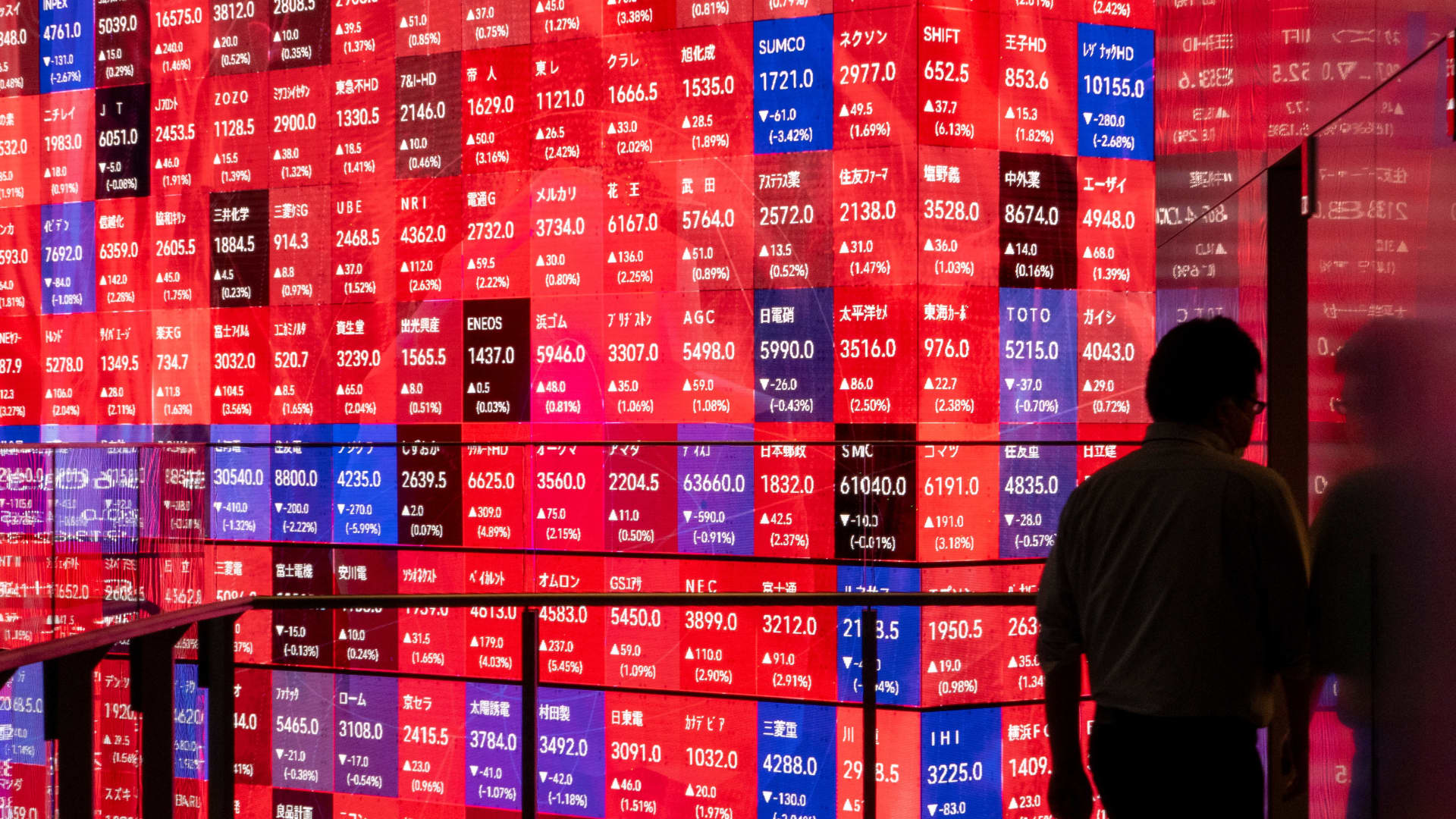
Japanese markets declined as trading resumed after a holiday. The benchmark Nikkei 225 lost 1.06% to close at 59,284.92 while the Topix fell 1.19% to 3,727.21.
Hong Kong’s Hang Seng index was down 1.27% as of its last hour of trade, while mainland China’s CSI 300 closed flat at 4,807.30
Oil climbed after Axios, citing two sources with knowledge of the matter, reported that the U.S. Central Command was set to present U.S. President Donald Trump plans for possible military action against Iran.
Trump had earlier reportedly rejected Tehran’s proposal to reopen the Strait of Hormuz, signaling the naval blockade will remain in place until a broader nuclear agreement is reached.
June futures for international benchmark Brent crude were last up 3.4% at $121.98 a barrel Thursday, while U.S. West Texas Intermediate added 1.21% to $108.22.
Brent crude has surged to its highest levels since mid-2022, LSEG data shows, as the Middle East conflict chokes supplies.
In the U.S., futures tied to the S&P 500 added 0.3%, while Nasdaq 100 futures gained 0.5%. Dow Jones Industrial Average futures fell 128 points, or 0.2%.
Overnight in the U.S., the Dow Jones Industrial Average closed lower. The 30-stock index fell 280.12 points, or 0.57%, to close at 48,861.81 and notch a fifth straight losing day. The S&P 500 inched down 0.04% to close at 7,135.95, while the Nasdaq Composite crept up 0.04% to 24,673.24.
— CNBC’s Sean Conlon and Lisa Kailai Han contributed to this report.


