
Share this @internewscast.com
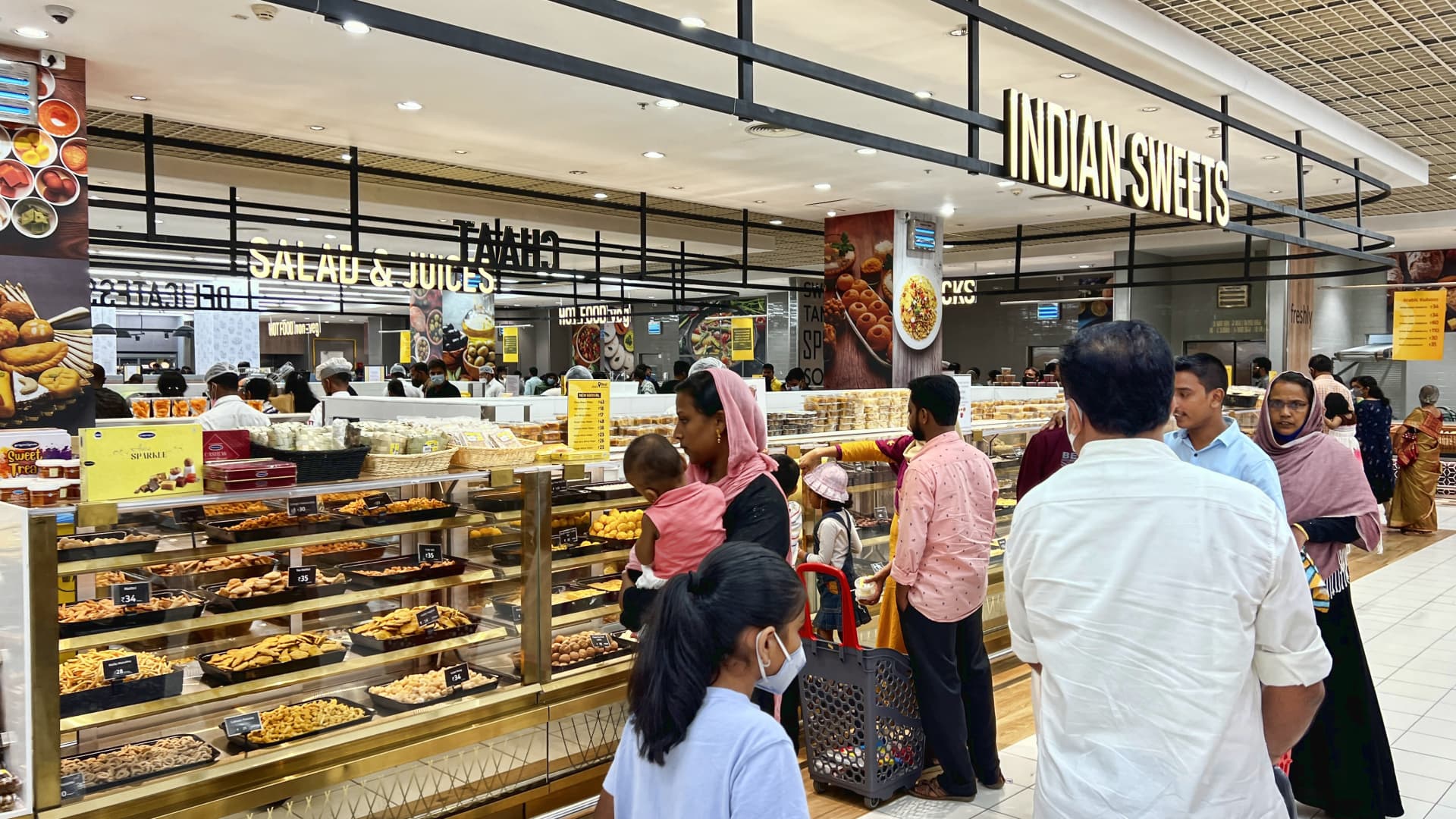
On May 25, 2022, shoppers perused the aisles of the luxurious LuLu Hypermarket in Kerala’s Lulu International Shopping Mall, India.
Image Source: Nurphoto | Nurphoto | Getty Images
India experienced a notable increase in consumer inflation, climbing to 0.71% in November from a historic low of 0.25% in the previous month.
This inflation rate aligned closely with the anticipated 0.70% rise in the consumer price index, as projected by a Reuters survey of economists.
The government’s report released Friday attributed the uptick in consumer inflation to rising costs of vegetables, eggs, meat and fish, spices, as well as fuel. Specifically, the prices for fuel and light witnessed a jump of 2.32% in November, up from 1.98% in October.
Both urban and rural regions experienced increased inflationary pressures.
Low inflation environment, coupled with the weakening of some key economic indicators, led India’s central bank to cut its policy rates by 25 basis points last week, allowing it to boost the country’s already strong economic growth.
The Reserve Bank of India expects consumer inflation at 2% for fiscal year ending March 2026, down from 2.6% forecast in October. It estimates CPI at 2.9% in the three months to March, rising to 4.0% in the quarter ending September 2026.
“The growth-inflation balance, especially the benign inflation outlook on both headline and core, continues to provide the policy space to support the growth momentum,” the central bank said last week after its monetary policy meeting.
Low inflation outlook has allowed the central bank “to remain growth supportive,” RBI Governor Sanjay Malhotra said, adding that the central bank will “continue to meet productive requirements of the economy in a proactive manner.”
Experts are divided on whether the 25-basis-point cut will be the last in this easing cycle or the RBI could ease further, given Malhotra’s “dovish” signals.
“We believe weaker growth down the line, low for long inflation, and tight fiscal policy may require growth supportive monetary policy in 2026 as well,” HSBC Research said in a report last week, post the monetary policy announcement.
In August, the U.S. imposed an additional 25% tariff on Indian imports, raising total duties to as high as 50%, among the steepest imposed by Washington on its trading partners, with textiles, gems and jewelry, and marine products being hit the hardest.
While exports to the U.S. account for just about 2% of India’s GDP, a prolonged weakness in those labor-intensive sectors could lead to job losses and weigh on overall growth.
To cushion the blow, New Delhi rationalized its goods and services tax regime, reducing levies on several items on Sept. 22, to spur domestic demand ahead of a month-long festive season. The tax cuts led to reduced prices for consumer goods, vehicles, and farm products, boosting consumption.
While consumption picked up, exports to the U.S., one of India’s major trading partners, fell for a second straight month in October, sliding 8.5% from a year earlier to $6.3 billion. Overall, outbound shipments in October also dropped 11.8% to $34.38 billion.
With no deal between New Delhi and Washington in sight, in the last few days, and a drop in exports, the Indian rupee has been hitting record lows against the dollar, and was trading below the 90-rupee-per-dollar mark on Friday.