

On Tuesday, oil prices took a hit after the White House indicated that a new set of peace negotiations between the United States and Iran might be on the horizon.
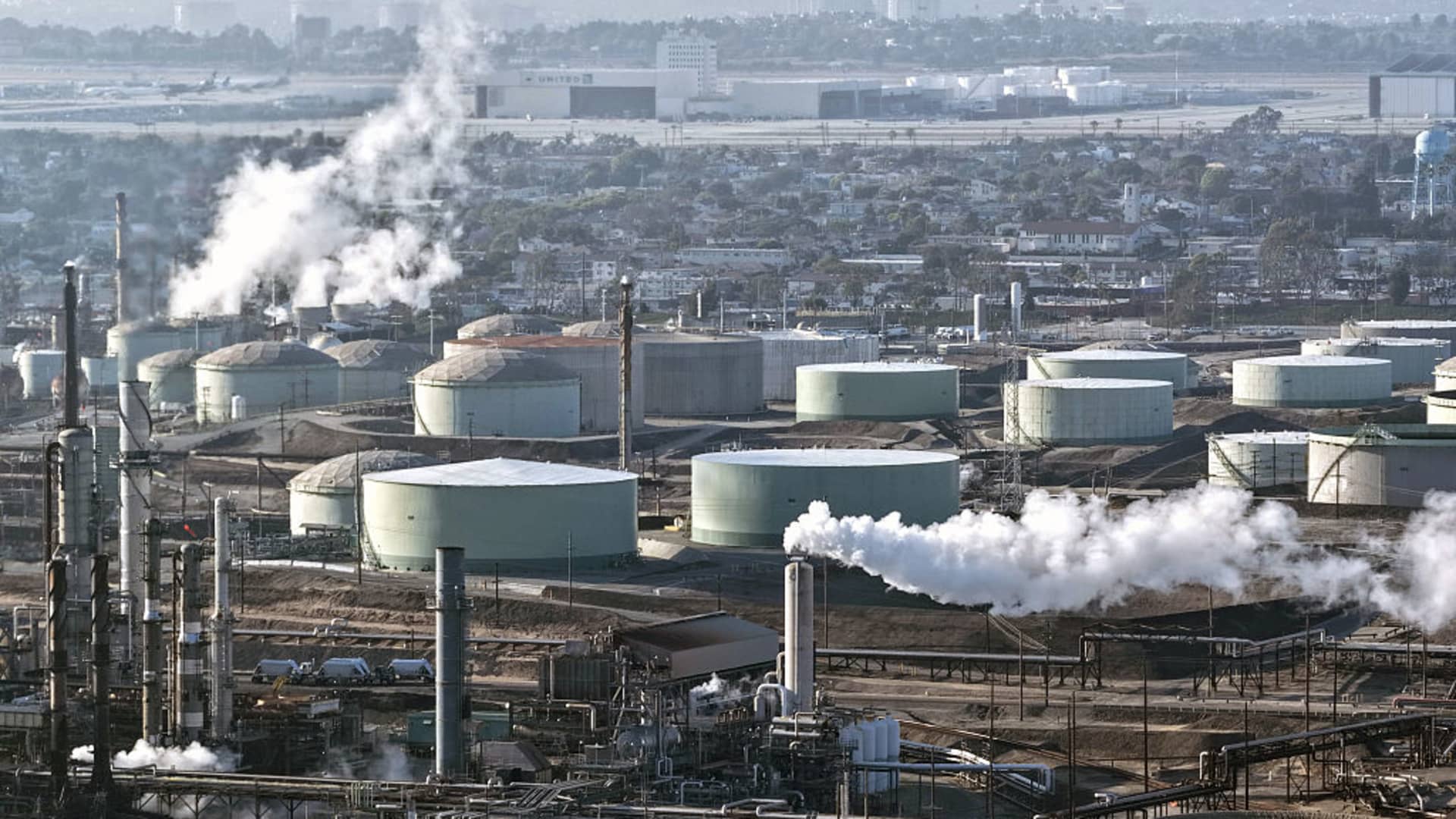
U.S. crude oil futures set for May delivery dropped significantly, falling nearly 7% to $92.34 per barrel by 12:17 p.m. ET. Meanwhile, Brent crude, the international benchmark for June delivery, saw a 4% decrease, landing at $95.34 per barrel.
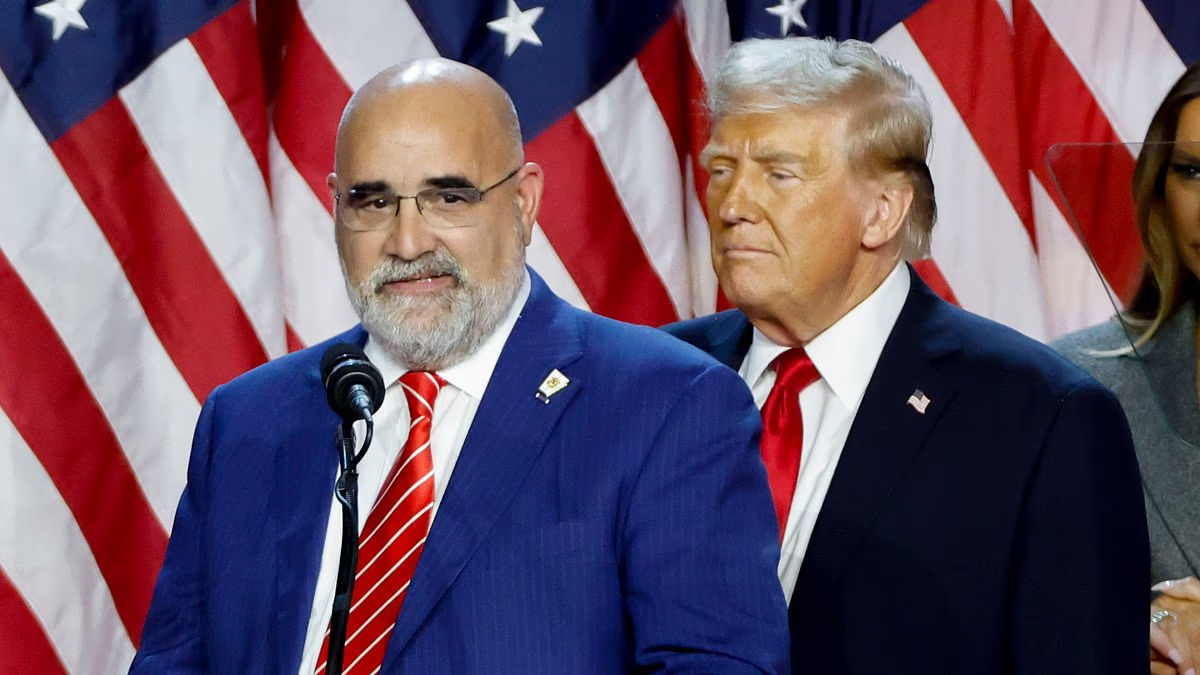
According to a White House official who spoke to CNBC, the Trump administration is open to resuming discussions with Iran, although no specific meetings have been scheduled yet. Vice President JD Vance mentioned on Monday that the decision now lies with Iran, following the unsuccessful talks in Islamabad, Pakistan last weekend.
During an interview with Fox News, Vance stated, “Whether we proceed with further discussions or reach an agreement is really up to Iran, as we have made significant offers.”
The U.S. Navy initiated a “blockade” of Iranian ports in the Persian Gulf on Monday, aiming to pressure Tehran into concessions.
This blockade poses a direct threat to Iran’s oil shipments through the Strait of Hormuz, which averaged around 1.7 million barrels per day last month, according to Vivek Dhar from the Commonwealth Bank of Australia.
“Therefore, the blockade tightens physical oil and refined product markets even further,” he said.
Oil demand to fall
The International Energy Agency forecast Tuesday that the oil supply shock triggered by the Iran war will depress demand this year as consumers respond to surging fuel prices.
It expects oil demand to contract by 1.5 million barrels per day in the second quarter, the biggest drop since the Covid-19 pandemic. Demand is expected to fall by 80,000 bpd for the year, a big swing compared to previous IEA expectations that consumption would grow by 640,000 bpd.

U.S. oil prices year-to-date