
Exclusive: Naomi Best was given two days’ warning before she had to start dialysis for kidney failure.
The 60-year-old from Port Lincoln was diagnosed with polycystic kidney disease (PKD), a form of chronic kidney disease (CKD), at 35 but lived without symptoms for years.
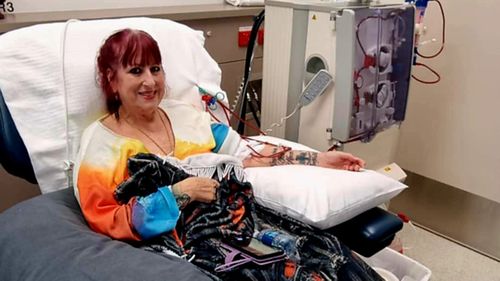
At what should have been a routine appointment in 2023, she was told she had just 48 hours to start in-centre haemodialysis in Adelaide, a seven-hour drive away.

“By the time I started dialysis, I was extremely sick, my kidney function was down to five per cent,” Best told 9news.com.au.
“I was sleeping up to 18 hours a day, had nausea and vomiting daily, lost 20 kilos, and struggled to shower or even walk to the letterbox.”
The worst part was not knowing when she’d be able to go home because her nearest dialysis unit had no space for her.
“We only have four chairs in our unit,” Best said.
“Unfortunately, for me to access a chair, a patient had to pass away.”
Best spent three weeks in Adelaide before that chair freed up but other patients in her unit have spent close to six months waiting in the capital.
This is because Australia is in the grips of a dialysis crisis as overburdened, understaffed units fight to keep up with growing patient demand.
An estimated 1.7 million Australian adults live with CKD and more than 15,000 patients with kidney failure are currently being treated with dialysis.
Each chair in a dialysis unit should support no more than four patients per week, and while the national average is 3.33 patients to a chair, some regions are struggling.
In the Northern Territory, the average is closer to 4.7 patients to a chair, according to the Australia and New Zealand Dialysis and Transplant (ANZDATA) Registry.
In some parts of western Sydney, the ratio is as high as five or six patients to a chair.
Almost 30 per cent of units in Australia have at least one nonâoperational chair, usually due to a lack of funding or appropriately trained staff.
The shortage has left many dialysis units understaffed, especially those in rural and regional areas, potentially compromising patient care.
Best has seen a rotating roster of agency nurses brought in to fill staffing gaps at her local unit and there’s no permanent nephrologist, meaning costly trips to Adelaide whenever she needs more advanced care.
“Out of pocket expenses for accommodation and taxi fares all add up, and I have no family I can stay with over there,” she said.
Some patients have to drive past their nearest unit to find one with capacity to treat them, while others have been forced to cut down from the standard three sessions per week to just two because there’s just no space to treat them more frequently.
About 24 per cent of patients get around these issues by using at-home dialysis therapies but they present their own challenges.
Mary, who asked for her surname not to be published, told 9news.com.au her Sunshine Coast home has become a “prison” since she started home dialysis.
Diagnosed with PKD in her early 20s, Mary’s kidney function declined rapidly in her 50s and she faced challenges accessing in-centre haemodialysis.
It also caused serious side effects, so she switched to at-home peritoneal dialysis.
Though it has been kinder on her body, this treatment requires Mary to dialyse nine hours a day, every day of the week.
She was forced to give up caring for her elderly mother and can no longer work or maintain an active social life as a result.
“You feel like you’re in a prison … it’s always got a hold of you,” she said.
“It’s very depressing and frustrating. You’re just missing out on life.”
Another patient said she paid about $40,000 to renovate her regional home so she could do at-home dialysis instead of travelling hours each way for in-centre haemodialysis.

Chief executive Chris Forbes fears that without greater emphasis on early diagnosis and preventative treatment, the dialysis crisis will only worsen.
“If you can diagnose the disease early, then you can slow or even stop progression to kidney failure,” he said.
“Doctors need to be on the lookout and doing kidney health checks which just haven’t been done, so people are diagnosed late and their options are very limited.”
Almost 2.7 million Australians currently live with indicators of CKD – up by almost one million people in the last decade – according to the latest National Health Measures Survey.
Of them, an estimated 2.49 million have no clue they have it.
There’s no cure for CKD and the only options for patients with advanced disease are dialysis or an organ transplant.
But organ donation rates plummeted by more than 20 per cent during the COVID-19 pandemic and though they’re back up in 2025, demand for donor kidneys vastly outpaces supply.
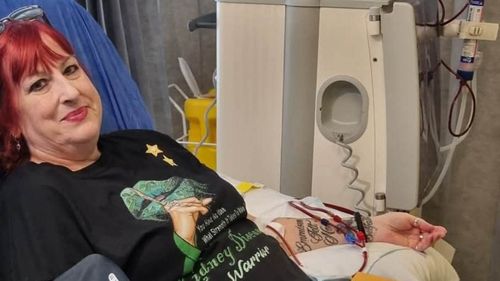
Best and Mary have both been on the waitlist for about two years and fear many more will pass before they receive donor kidneys.
About four in five Australians support organ donation but only one in three are registered donors, according to the 2024 Donation and Transplantation Report.
Even registered donors can be overruled by their families after death and more than 40 per cent of families refused to allow donation in 2024.
Until donation rates rise or the prevalence of CKD falls, the only option for patients like Best and Mary is to continue dialysis despite the challenges.
”I’ve got two choices: either do [dialysis] and live, or don’t do it and die,” Mary said.