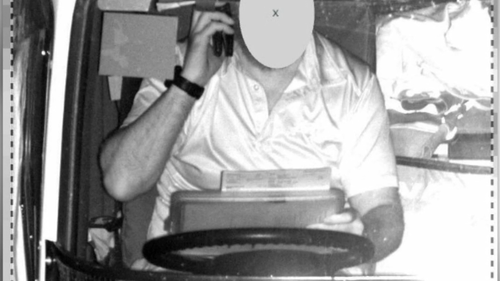

Across the state, six mobile camera trailers and three stationary cameras located on the Kwinana Freeway have been silently observing drivers for the past eight months. Initially, these devices were used to gently warn motorists about their behavior on the road.
However, this grace period came to a close on October 7. In the month following, a staggering $13 million in fines were issued to offenders. This financial penalty underscores the gravity of the situation as authorities aim to modify driving habits amidst rising road fatalities, which threaten to set a grim record for the worst year in nearly a decade.
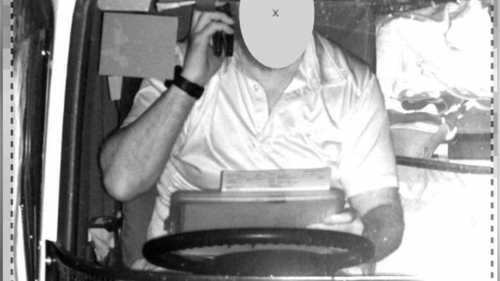
Professor Teresa Senserrick from the University of Western Australia highlighted a worrying trend: drivers are increasingly treating their vehicles as personal spaces, engaging in distracting activities that compromise road safety. “People are normalising the car as an extension of their home,” she emphasized, pointing out the dangers of such behavior.
In an effort to further understand and mitigate these risks, academics at the WA Centre for Road Safety Research at UWA are turning to innovative solutions. They hope that a state-of-the-art driving simulator will convincingly demonstrate just how perilous these distractions can be.
Professor Senserrick elaborated on the stakes involved, noting that “it’s usually fractions of seconds that are the difference between either being able to avoid a crash or at least being in a low-impact crash.” This highlights the critical need for increased awareness and behavioral change among drivers as a measure to enhance road safety.
“It’s usually fractions of seconds that are the difference between either being able to avoid a crash or at least being in a low-impact crash,” Senserrick said.