Share this @internewscast.com
Lately it can feel like every drink, meal or piece of plastic is out to get you. One person warns you not to microwave food in plastic containers. Another says to avoid bottled water. And every week, a new headline announces another place microplastics have been found in the body — blood, brain, urine and even breast milk.

Are we exaggerating the threat? Are we facing an inevitable crisis? And what insights have scientists truly uncovered?

The pressing issue isn’t just the presence of microplastics in our bodies, according to Rauert, but rather the quantity and potential risks they pose. This dilemma is compounded by the complexities involved in accurately measuring microplastics.

“They’re in the air we breathe, the food we eat, the water we drink,” said Dr Cassandra Rauert, a senior research fellow at the University of Queensland who studies the effects of microplastics on human health.
Microplastics are defined as plastic fragments smaller than five millimetres — about the length of a grain of rice — though lots of the particles scientists detect in the environment or in humans are thousands of times smaller. Nanoplastics are even tinier, completely invisible to the naked eye.

“We lack a clear understanding of our exposure levels to microplastics,” she stated.

“This is a crucial factor that must be integrated into ongoing research studies,” she emphasized.

Measuring is a good place to start because it is at the core of the issue. There are many different types of plastic, and researchers are still working to measure how much is in the body, said Rauert.

Without clear data on our exposure, it remains difficult to link any health impacts directly to microplastics.

In 2022, the World Health Organization (WHO) urged scientists to standardise how they test for microplastics in the body, warning that inconsistent methods were muddying the picture.
Rauert explains that the studies grabbing headlines often don’t acknowledge the limits of current testing.
“I think that the data is not convincing, and then it’s being reported in the media, and it’s causing a lot of concern in the general population — unnecessary concern.”
Other factors could also explain why some viral studies have claimed high levels of plastic in the body.
“We’ve published a study recently that’s showing that a lot of our bodies, for instance, contain a lot of fats, and that can give you a false positive for certain plastics,” Rauert said.

Rauert describes the study of microplastics as “an emerging analytical field” that is advancing rapidly, perhaps too rapidly. She suggests that scientists need to pause and critically assess the findings being reported.

This is something Professor Oliver Jones, a chemist at RMIT University, who has studied environmental contaminants, echoed.
He said some plastics, like polyethylene terephthalate, can look like body fat under certain lab tests. When broken down for analysis, both produce the same chemical “signals,” meaning a “plastic” reading can sometimes just be fat.
Jones said that when people don’t understand the intricacies or limitations of a study, its findings can easily be sensationalised.
“What makes the headlines are studies that use really high doses we’d never encounter … But science doesn’t work on feelings or likes or vibes or whatever. It’s based on evidence,” he said.

Until we know how much we’re exposed to, we can’t know whether any health effects are directly connected.

What can we say about the effects microplastics are having on our bodies?

This is where scientists and health bodies start to diverge.
Researchers agree we’re being exposed, but what happens once those particles enter the body remains unclear.
“So after we ingest them, can they then cross through the gut–blood barrier, get into our bloodstream? We still don’t have a good handle on that,” Rauert said.
“We don’t have a good measure of where it ends up in the body, and we don’t know the effects of that as well.”

She describes it as “a very young analytical field” that’s “progressing very quickly, perhaps a little too quickly,” adding that scientists “need to take a step back and look at what’s actually being reported”.

The global health view

Food regulators, including Food Standards Australia New Zealand and the European Food Safety Authority, say the small amounts of microplastics currently detected in food and drink are unlikely to harm human health.
Australia’s Department of Health, Disability and Ageing echoed that position in a statement to The Feed, but said it is currently reviewing the latest research on microplastics and plans to release updated health advice later this year.

But the WHO has taken an increasingly precautionary stance.
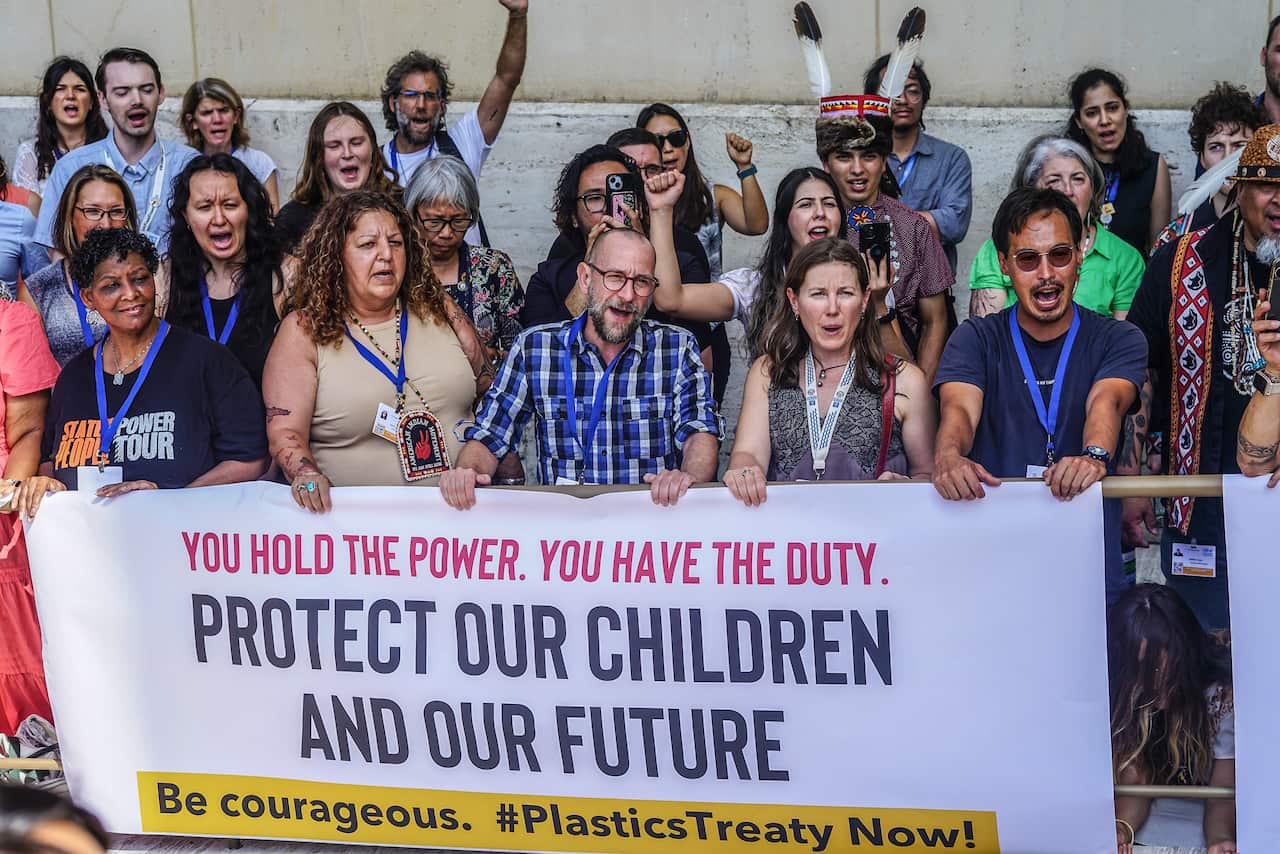
People standing behind a large white banner that has writing on it reading Protect our children and our future

Activists carrying a huge banner protest on the sidelines of the Plastics Treaty negotiations at the United Nations this year, before talks failed. Source: Getty / SOPA Images/LightRocket

In a statement to the Feed, it said it “recognises growing scientific evidence that the release of micro- and nano-plastics across the life cycle of plastics poses potential health risks.”

The WHO draws attention to the chemical additives in plastics — these make plastics tougher or clearer, but under heat, they can leach.
It noted that “many additives used in plastics are a health concern”.
The WHO stated that studies have linked these substances to “hormonal imbalance, reproductive disorders, infertility, kidney disease, and cancer”. Emerging research, it added, also connects plastic-related exposures to obesity, diabetes, and cardiovascular risks.
While the WHO acknowledges there are “many uncertainties” in current research, it says those gaps “do not change the message that measures should be taken to reduce exposure”.

Rauert agrees that while microplastics themselves are still being studied, the chemicals they contain are a known concern.
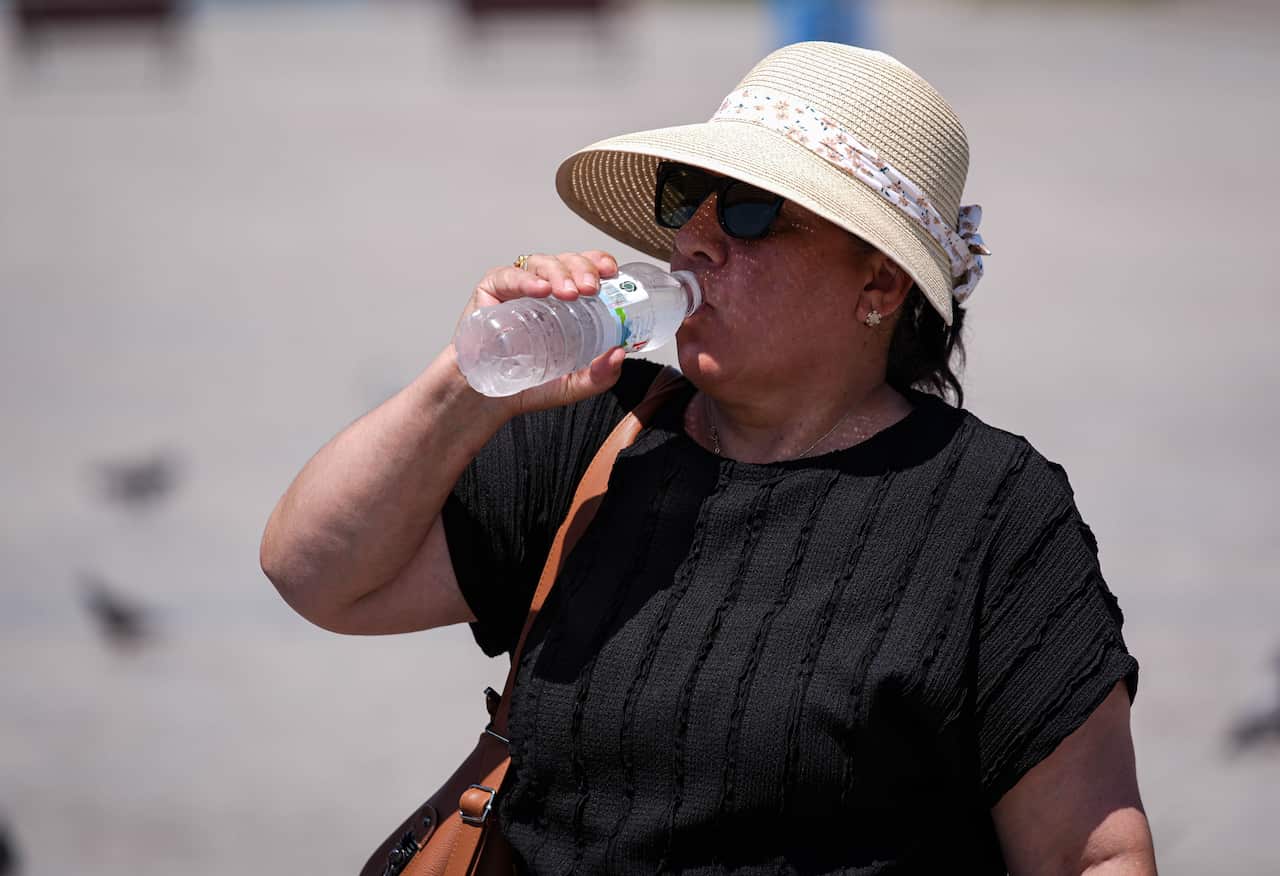
A woman wearing a white hat outside drinking from a clear plastic water bottle

A plastic water bottle left in the sun can heat up, allowing some of the chemicals used in the plastic’s production to potentially leach into the water inside. Source: Getty / Houston Chronicle/Hearst Newspaper

“Additive chemicals are added during manufacturing, or plastics can pick up chemicals in the environment. So when you’re exposed to these plastics, you’re exposed to these chemicals as well,” she said.

“And we do have a better understanding of health effects from those.”
She said some of those additives, “are endocrine disruptors. There’s been links with type two diabetes”.

But even here, experts warn against jumping to conclusions.
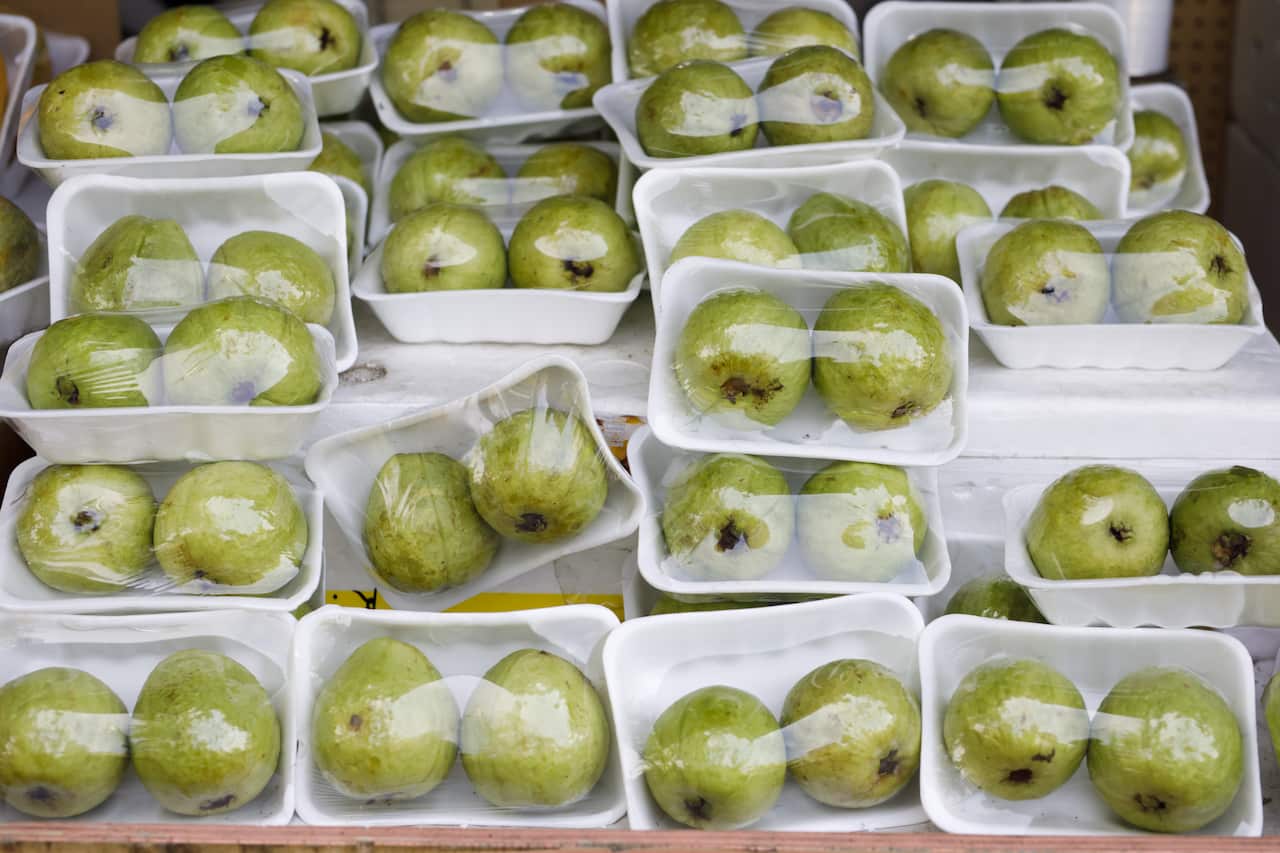
Pears packaged in plastic wrap.

Food Standards Australia New Zealand currently states that small amounts of microplastics in food and drink are unlikely to harm human health. Source: Bloomberg / Getty Images

As for viral claims that microwaving food in plastic causes infertility, Rauert urged caution. “I think having a direct link between microwaving your food and that affecting your fertility — that we don’t know as yet,” she said.

WHO said that it provides guidance through its “long-standing programmes on chemical risk assessment and international safety standards and continues to advise precautionary measures to limit unnecessary exposure and strengthen chemical management systems”.
This is echoed by Oliver Jones from RMIT, who said the risk of leaching chemicals is already something considered by manufacturers.
“Manufacturers have to do [tests] by law to get their products on sale,” Jones said.
“They have to show that any leaching that occurs is below the regulatory limits or not at all, and they need to do quite big studies in a wide variety of conditions to do that. And then their product is deemed safe for the conditions that it’s advertised to be used on.”

That’s why, he explains, certain products are labelled “microwave-safe”.

What should I do?

“Our bodies are not designed to be digesting up hard pieces of plastic, so reducing how much we’re actually eating in our food or drinking in our water can only be a good thing,” says Rauert.

Experts say there are small, reasonable ways to cut down your personal exposure:

  • Don’t overheat plastic containers. If it’s not labelled microwave-safe, use glass or ceramic instead.
  • Avoid leaving plastic water bottles in hot cars or direct sunlight.
  • Vent your clothes dryer outdoors — synthetic fabrics shed plastic microfibres into the air.
  • Choose reusable materials like metal drink bottles, wooden utensils, or glass storage jars where practical.
Jones says it’s fine to make small changes, but to keep perspective.
“There’s plenty of things that are bad for us that we have on a daily basis that we don’t worry about,” he said.
“We’ll be quite happy to take a car trip or drive too fast, sit in the sun without sunscreen on. But then we worry about microplastics.”
This year in Geneva, world leaders have been trying to hammer out a global plastics treaty and failed.

For now, the consensus is cautious: there’s growing evidence of risk, but not yet proof of harm. The advice from health agencies is to reduce exposure where possible — not out of panic, but precaution.


Share this @internewscast.com
You May Also Like

Manhunt Intensifies: Police Deploy Extensive Resources to Capture Fugitive Dezi Freeman

On Monday, authorities are reigniting a major search effort to locate Dezi…
Business owner Bruno Elias received 14 fines for parking illegally in the Wilson carpark at Adelaide University.

University Car Park Inspector Dismissed for Issuing Fraudulent Fines

An Adelaide parking inspector has been sacked after confessing to handing out…
Aerial urban suburban cityscape landscape view in Perth Western Australia.

Emerging Capital City Enters the $1 Million Real Estate Club: A Milestone in Housing Market Growth

A new capital has joined the ranks of Australian cities where the…

David Littleproud Successfully Retains Leadership After Unsuccessful Spill Attempt

David Littleproud will continue to serve as the leader of the federal…
Victoria's Mount Buffalo National Park has officially reopened after an extensive, eight week manhunt for accused police killer Dezi Freeman.

Intensified Manhunt: Police Launch Renewed Search for Accused Killer Dezi Freeman After Gunfire Incident

A major new search for alleged police shooter Dezi Freeman will kick…
A document that was included in the U.S. Department of Justice release of the Jeffrey Epstein files is photographed Sunday, Feb. 1, 2026.

Unveiled: The Removal of Key Epstein Documents and Its Impact on Victim Identification

The US Justice Department said that it had taken down several thousand…

Reyna’s Family Faces Deportation from Australia as Community Rallies in Support

Reyna Nangan, who has spent more than ten years establishing her life…

Discovering the Truth: The Emotional Impact of Sperm Donation on Families

For an in-depth look at the diverse experiences of individuals in Australia…

Pioneering Visa Holders Arrive in Australia: Thousands Applied, Meet the First to Land

The Manuellas: Pioneers of a New Era in Climate Migration In a…
A toddler is in a critical condition after being hit by a truck in Queensland. Police were called to the scene after reports a light truck hit a stroller being pushed by a woman crossing the road at the corner of Browns Plains Road and Webber Drive after 8.30am. The girl was rushed to Queensland Children's Hospital with significant head injuries.

25-Year-Old Man Charged with Murder in Tragic Newborn Death Case

A man has been charged with murder more than 18 months after…
Gold bars.

Gold Prices Plunge Following Trump’s Federal Reserve Leadership Announcement

The price of gold has seen a significant decline, with the precious…
Pauline Hanson in Australian Senate (Alex Ellinghausen/Nine)

Surge in Support for One Nation as Voters Turn Away from Traditional Parties

As federal politicians reconvene in Parliament this week, they are confronted by…