Share this @internewscast.com
Nearly 180 countries, including Australia, are set to begin 10 days of discussions aimed at establishing a landmark global treaty to tackle plastic pollution.
Negotiations stalled in South Korea in December when a group of oil-producing nations blocked an agreement.
Since the deadlock in Busan, countries have been working behind the scenes and are preparing for renewed discussions in Geneva under the auspices of the United Nations.
Key negotiators mentioned they do not foresee a straightforward process this time, yet they are confident that a deal is achievable.
“There’s been extensive diplomacy from Busan till now,” UN Environment Programme (UNEP) executive director Inger Andersen told Agence France-Presse.

UNEP is facilitating the talks, and Andersen mentioned that dialogues across, between, and among various regions and interest groups had generated momentum.

“Most countries, actually, that I have spoken with have said: ‘We’re coming to Geneva to strike the deal’.
“Will it be easy? No. Will it be straightforward? No. Is there a pathway for a deal? Absolutely.”

Plastic pollution is so widespread that microplastics have been detected on the highest mountain peaks, in the deepest ocean trench, and throughout nearly every part of the human body.

How did we get here, and what could be different this time?

In 2022, countries agreed they would find a way to address the crisis by the end of 2024. However, the supposedly final round of negotiations on a legally binding instrument on plastic pollution, including in the seas, flopped in Busan.
One group of countries sought an ambitious deal to limit production and phase out harmful chemicals.
But a clutch of mostly oil-producing nations rejected production limits and wanted to focus more narrowly on treating waste.

Ecuadoran diplomat Luis Vayas Valdivieso, who is chairing the talks process, said an effective, fair and ambitious agreement was now within reach.

“Our paths and positions might differ; our destination is the same,” he said on Monday.
“We are all here because we believe in a shared cause: a world free of plastic pollution.”
More than 600 non-governmental organisations are attending the Geneva talks.
Valdivieso said lessons had been learned from Busan, and NGOs and civil society would now have access to the discussions tackling the thorniest points, such as banning certain chemicals and capping production.
“To solve the plastic pollution crisis, we have to stop making so much plastic,” Greenpeace delegation chief Graham Forbes told Agence France-Presse.

The group and its allies are pushing for a treaty “that reduces plastic production, eliminates toxic chemicals, and secures the necessary financing to transition to a fossil fuel, plastic-free future,” he said.
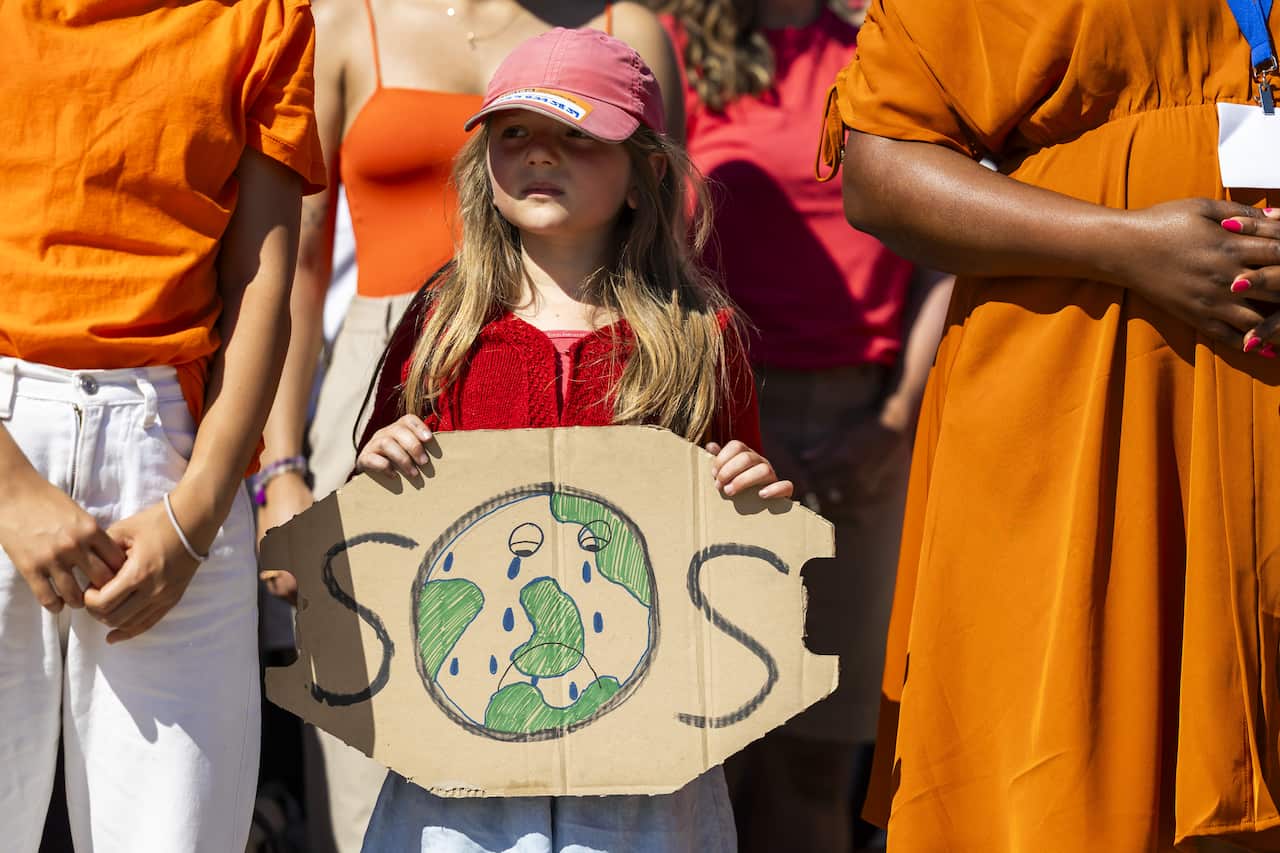
A young girl holding a piece of cardboard with "SOS" written on it. The O is a globe that is crying.

Greenpeace and its allies want a treaty that cuts plastic production and eliminates toxic chemicals. Source: AAP / EPA/Salvatore Di Nolfi

“The fossil fuel industry is here in force,” he noted, adding: “We cannot let a few countries determine humanity’s future when it comes to plastic pollution.”

How much plastic waste is produced every year?

Well over 400 million tonnes of plastic are produced globally each year, half of which is for single-use items.
While 15 per cent of plastic waste is collected for recycling, only 9 per cent is actually recycled.
Nearly half, 46 per cent, ends up in landfills, while 17 per cent is incinerated and 22 per cent is mismanaged and becomes litter.
A report in The Lancet medical journal warned on Monday that plastic pollution was a “grave, growing and under-recognised danger” to health, costing the world at least US$1.5 trillion ($2.31 trillion) a year in health-related economic losses.
The new review of existing evidence, conducted by leading health researchers and doctors, compared plastic to air pollution and lead, saying its impact on health could be mitigated by laws and policies.

To underscore the point, a replica of Auguste Rodin’s famous sculpture The Thinker outside the UN will gradually be submerged in accumulating plastic waste during the talks.
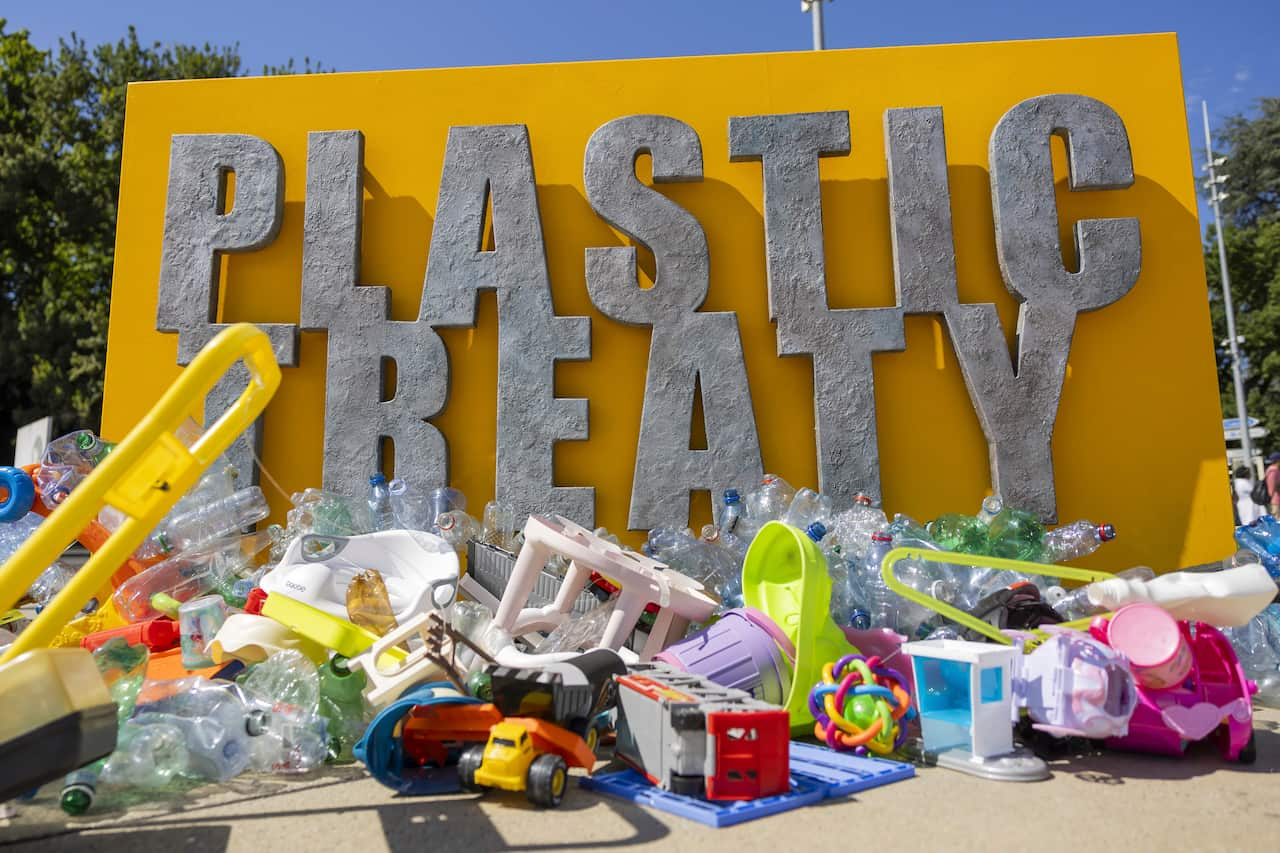
An artwork with plastic items underneath a large plaque that reads "PLASTIC TREATY".

More than 400 million tonnes of plastic are produced globally each year. Source: AAP / AP/Salvatore Di Nolfi

The artwork, entitled The Thinker’s Burden, is being constructed by the Canadian artist and activist Benjamin Von Wong.

“If you want to protect health, then we need to think about the toxic chemicals that are entering our environment,” he told Agence France-Presse.
But Matthew Kastner, spokesman for the American Chemistry Council, said the plastics industry and the products it makes were “vital to public health”, notably through medical devices, surgical masks, child safety seats, helmets and pipes delivering clean water.

Share this @internewscast.com
You May Also Like

Parliament to Prioritize New Hate Preacher Legislation in Upcoming Session

Parliament is expected to return at some point in the next two…
The Melburnian trio has amassed millions of fans for their comedy skits.

Australian Comedy Group Urges Stricter Security Measures Following Office Break-In

Australian comedy trio Sooshi Mango has revealed their Melbourne office was broken…
Venezuela's billions in distressed debt: Who is in line to collect?

Unpacking Venezuela’s Debt Crisis: Who Will Claim the Billions?

The recent ousting of President Nicolas Maduro has cast a spotlight on…
Marco Rubio

Rubio: US to Advocate for Change in Venezuela via Oil Blockade, Not Direct Governance

US Secretary of State Marco Rubio has suggested that the United States…

Concerned About AI Replacing Jobs? Experts Reveal a More Complex Reality

Artificial Intelligence (AI) is transforming jobs at a pace not seen since…

Urgent Alert: New Measles Case Detected in Sydney—Officials Advise Caution

Passengers from QF748, which touched down in Sydney at 10:30 PM, are…
Aussies to sizzle under three-day heatwave 'practically everywhere'

Australia Braces for Widespread Three-Day Heatwave

Capital cities across the country could suffer through sizzling temperatures of more…
Childcare

New $15 Daily Childcare Rates Introduced for Eligible Australians

Childcare costs will be reduced to about $15 per day for some…

Brace for the Heatwave: Four Australian States Prepare for Record-Breaking Temperatures

Severe heatwave warnings have been issued for large parts of the country,…
'What next?': Fury, chaos as Venezuelans grapple with future after Maduro's capture

Venezuelan Turmoil: Navigating the Uncertain Future After Maduro’s Dramatic Capture

Venezuelans are scrambling to understand who is in charge of their country…

Uncovering the Secret Tale Woven into Melbourne’s Famous Tram Seats

When Farah Shirkool steps onto a Melbourne tram, she doesn’t just see…
Some experts predicting that notes and coins may be unusable in a few years time.

Is Australia on the Fast Track to Becoming a Cashless Economy?

Could Australia become entirely cashless in the coming years? Some experts are…