Share this @internewscast.com
In Brief
- Petrol price surges are worsening the cost-of-living crisis already being felt by disadvantaged Australians.
- Advocacy groups are calling on the federal government for help.
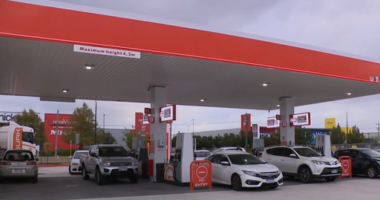
As fuel prices continue to climb across Australia, advocacy groups are calling on the federal government to implement swift relief measures to alleviate the mounting cost-of-living pressures faced by the nation’s most vulnerable citizens.
Disruptions in global fuel supply chains, largely due to the ongoing conflict in the Middle East, have triggered price hikes and led to the cancellation of oil shipments as countries focus on securing their domestic supplies.
The government is providing daily updates, identifying service stations experiencing fuel shortages. The latest reports indicate that 12% of stations in New South Wales are affected, followed by 10% in Victoria, 6.5% in South Australia, 4.5% in Queensland, 2.8% in Tasmania, with the Northern Territory and Australian Capital Territory reporting no shortages.
On average, fuel costs have spiked by over 50 cents per litre, a burden that is particularly challenging for unemployed Australians who are already grappling with a cost-of-living crisis.
For those reliant on vehicles or taxis to attend mandatory mutual-obligation appointments necessary for receiving welfare payments like JobSeeker, the increase in fuel costs can be especially burdensome.
These required appointments typically involve creating a Job Plan and reporting job search activities to service providers.
But some advocacy groups such as the Antipoverty Centre have long argued that these mandatory tasks are ineffective in helping job seekers secure employment.
Jay Coon, spokesperson for the Antipoverty Centre, told SBS News that if the government would consider cancelling the in-person appointments required of welfare payment recipients, it could help them save money amid the cost-of-living crisis.
He said appointments can be easily done online over the phone and peopl should not be forced to travel.
“People are already struggling to pay for fuel and taxis to attend compulsory activities for their welfare compliance appointments, and that was before the fuel crisis” because the Centrelink payments people are receiving barely cover costs, he said.
Coon said there could be “massive benefits” for people who are already at a disadvantage.
“Instead of spending $25 on an extra 10 litres, they could be spending $25 to feed themselves and buy fresh groceries,” he said.
“I think it’s just a bit hypocritical that the government is (suggesting) people work from home to save on fuel costs, and then they’re expecting poor people to waste their time and limited resources to attend five-minute appointments, or in some cases, to work for free,” Coon said.
In a statement, the Department of Workplace Relations and Employment said it would continue to monitor the situation closely.
“We encourage participants to contact their employment services provider if they are experiencing challenges attending appointments or looking for work,” the Department said.
“A range of supports, including flexibility in attending face-to-face appointments and assistance with transport for employment-related activities, may be available.”
Remote communities call for urgent help
In the Northern Territory, the Central Land Council urged the federal government to immediately increase the Remote Area allowance to support remote Aboriginal communities, which have been struggling with cost-of-living pressures even before the latest petrol price surges.
Currently, a single person living in remote areas can receive a fortnightly payment of $18.20, while those in a couple can receive $15.60 each.
Dr Josie Douglas, executive director of Policy at the Central Land Council, said the rapidly rising petrol prices could easily erase the value of the Remote Area Allowance.
“As of today, the diesel price in Alice Springs has risen to $3.40 a litre at some service stations,” she told SBS News.
“So the increase in fuel will have a flow-on effect in terms of the cost of living — pressure being felt by Aboriginal people out bush.”
In July, the federal government introduced the low-cost essentials subsidy scheme, investing $50 million to reduce the costs of essential items in over 76 remote stores.
While Douglas said the scheme was “very welcome”, she said it would remain vulnerable because rising petrol prices would push up the cost of food and everyday groceries through higher transportation expenses.
“And so without a meaningful increase in Centrelink income, there’s no buffer against this inevitable surge in the cost of living,” she said.
The chief executive of the Australian Council of Social Services, Cassandra Goldie, called on the federal government to “substantially lift the woefully inadequate rate of income support”.
She also called for greater flexibility for welfare payment recipients amid global economic uncertainty.
“The federal government should immediately remove harsh payment suspensions and cancellations, which cause immense harm to people living in poverty and do not support people to find paid work,” she told SBS News.
“Providers should be adjusting requirements to ensure that nobody is punished because they are unable to attend an activity due to soaring fuel costs, and suspend obligations that cannot be met in the current crisis.”
For the latest from SBS News, download our app and subscribe to our newsletter.