Share this @internewscast.com
In brief
- Current forecasts suggest El Niño or strong El Niño conditions could form later this year.
- A climate scientist noted forecasts are unreliable at this time of year, while another expert says current models only show one piece of the puzzle.
Climate experts and media reports are closely monitoring the potential emergence of a robust El Niño event, often referred to as a “super” El Niño, that could manifest later this year. Such a development carries the risk of exacerbating extreme weather events and might contribute to a notably warm year in 2027. But what exactly constitutes a “super El Niño,” and how likely is it to occur?
The situation is complex, and specialists caution that it’s premature to make definitive predictions.
In a social media update, Washington Post meteorologist Ben Noll highlighted recent data from the European Center for Medium-Range Weather Forecasts, suggesting a 22% probability of a “super El Niño” by August. He also indicated an 80% chance of a “strong” El Niño developing.
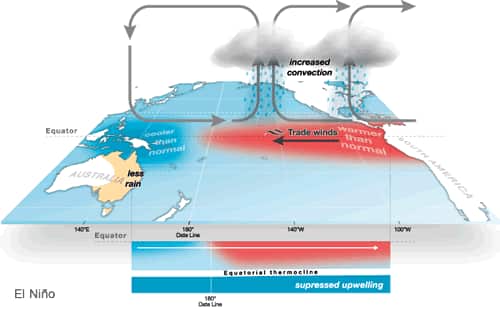
The El Niño phenomenon is characterized by variations in Pacific Ocean temperatures that influence global weather patterns. When this climate pattern last emerged in Australia in 2023, it was associated with warm and dry conditions.
El Niño occurs when sea surface temperatures in the central and eastern tropical Pacific Ocean rise above normal levels.
Andrew King, a climate scientist at the University of Melbourne, notes that current models are indicating the possibility of an El Niño or a strong El Niño taking shape later this year.
However, he noted forecasts are unreliable at this time of year, and he would not place any confidence in predictions until they come into sharper focus in May or June.
“At this time of year, in our autumn, there’s kind of a bit of a reset” in conditions in the Pacific Ocean, he told SBS News.
“Things die down a bit. There’s not really that much going on. And then something usually emerges, kind of late autumn, early winter.”
“Super” El Niño is not a scientific term, but some use it to describe a very strong El Niño event.
A spokesperson for the Bureau of Meteorology (BoM) told SBS News it isn’t forecasting a super El Niño and it does not use that term to categorise El Niño–Southern Oscillation (ENSO) events.
ENSO refers to the climate cycle involving fluctuations in ocean temperatures and atmospheric conditions across the tropical Pacific, driving shifts between El Niño, neutral and La Niña phases.
The BoM said all models indicate a return to neutral conditions in early autumn with a possible shift to El Niño by the end of winter.
Linden Ashcroft, a senior lecturer in climate science at the University of Melbourne and a Climate Council fellow, said that while it’s “somewhat unusual to have so much agreement at this time of year” that an El Niño might occur, some models are missing important pieces of the puzzle at this stage.
“The ocean is only part of the story,” she told SBS News.
“El Niños are the ocean plus the atmosphere, and these forecasts are only really talking about the ocean right now.”
The BoM noted that its long-range forecasts take into account all influences from the oceans and atmosphere.
What happens in Australia during a strong El Niño?
El Niño can drive certain patterns around the world, including wetter conditions and flooding in South America and drought in Australia and Asia.
Typically, global temperatures increase during El Niño and fall during La Niña, the flip side of the pattern, which occurs when Pacific Ocean temperatures are cooler than usual.
However, not every El Niño is the same, and the strength of the pattern doesn’t guarantee hot and dry weather.
“In Australia, eastern Australia especially, El Niño springs and summers are more likely to be drier and hotter than normal,” King said.
“But it’s not super strongly tied to how strong an El Niño is. There’s other things that influence our weather and climate as well, which means that even if we have quite a strong El Niño, that doesn’t guarantee a really dry spring or summer. It just raises the probability of it.”
On average, El Niño episodes occur every three to five years, and typically last for about a year, but can be shorter or much longer, according to the Bureau.
‘Lingering impacts’ of El Niño could bring ‘new record’ year in 2027
Should an El Niño form this year, it would likely mean an increase in the global average temperature for 2027, King said.
“If we did have an El Niño form, [there’s a] pretty good chance that 2027 would be a very hot year for the world. Possibly a new record hot year.”
Months of unusually high sea surface temperatures in the Pacific are “enough to have quite a big effect on the global average temperature that … would persist beyond 2026 and into 2027 also”.
“It does kind of have lingering impacts due to relationships with other parts of the ocean and atmosphere as well,” he said.
The hottest year on record, 2024, was driven in part by a moderate-to-strong El Niño in 2023.
In Australia, 2024 marked the second-hottest year for the country since records started in 1910, according to the Bureau of Meteorology. Australia’s hottest year on record was 2019, which ended with the catastrophic Black Summer bushfire season.
In the World Meteorological Organization’s State of the Global Climate report released earlier this week, it confirmed that the past 11 years have been the hottest on record.
Climate change will likely drive new records every year, Ashcroft said. A global El Niño event would only “tip the scales even more”, she said.
“That would lead to a very, very hot year for the planet,” she said.
Australians warned ‘not to make big decisions’ just yet
Ashcroft pointed out that in Australia, where “extreme climate is part of our identity”, people are very invested and well-versed in this particular climate pattern, which can evoke fears of bushfires, drought and intense heat for some, such as farmers.
She noted that even if an El Niño event does occur, it doesn’t always lead to those outcomes, particularly as previously known patterns evolve due to climate change.
“I’d be encouraging people not to make big decisions based on this one metric, particularly in Australia,” she said.
“An El Niño event doesn’t always equal hot and dry. The relationships between El Niño and La Niña and Australian climate, they are changing in a warmer world, so the relationships that we understood in the past are not quite as reliable now.”
For the latest from SBS News, download our app and subscribe to our newsletter.