

Australians should brace for warm nights ahead, as forecasts indicate that nighttime temperatures will remain higher than usual across much of the country during March, April, and May.
As autumn 2026 approaches, here’s what residents can expect regarding the weather.

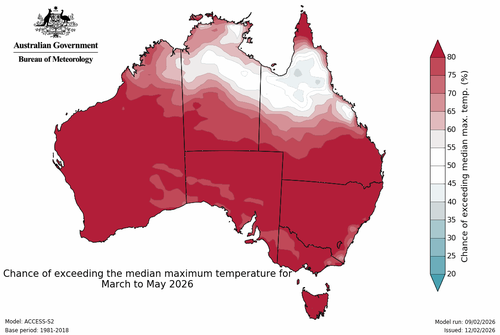
The Bureau of Meteorology (BOM) forecasts an 80 percent likelihood that temperatures will exceed the average across most regions from March through May.
This season, expect maximum temperatures to climb significantly above normal in New South Wales, the Australian Capital Territory, Victoria, South Australia, Tasmania, and Western Australia.
In Queensland and the Northern Territory, the odds of experiencing above-average temperatures are slightly lower, standing at around 50 percent.
Even after sunset, Australians can anticipate warm conditions to persist.
According to the BOM, it’s very likely overnight temperatures will be above average across much of Australia.
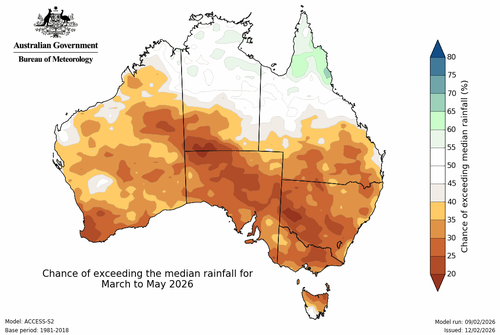
The BOM is predicting below-average autumn rainfall across most of Australia’s southern regions, including NSW, the ACT, Victoria, South Australia, and most parts of WA.
North-eastern Tasmania and South Australia’s interior specifically are forecast to receive unusually low rainfall.
The drier-than-average conditions could put some states on high alert for bushfire risk.
It’s a slightly different story up north.
The rainfall forecast for March to May in much of northern Australia isn’t leaning one way or another yet, meaning it could be below, above, or right on average.
And parts of Cape York Peninsula, the Top End and northern Kimberley are slated for above-average rainfall in March.
NEVER MISS A STORY: Get your breaking news and exclusive stories first by following us across all platforms.


