
Share this @internewscast.com
Just before the United States and Iran agreed to a two-week ceasefire, Morningstar DBRS released a report noting Iran’s commitment to reopening the Strait of Hormuz during the temporary cessation of hostilities.
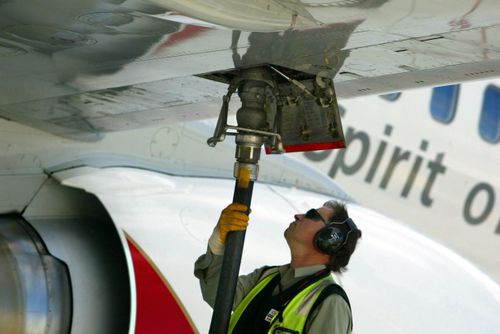
Since the conflict erupted on February 28, the cost of jet fuel has nearly doubled, prompting airlines to raise ticket prices in response to the increased expenses.
Experts suggest that airlines employing aggressive fuel hedging strategies, which involve securing prices in advance, are better shielded from these fluctuations in the short term.
However, should global aviation fuel supplies dwindle, airlines without such measures could find themselves at a disadvantage.
The report highlights a potential risk beyond just escalating prices: “A prolonged disruption in the Middle Eastern supply chain, coupled with export limitations by major jet fuel suppliers like China, might lead to actual shortages in certain areas.”
Airlines that depend heavily on imports from the affected regions—particularly those based in Australia, Asia, and parts of Europe—are expected to be the most vulnerable under these circumstances.
Airlines around the world have been grappling with volatile oil markets as fighting near the Strait of Hormuz disrupts global supplies.
Roughly a fifth of the world’s oil typically passes through the narrow water way, and the threat to that chokepoint is pushing up the price of jet fuel, which is refined from crude.
Fuel typically ranks as the second-largest expense for airlines after labour.
NEVER MISS A STORY: Get your breaking news and exclusive stories first by following us across all platforms.