
Share this @internewscast.com
Iran, a pivotal player in global oil markets, not only controls the strategic Strait of Hormuz but also holds the world’s third-largest proven oil reserves.
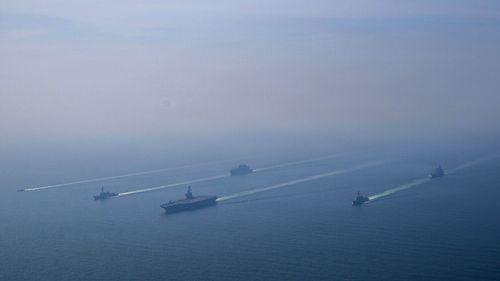
Every day, approximately 20 million barrels of oil—accounting for about 20% of the world’s daily oil production—are transported through this vital waterway, according to data from the U.S. Energy Information Administration (EIA). The EIA refers to the strait as a “critical oil chokepoint,” underscoring its importance to the global energy supply.
If the Strait of Hormuz were to be closed, it would severely impact China and various Asian economies that depend heavily on the crude oil and natural gas shipped through this route.
The EIA reports that last year, a remarkable 84% of the crude oil and 83% of the liquefied natural gas passing through the strait were destined for Asian markets.
China, which stands as the largest importer of Iranian oil, received 5.4 million barrels per day via the Strait of Hormuz in the first quarter of this year. Meanwhile, India and South Korea imported 2.1 million and 1.7 million barrels per day, respectively, according to EIA estimates. In contrast, the U.S. and Europe imported considerably less, with 400,000 and 500,000 barrels per day, respectively, during the same timeframe.
STAY INFORMED: Never miss an update—follow us everywhere for the latest breaking news and exclusive stories.