Share this @internewscast.com
This story contains references to distressing content.
Cut off from the world by an internet blackout, Amirhossein spent two weeks protesting on the streets of Iran, witnessing scenes of brutality he says he had never seen before.
In a voice note sent to SBS News, he described “madness” on the streets of Tehran.
“I saw it with my own eyes,” the human rights activist said.
“A wave of people had taken to the streets, because of international pressure, and because the situation was deeply against the Islamic Republic.

“The security forces had descended into chaos, shooting at anything in sight, driven by their own fear. They seemed indifferent to whether their targets were women, men, or children,” he recounted.

The protester’s name has been changed because of potential safety concerns.

He requested to be called Amirhossein, in memory of a young protester who lost his life in the recent demonstrations.

The protests in Iran, initially sparked by economic issues a couple of weeks ago, have now transformed into a significant anti-regime movement. Demonstrators are reportedly heard chanting slogans like “Death to the dictator,” a direct reference to Iranian Supreme Leader Ali Khamenei.

The internet has been shut off in Iran since Friday morning AEDT, but some Iranians, like Amirhossein, are finding ways to get around the blackout, such as connecting to Starlink’s satellite service to share information about what is happening in the country.
“What we witnessed on the streets was truly unprecedented. I saw a lot of gunfire, tear gas being fired, people being brutally beaten,” he said.
“The people’s only weapons were slogans and stones.
“The Islamic Republic has used maximum violence every time … This is nothing new. It just broke the record this time.”

SBS News has not been able to independently confirm the number of casualties resulting from these protests.

Protest movements have a long history in Iran, but human rights groups say the death toll amid this crackdown is unprecedented, warning it could be much higher than reported, with the internet blackout hindering efforts to verify reports.
Mina Khani, a member of Hengaw, an Iranian Kurdish organisation documenting human rights violations in Iran, told SBS News: “The internet has been completely shut down for several days, and communication is heavily restricted. Making it very difficult to get verified information for us.”
United States-based Human Rights Activist News Agency (HRANA) has confirmed the deaths of at least 2,615 people in Iran, which includes 13 children. At least 153 members of security forces and government supporters have also lost their lives, according to the organisation.

Additionally, SBS could not independently verify allegations of indiscriminate killings or crimes against humanity occurring during the unrest.

SBS News has contacted the Iranian embassy for comment, but had not received a response at the time of publication.
There are also reports of people unable to access hospitals and medical services due to overwhelmed resources, as well as a fear of security forces who are reportedly stationed there.
Amirhossein said figures relating to the number of people killed are inaccurate, as “a large part of these dead and wounded are now hiding in their homes. We may have seen a third of the disaster”.
He said the crackdown reached its peak over the weekend.
“It turned into a purge. Anyone who came out onto the streets was killed by snipers, from buildings, and mercilessly in the streets,” he said.
According to Hengaw, the recent crackdown on the protests “contains clear and multiple elements of crimes against humanity”.
“[With] the massive killing, attacking hospitals, [and] targeting and killing children, we are sure about that, that this is a crime against humanity and this is intentional,” Khani said.

Former President Trump did not eliminate the possibility of U.S. military intervention, stating, “We are going to watch what the process is,” while mentioning that his administration had received a “very good statement” from Iran.

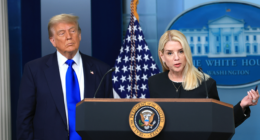
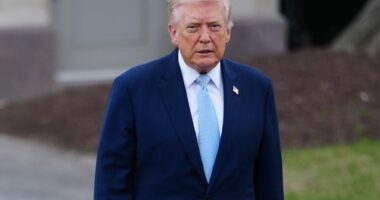
US President Donald Trump told reporters he has been told that reported killings in the Iranian regime’s crackdown on the protests were subsiding, and that he believes there is currently no plan for large-scale executions.
When asked who told him that the killings had stopped, Trump described them as “very important sources on the other side”.

Trump did not rule out potential US military action, saying “we are going to watch what the process is” before noting that his administration had received a “very good statement” from Iran.

‘They were not afraid’

Iran’s foreign minister Abbas Araghchi has denied thousands being killed, saying “hundreds” died in protests, without providing an exact number.
Several Iranian officials have labelled the protesters as “terrorists” and “rioters”, and during the initial days of the protests, Khamenei said “rioters should be put in their place”.
Amirhossein, who has been involved in multiple protests in Iran over the past few decades, said he still feels compelled to go to the streets.
But he’s worried especially about younger protesters.

“Being out on the streets was more frightening for us than for the young people,” he said.

“They went out full of passion, smiling, shouting, chanting their demands, and they were killed [while] our legs were shaking.
“Those young people were so full of desire and passion that they were not afraid. They were killed with their smiles and are now buried.”
According to Human Rights Watch Australia director Daniela Gavshon, there are grave fears for those detained.
“They are being accused by authorities of being ‘enemies of God’, which in Iran carries the death penalty,” she told SBS News.
At least 18,470 individuals have been arrested during the protests, according to HRANA. Among them is Erfan Soltani, a 26-year-old protester who has been sentenced to execution. His face has become one of the symbols of resistance among activists.

Hengaw has reported that authorities had told Soltani’s family that the death sentence was final, while Araghchi has said that “there is no plan for hanging”.

‘Regime in a bad spot’

Dara Conduit, a political science lecturer at Melbourne University, said the “regime is in a bad spot”, with these protests forming part of a raft of recent challenges to the Islamic Republic’s regime leadership.
“Developments internationally over the last couple of years have made it feel extremely vulnerable,” he told SBS News.
“Things such as the assassination of the chief of the Revolutionary Guards, Qasem Soleimani, to the fall of Bashar al-Assad’s regime in Syria, the catastrophic weakening of Hezbollah in Lebanon and also the Iran-Israel war last year, which showed just how ill-prepared Iran was to stand up to Israel.

“The Iranian regime has been trading on its strength and its capacity to stand up for Israel for its entire lifetime, and within the space of a few days, it became very clear that actually Israel had deeply penetrated Iran and … no-one in the regime was safe.”

Iran has a long history of protest movements, with several triggered by different issues since the 1979 revolution.
“I think we need to be very clear that this is not a protest movement that erupted out of nowhere,” Conduit said.
“It’s one that’s really deeply rooted in Iranian society, and these grievances are very real and very widely felt.”
Iranian authorities have accused the US and Israel of fomenting the unrest, carried out by people it calls “armed terrorists”.
The unrest on such a scale caught the authorities off guard at a vulnerable time, but it doesn’t appear that the government faces imminent collapse, and its security apparatus still appears to be in control, one Western official told Reuters.

Iranian President Masoud Pezeshkian — an elected figure whose power is subordinate to that of Iran’s supreme leader — told a cabinet meeting that as long as the government had popular support, “all the enemies’ efforts against the country will come to nothing”, Reuters reported.

‘As if the whole city poured into the streets’

In 18 days, the protests reached 187 cities across the country with 617 protest gatherings, according to HRANA.
For Amirhossein, these protests felt different.
“This time, all the women, children, old and young, all said together that once and for all, let’s all come out into the streets,” he said.
“Even those who couldn’t come out into the streets were chanting slogans from their windows and supporting each other, and it was as if the whole city had poured out into the streets.

“It means people who’ve been pushed to the very edge have nothing left to lose, and they’re saying: ‘You only die once, you only mourn once’, so let’s take to the streets again.”
While there have been fewer reports of protests in recent days, amid what Amirhossein calls a “horrifying crackdown” and an internet blackout, he’s holding onto hope for change.
“If they throw someone to the bottom of a well, there’s still hope they might be rescued from there.
“This is human nature. We have no other way. What else can we do? Die by mass suicide?
“We’re forced to go on. We’re forced to hold on to hope for the future.”
This story was produced in collaboration with SBS Persian.

Share this @internewscast.com
You May Also Like

Escalating Tensions: Pakistan Declares ‘Open War’ with Afghanistan Amid Intense Airstrikes

Key Points A Taliban spokesperson said Pakistan carried out airstrikes in parts…
General view of Yallourn Power Station (Luis Enrique Ascui/Australian Financial Review)

Firefighters Combat Intense Blaze for Five Hours at Victorian Power Station

Firefighters have spent nearly five hours battling to control a blaze inside…

Shocking Arrest of Larrakia Elder Amid Heated NT Administrator Protests: Uncover the Controversy

On Friday morning, a significant gathering of protesters convened in a park…
A cargo plane carrying money crashed near Bolivia's capital leaving at least 15 people dead.

Tragic Bolivian Cargo Plane Crash Claims 15 Lives, Devastating Loss of Money on Board

A cargo plane carrying money crashed near Bolivia’s capital killing at least…
Belgian traveller Céline Cremer.

Heartbreaking Discovery: DNA Confirms Missing Backpacker’s Fate

Following the announcement by police today that the remains have been “provisionally…

Sussan Ley Announces Departure from Parliament, Celebrates Leadership Achievements

After representing her New South Wales electorate for a quarter of a…

Hillary Clinton Denies Any Memory of Meeting Jeffrey Epstein

In Brief Former US secretary of state Hillary Clinton has spoken at…
Jacqueline Schmidt Aravena, pictured with her sister at their Melbourne home.

Melbourne Woman Fights to Stop Disabled Sister’s Imminent Deportation

The sister of a woman with cerebral palsy, who is on the…
Festival visitors enter one of the main entrances during day one of the Byron Bay Bluesfest on April 14, 2022 in Byron Bay, Australia. The music festival returns after a two-year break due to the coronavirus pandemic.

Cancellation of Recent Music Festival Reflects Emerging Trend in Australia

Just a week shy of its scheduled dates, the Rolling Loud music…
Babawru Akuntsu, top, rests beside Akyp, her newborn son

Miraculous Birth Revives Endangered Amazonian Tribe: A New Dawn for Survival

Pugapia and her daughters, Aiga and Babawru, have long been the last…

Australia’s Financial Crisis: Breaking Records and Impacting Lives in 2023

Key Points Investment firm collapses, superannuation issues and misleading advice were major…
Warnings as heavy rain heads for South Australia

Prepare for Downpour: Heavy Rain Expected to Hit South Australia

Significant rainfall is anticipated for regions of South Australia, including Adelaide, as…